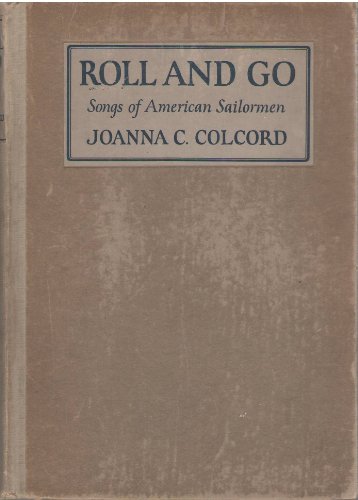
(This collection of literature attempts to compile many cl...)
This collection of literature attempts to compile many classics that have stood the test of time and offer them at a reduced, affordable price in an attractive volume so that everyone can enjoy them.
Lincoln Ross Colcord was an American journalist and maritime historian.
Background
Lincoln Ross Colcord was born on August 14, 1883 at sea off Cape Horn in the bark Charlotte A. Littlefield, commanded by his father, Captain Lincoln Alden Colcord of Searsport, Maine. His family had been seafarers for five generations. His mother, Jane French (Sweetser) Colcord, accompanied her husband on his distant voyages as a matter of course. Her two children, Joanna Carver, later a social worker at the Russell Sage Foundation, and Lincoln, were not only born but grew up on voyages to China, during which they were taught by their parents. Lincoln (who never used his middle name) did not come ashore until the age of fourteen.
Education
He was graduated from the Searsport High School in 1900 and attended the University of Maine intermittently from 1900 to 1906. Although he left in the middle of his junior year, the university awarded him an honorary M. A. in 1922 and elected him to Phi Beta Kappa in 1924.
Career
Colcord worked in the Maine woods as a civil engineer with the Bangor and Aroostook Railroad from 1906 to 1909, when he settled in Searsport and began writing short stories for magazines. His book of sea stories, The Drifting Diamond, was published in 1912, and The Game of Life and Death appeared in 1914. The outbreak of World War I led him to write a 149-page poem, Vision of War, published in 1915. He soon plunged into the current of political reform, and by 1916 he had become a close ally of Col. Edward M. House, who sponsored him for the post of staff correspondent in the Washington bureau of the Philadelphia Public Ledger, which he held in 1917-1918. He took to journalism with the same passionate energy that he had suddenly developed for political activism in the radical liberal cause. By July 1918, Colcord had begun to lose faith in both House and President Wilson. In 1919-1920 he worked for Oswald Garrison Villard as associate editor of The Nation in New York. Thereafter the drama of national political reform began to fade, and Colcord returned to Searsport. His third collection of stories, An Instrument of the Gods, appeared in 1922. In the mid-1920's, after the death of his first wife, Colcord and their young daughter lived for a time in Minneapolis, where his sister was then working. There he became a friend of the Norwegian-born novelist O. E. Rölvaag, whom he assisted with the English translation of Giants in the Earth, A Saga of the Prairie (1927). This enormously successful novel owed much to Colcord's "real labor amoris, " as Rölvaag characterized it, in unifying and rewriting the text. Colcord then returned to Searsport for good. To his house overlooking Penobscot Bay came sailors, scholars, publishers, painters, railroad presidents, film actors, and poets. The range of his ideas was boundless, and it did not disconcert him in the least to make a right-about-face in his arguments with neither warning nor apology. His literary style seldom reflected his conversational gifts, except in his book reviews for the New York Herald-Tribune and in his exuberant letters, which remain uncollected and unpublished. With his wife he compiled from Custom House documents a 225-page "Record of Vessels Built on Penobscot River and Bay, " an appendix to George S. Wasson's Sailing Days on the Penobscot (1932). When the Penobscot Marine Museum was created in Searsport in 1936 by his cousin, Clifford N. Carver, the Colcords were active in gathering paintings, models, and logs of local ships. Although Link's head was crammed with details about maritime history, it was next to impossible to persuade him to get down his information on paper. He was too busy comparing the earlier world of "real men" to their shabby successors. Although he wrote President Roosevelt seeking a patronage appointment for himself as a "deserving Democrat, " he soon came to abhor the New Deal. The nearer the country moved to war, the more vociferously isolationist he became. Yet he would happily lend his friend Samuel Eliot Morison nineteenth-century blue-backed charts of the Pacific to take with him on his cruises as historian of United States naval operations. As the undisputed "sage of Searsport, " Colcord stirred others to action. In the fall of 1939 he spoke before the Peabody Museum Marine Associates, delivering an impassioned plea for founding a journal of maritime history similar to the Mariner's Mirror. The American Neptune began publication in January 1941. Colcord died suddenly at Belfast, Maine, on November 16, 1947, and was buried at Searsport. Through his boyhood at sea he had established, somehow, a private quarterdeck of the mind from which he passed judgment on men and things. With characteristic fairness, though, he was more than willing to allow each of his fellow men a similar retreat, because of his limitless respect for the rights of the individual. Much that was strange or perverse he could tolerate, provided only it arose from wholehearted conviction; contrariwise, his scorn for affectation and pettiness was blistering. This all-engrossing concern for the independence of the individual led him to decry our contemporary processes of regimentation, and to exalt the past, particularly the seafaring past of New England, which, to his imagination, had fostered the hardihood of man.
Achievements
Few men have had so varied a career with so little conventional preparation; few have had so wide an influence simply by talking to their friends.
Quotations:
"We discern at last a great truth--that our secret feeling for sailing ships is based on deeper values than those of sentimental attachment or the perception of beauty. It is based on something very real in life, something so true, of such immense significance, that we hardly dare to face the issue. The sailing ship stood for a sociological achievement of the highest order. She stood for a medium whereby men were brought to their fullest development. She stood for a profession where only merit could endure. She stood for the efficiency of spirit and character. She stood for things that we could not afford to lose. "
Personality
He was a man of outstanding vitality and gusto. He met life eagerly, equally alert for the savor of a situation, a bowl of chowder, a bottle of rum, an idea, an anecdote, or a stretch of landscape. Whatever ills he gallantly encountered--and he had stood up to his fair share--boredom was not one of them.
Quotes from others about the person
"Colcord is still new in this business, " H. B. Brougham, publisher of the Ledger, wrote to House on July 19, 1917. "If he is a cub he is a lion's cub, and waxing powerful. Since he came here I have watched his course with an amazed admiration which I find it difficult to conceal. He is a man of hungry and indomitable energy, and facts are his prey, which he devours and assimilates with a veritable rapacity after the truth. "
"For Colcord, the Bolshevik revolution in November 1917 posed the decisive test of the administration's good faith. The failure to aid the revolution, followed by the decision to intervene in Siberia, convinced him that Wilson had gone over to the reactionaries".
Connections
On May 4, 1910, he married Blanche T. Nickels, also of Searsport; they had a daughter, Inez Nickels Colcord.
Colcord married Loomis Logan on February 16, 1928; they were divorced on January 7, 1929. On July 23 of that year he married Frances Brooks; they had one son, Brooks.
Father:
Captain Lincoln Alden Colcord
Mother:
Jane French (Sweetser) Colcord
Spouse:
Blanche T. Nickels
Spouse:
Loomis Logan
Spouse:
Frances Brooks
Sister:
Joanna Carver
She was a social worker at the Russell Sage Foundation