Background
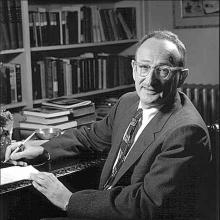
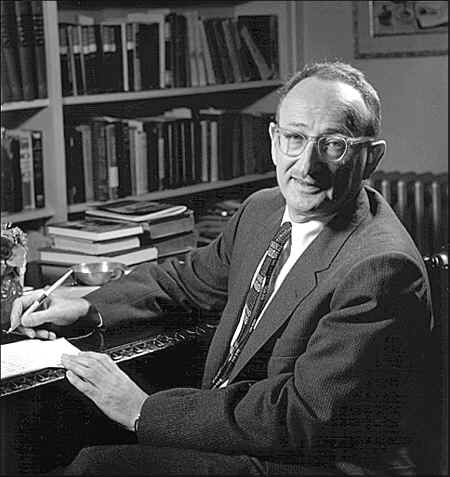
Sidney Hook was born on December 20, 1902 in New York City. Son of Isaac and Jennie (Halpern) Hook.
http://www.amazon.com/gp/product/B013J9675U/?tag=2022091-20
http://www.amazon.com/gp/product/B000UDX58Q/?tag=2022091-20
http://www.amazon.com/gp/product/0837165628/?tag=2022091-20

(2011 Reprint of 1955 Edition. Full facsimile of the origi...)
2011 Reprint of 1955 Edition. Full facsimile of the original edition, not reproduced with Optical Recognition Software. In this work Sidney Hook, a distinguished scholar, examines the chief issues which have divided Marxists from non-Marxists, and Marxists from each other. This volume of exposition, comment and readings is offered as an introduction to the study of Marxism in conflicting theory and practice. A valuable collection of original source readings are provided, including "The Communist Manifesto", "Historical Materialism," "The Fetishism of Commodities," "Religion and Economics," and much more by Marx, Engels, Lenin, Stalin, Kautsky, Trotsky and Luxemburg.
http://www.amazon.com/gp/product/0898744431/?tag=2022091-20
http://www.amazon.com/gp/product/B00462BWSW/?tag=2022091-20

(Philosophy, Naturalism, Humanism, Essays)
Philosophy, Naturalism, Humanism, Essays
http://www.amazon.com/gp/product/B000XI96A4/?tag=2022091-20
http://www.amazon.com/gp/product/0402122119/?tag=2022091-20
http://www.amazon.com/gp/product/B004DYBLXE/?tag=2022091-20
(Book by Hook, Sidney)
Book by Hook, Sidney
http://www.amazon.com/gp/product/0856570184/?tag=2022091-20
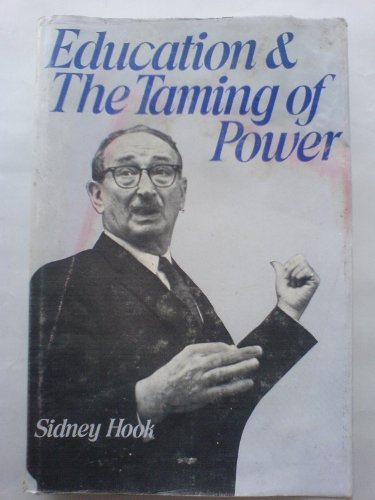
http://www.amazon.com/gp/product/B012TS2PVC/?tag=2022091-20
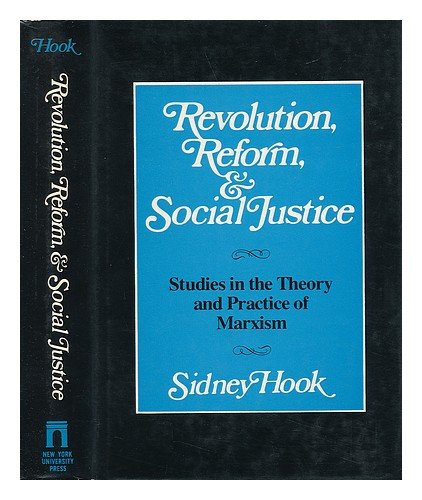
(Book by Hook, Sidney)
Book by Hook, Sidney
http://www.amazon.com/gp/product/0814733689/?tag=2022091-20

(To find more information about Rowman and Littlefield tit...)
To find more information about Rowman and Littlefield titles, please visit www.rowmanlittlefield.com.
http://www.amazon.com/gp/product/0847671593/?tag=2022091-20
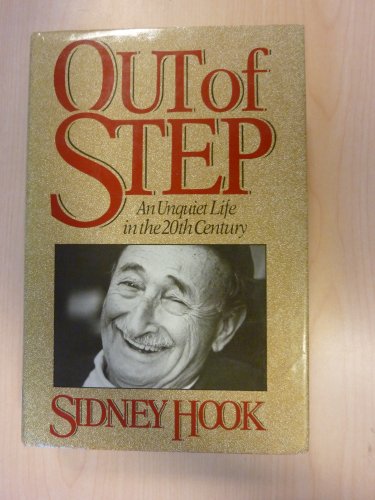
http://www.amazon.com/gp/product/0060156325/?tag=2022091-20
http://www.amazon.com/gp/product/B013PT08X6/?tag=2022091-20
http://www.amazon.com/gp/product/B002DHZWCE/?tag=2022091-20

http://www.amazon.com/gp/product/B012YTBMN8/?tag=2022091-20
http://www.amazon.com/gp/product/B010IKLH3U/?tag=2022091-20
( Like John Dewey, his mentor and friend, Sidney Hook sha...)
Like John Dewey, his mentor and friend, Sidney Hook shares the classic conception of philosophy as the pursuit of wisdom. A philosopher is concerned ultimately with the conception of the good life in a good society. In these essays extending over many years, Hook illustrates the activity of the philosopher in the cave of social life. He brings to bear the tools of reflective analysis on dominant social and political issues: human rights; the role of personality and leadership in history; the attempt to defend freedom as we seek to preserve and extend the welfare state; and a criticism of the common premise of historical materialism shared by both Marxists and their opponents. Most significantly, Hook addresses the relation between morality and religion and the place of religion in democratic society. A secular and naturalistic humanism, he contends, generates an authentic, reliable commitment to the democratic faith.
http://www.amazon.com/gp/product/0809309378/?tag=2022091-20
http://www.amazon.com/gp/product/B011MESXBA/?tag=2022091-20
http://www.amazon.com/gp/product/B010EW7CMM/?tag=2022091-20
(Considered by some the most controversial American philos...)
Considered by some the most controversial American philosopher of contemporary times, SIDNEY HOOK (1902-1989) was infamous for the wild swing in his political thought over the course of his career, starting out as a young Marxist before the Great Depression and ending up a vehement anti-Communist in his later years. Hook's conception of history and the individual's impact upon it is the subject of this intriguing work, first published in 1943. Subtitled A Study in Limitation and Possibility, it examines the concept of the "hero" as it relates to leadership in the modern world, the hero as a child of crisis, how the character of rulers affects society, how history swings on the contingent and the unforeseen, and much more. With sections on the Russian revolution and the influence of the hero on democracy, this unexpectedly entertaining book is an enthralling look at the theories that shaped Hook's thought and guided his changes in political alliance.
http://www.amazon.com/gp/product/1605203742/?tag=2022091-20
http://www.amazon.com/gp/product/B0140DKX9K/?tag=2022091-20
Sidney Hook was born on December 20, 1902 in New York City. Son of Isaac and Jennie (Halpern) Hook.
Born and educated in Brooklyn, N.Y., he studied at City College and with John Dewey at Columbia, graduating with a doctorate in 1927.
He began teaching at New York University and from 1931 also at the New School for Social Research. After his retirement in 1972, he became senior research fellow at the Hoover Institution at Stanford University.Senior Research Fellow, Hoover institution, Stanford. 1973-1989.
As an educator, he regarded the object of learning as the development of a critical intelligence. He rejected attempts to introduce external political criteria, such as admission quotas, in institutions of higher learning and insisted on academic freedom.
He was the chief organizer of a number of activities among intellectuals, including the Committee for Cultural Freedom. He also organized the Conference on Methods in Philosophy and Science, the Conference on Scientific Spirit and Democractic Faith, and University Centers for Rational Alternatives. He was president of the American Philosophical Society (1959).
(Considered by some the most controversial American philos...)
(One of America's most influential social philosophers off...)
( Like John Dewey, his mentor and friend, Sidney Hook sha...)
(To find more information about Rowman and Littlefield tit...)
(Philosophy, Naturalism, Humanism, Essays)
(2011 Reprint of 1955 Edition. Full facsimile of the origi...)
(Book by Hook, Sidney)
(Book by Hook, Sidney)
(1960 Antioch Press. Article at pp. 5-26 in one complete i...)
Hook has been described as a secular humanist. He was critical of religion, feeling that evidence for the existence of God is inadequate. He therefore objected to the effort to use theological premises to derive ethical conclusions.
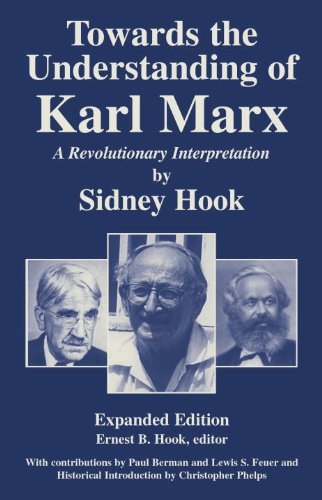
He was often called a neoconservative thinker — a conservative committed to democratic socialism. His early reading of Karl Marx led him to try to reinterpret Marx in pragmatic terms. Indeed he was one of the first scholars in the United States to subject Marx’s thought to serious scholarship. Hook was a strong opponent of Stalinism and, criticizing totalitarian expressions of Marxism, was politically active in stemming the influence of communism in America. He was passionately committed to democracy, which he saw as based in the ethical principle of equality, and opposed all forms of authoritarianism and absolutism.
An activistic intellectual, Sidney Hook struggled to do justice to both the professional demands of his university commitment and the political demands of his commitment to ‘the socialist dream’. The political commitment had emerged first. At a time when the American system was •hired in deep depression, Marxism appeared to he a promising alternative.
Hook considered himself to have been a ‘fellow traveller' until the Moscow treason trials of 1936-1937 revealed to him (he unethical terror at the heart of the Soviet experiment. Thereafter, his position became that pf a ‘communism without dogmas', which turned •nto ‘democratic socialism’. Eventually, he would call himself a ‘social democrat’ and insist upon Political democracy above all with ‘more or less’ socialism or capitalism depending on the situation.
His university orientation was fixed by his discovery of the pragmatism of John Dewey, which began in his undergraduate work and was completed by his studying under Dewey at Columbia.
Dewey wrote an introductory word commending Hook’s first book (1927), and seems to have regarded the younger man as his ’ntellectual heir apparent. In any case they became a kind of social action team with Hook attempting to relieve the great man of some of the tedium of scholarly work while arranging for his Participation in various political projects which had engaged the interests of the younger man. In one of these endeavours, for example, Dewey joined a commission to investigate the Moscow trials, including a trip to Mexico to interview Trotsky.
Initially, Hook saw Dewey as a philosopher who was applying ‘the principles of historical materialism’ to philosophy in a brilliant manner.
However that may be, what Dewey gave Hook intellectually was a framework allowing Hook to defend the principles of democratic liberalism and naturalism against attack from whatever quarter. The initial attacks came from the Stalinist left although, to be sure, the vigour of Hook’s counterattack would often leave one in doubt concerning the difference between offence and defence. Hook’s inner sense was that his ‘polemical exchanges’ always came ‘in response to criticism or in defense of the causes' to which he was committed.
The particular issues would change with the times. After fighting the cultural cold war against the Communists, during the McCarthy years he opposed the Senator while arguing that intellectuals had an obligation to testify before Congressional committees. With respect to university education he became embroiled ‘for almost twenty years’ in ‘vigorous educational and political controversy’ with Hutchins and Adler over the great books and classical, versus progressive, educational ideals.
In the 1960s and early 1970s he criticized university administrators for their ineptitude in controlling student disturbances.
Throughout, he said that his energies were called forth by such disputes against his repeated resolves to devote himself ‘to the sweet uses of technical philosophy’. In fact, his early writing was more concerned with these uses, whether pragmatistic or Marxist, than his later work. Upon retirement he promised himself that he would turn to ‘a systematic exposition and defense of the thought of John Dewey', but the issues and problems of ‘the last forty years’ remained ‘still as topical and compelling’ as ever.
Approaching his eighty-fourth year he felt ‘just as much embattled’ as the day he ‘first discovered injustice and unnecessary cruelty in the world’.
His position of pragmatic naturalism coupled the appreciation of science to that of political democracy. ‘All human knowledge is scientific knowledge’. The logic and ethics of scientific method are applicable to all human affairs, including ‘normative social inquiry’.
It is not only possible to determine the best means to achieve ‘given ends’, but also to determine what are the best ends. A corollary to this approach was
an ‘open minded atheism', joined, however, to the proviso that freedom of religious belief is integral to ‘any morally acceptable schedule of human rights'. A depth note to all of this is his belief (1975) that the incompossibility of goods, requiring that some be sacrificed, introduces a genuine, inescapable tragedy between betrayal of the greater good and the ideal of justice.
He was recognized internationally as an outstanding American intellectual and was a leading representative of the pragmatic tradition in American thought, applying pragmatic intelligence to ethical, social, and political issues and applying historical theory to American philosophy. This involved the experimental testing of his ideas by observing their results in behavior.
Married Carrie Katz, March 31, 1924. 1 son, John Bertrand. Married Ann Zinken, May 25, 1935 (deceased January 1995).
Children: Ernest Benjamin, Susan Annual.