Background
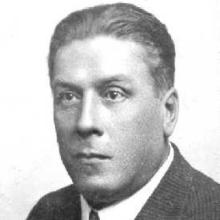
Leśniewski was born on March 30, 1886, in Serpukhov, Russian Empire (now Russian Federation). His father was Izydor, an engineer working on the construction of the Trans-Siberian Railway, and his mother was Helena (née Palczewska).


Universytetska St, 1, Lviv, L'vivs'ka oblast, Ukraine, 79000
Leśniewski received the Ph.D. under Wacław Sierpiński at the Lviv University in 1912.

Munich, Bavaria, Germany
Leśniewski went to a high school in Irkutsk. He studied philosophy at various German universities (he attended lectures by Hans Cornelius at the Ludwig Maximilian University of Munich).
Munich, Bavaria, Germany
Leśniewski went to a high school in Irkutsk. He studied philosophy at various German universities (he attended lectures by Hans Cornelius at the Ludwig Maximilian University of Munich).
Universytetska St, 1, Lviv, L'vivs'ka oblast, Ukraine, 79000
Leśniewski received the Ph.D. under Wacław Sierpiński at the Lviv University in 1912.

(Volumes 1 and 2)
Volumes 1 and 2
https://www.amazon.com/Stanislaw-Lesniewski-International-Philosophy-1991-12-31/dp/B01K0UV7VA/ref=sr_1_3?dchild=1&keywords=Stanis%C5%82aw+Le%C5%9Bniewski&qid=1584968336&s=books&sr=1-3
logician mathematician philosopher scientist
Leśniewski was born on March 30, 1886, in Serpukhov, Russian Empire (now Russian Federation). His father was Izydor, an engineer working on the construction of the Trans-Siberian Railway, and his mother was Helena (née Palczewska).
Leśniewski went to a high school in Irkutsk. After studying philosophy at various German universities (he attended lectures by Hans Cornelius at the Ludwig Maximilian University of Munich), Lesniewski received the Ph.D. under Wacław Sierpiński at the Lviv University in 1912.
From 1919 until his death Leśniewski held the chair of philosophy of mathematics at the University of Warsaw and, with Jan Łukasiewicz, inspired and directed research at the Warsaw school of logic. As a student Leśniewski studied the works of John Stuart Mill and Edmund Husserl, but through the influence of Łukasiewicz he soon turned to mathematical logic and began to study the Principia and the writings of Gottlob Frege and Ernst Schröder. A thorough and painstaking analysis of Russell's antinomy of the class of all those classes which are not members of themselves led Leśniewski to the construction of a system of logic and of the foundations of mathematics remarkable for its originality, elegance, and comprehensiveness. It consists of three theories, which he called protothetic, ontology, and mereology.
Leśniewski published several papers before the First World War, which he spent in Moscow. His preoccupation with the logical antinomies, which began in 1911 when he read Jan Łukasiewicz's book On the Principle of Contradiction in Aristotle, shifted his interests permanently from philosophy of language to the logical foundations of mathematics. In 1919 he was appointed professor of the Philosophy of Mathematics at the University of Warsaw. From then until his early death from cancer he was at the center of developments in mathematical logic in Poland, first developing his systems, then from 1927 publishing his results. Leśniewski's notes, correspondence, and a monograph on the antinomies were destroyed in the 1944 Warsaw Uprising: After the war several of his surviving students worked to reconstruct the lost results.
Leśniewski's sole doctoral student Alfred Tarski - Leśniewski boasted proudly of having one hundred percent geniuses as doctoral students - inherited many of his teacher's attitudes, but Tarski's increasing willingness to embrace platonistic set theory for the sake of metamathematical results caused tensions between them. Other pupils such as Jerzy Słupecki, Bolesław Sobociński, Czesław Lejewski, and Henry Hiż remained closer to Leśniewski's views, but their influence was limited. Quine's concern with ontological commitment and the meaning of the quantifiers probably went back to discussions he had with Leśniewski in 1933 on the interpretation of higher-order quantification. Because of the inconvenience of his systems, his forbidding perfectionism, and the idiosyncrasy of his positions, Leśniewski's work remained outside the mainstream, but some aspects became widely influential outside Poland. These include: the object language/metalanguage distinction, exact canons of definition, the theory of semantic categories, and mereology.
Leśniewski was a co-founder and leading representative of the Warsaw school of logic. The distinctive and original contribution of Leśniewski consists in the construction of three interrelated logical systems, to which he gave the names, derived from the Greek, of protothetic, ontology, and mereology.
(Volumes 1 and 2)
The standard system of protothetic, which is the most comprehensive logic of propositions, is based on a single axiom; and the functor of equivalence, "if and only if," occurs in it as the only undefined term. The directives of protothetic include (1) three rules of inference: substitution, detachment, and the distribution of the universal quantifier; (2) the rule of protothetical definition; and (3) the rule of protothetical extensionality. Protothetic presupposes no more fundamental theory, whereas all other deductive theories which are not parts of protothetic must be based on it or on a part of it.
Leśniewski formulated the directives of his systems with unprecedented precision. In the art of formalizing deductive theories he has remained unsurpassed. Yet the theories that he developed never ceased for him to be interpreted theories, intended to embody a very general, and hence philosophically interesting, description of reality.
Nothing is known of Leśniewski's family.