Background
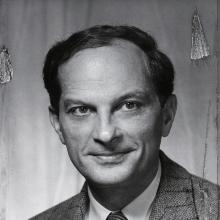
Ulam, Stanislaw Marcin was born on April 13, 1909 in Lwow, Poland. Son of Josef and Anna (Auerbach) Ulam.


Stepana Bandery St, 12, Lviv, Lviv Oblast, Ukraine, 79000
Ulam attended Lviv Polytechnic Institute (now Lviv Polytechnic National University).

1943
A group of men working on the Manhattan Project get together for an informal gathering. Stanislaw Ulam is talking to a man bent toward him.

1950
Stanislaw Ulam, pioneer in the initiation of fusion in the hydrogen bomb, manipulates a long piece of scientific equipment.

1958
Stanislaw Ulam with his colleagues.

1962
Mathematician Stanislaw Ulam posing next to the molecular model in office. (Photo by Alfred Eisenstaedt)

1969
Stanislaw Ulam and the University of Colorado faculty members.

Stanislaw Ulam with his wife.

Stanislaw Ulam

Stanislaw Ulam, Richard Feynman, and John Von Neumann.

Stanislaw Ulam

Stanislaw Ulam

Stanislaw Ulam

Stanislaw Ulam

Stanislaw Ulam

Stanislaw Ulam


1976 - 1984
1943
A group of men working on the Manhattan Project get together for an informal gathering. Stanislaw Ulam is talking to a man bent toward him.
1950
Stanislaw Ulam, pioneer in the initiation of fusion in the hydrogen bomb, manipulates a long piece of scientific equipment.
1958
Stanislaw Ulam with his colleagues.
1962
Mathematician Stanislaw Ulam posing next to the molecular model in office. (Photo by Alfred Eisenstaedt)
1969
Stanislaw Ulam and the University of Colorado faculty members.
Stanislaw Ulam with his wife.
Stanislaw Ulam
Stanislaw Ulam, Richard Feynman, and John Von Neumann.
Stanislaw Ulam
Stanislaw Ulam
Stanislaw Ulam
Stanislaw Ulam
Stanislaw Ulam
Stanislaw Ulam
Stepana Bandery St, 12, Lviv, Lviv Oblast, Ukraine, 79000
Ulam attended Lviv Polytechnic Institute (now Lviv Polytechnic National University).


(Ulam, famous for his solution to the difficulties of init...)
Ulam, famous for his solution to the difficulties of initiating fusion in the hydrogen bomb, devised the well-known Monte-Carlo method. Here he presents challenges in the areas of set theory, algebra, metric and topological spaces, and topological groups. Issues in analysis, physical systems, and the use of computers as a heuristic aid are also addressed.
https://www.amazon.com/Problems-Modern-Mathematics-Phoenix-Editions/dp/0486495833/ref=sr_1_6?dchild=1&keywords=Stanislaw+Ulam&qid=1599810503&sr=8-6
1964

(The volume begins with a discussion of problems involving...)
The volume begins with a discussion of problems involving integers in which ideas of infinity appear and proceed through the evolution of more abstract ideas about numbers and geometrical objects. The authors show how mathematicians came to consider groups of general transformations and then, looking upon the sets of such subjects as spaces, how they attempted to build theories of structures in general. Also considered here are the relations between mathematics and the empirical disciplines, the profound effect of high-speed computers on the scope of mathematical experimentation, and the question of how much mathematical progress depends on "invention" and how much on "discovery." For mathematicians, physicists, or any student of the evolution of mathematical thought, this highly regarded study offers a stimulating investigation of the essential nature of mathematics.
https://www.amazon.com/Mathematics-Logic-Dover-Books/dp/0486670856/ref=sr_1_2?dchild=1&keywords=Stanislaw+Ulam&qid=1599810503&sr=8-2
1968

(The work presented in this volume spans a period of some ...)
The work presented in this volume spans a period of some 40 years.
https://www.amazon.com/Stanislaw-Ulam-Universes-Selected-Mathematicians/dp/0262021080/ref=sr_1_4?dchild=1&keywords=Stanislaw+Ulam&qid=1599810503&sr=8-4
1974

(The autobiography of mathematician Stanislaw Ulam, one of...)
The autobiography of mathematician Stanislaw Ulam, one of the great scientific minds of the twentieth century, tells a story rich with amazingly prophetic speculations and peppered with lively anecdotes. As a member of the Los Alamos National Laboratory from 1944 on, Ulam helped to precipitate some of the most dramatic changes in the postwar world. He was among the first to use and advocate computers for scientific research, originated ideas for the nuclear propulsion of space vehicles, and made fundamental contributions to many of today's most challenging mathematical projects.
https://www.amazon.com/Adventures-Mathematician-S-M-Ulam/dp/0520071549/ref=sr_1_1?dchild=1&keywords=Stanislaw+Ulam&qid=1599810503&sr=8-1
1983
educator mathematician scientist
Ulam, Stanislaw Marcin was born on April 13, 1909 in Lwow, Poland. Son of Josef and Anna (Auerbach) Ulam.
Ulam studied mathematics at the Lviv Polytechnic Institute, getting his Doctor of Philosophy degree in 1933. His original research was in abstract mathematics, but he later became interested in a wide range of applications. He once joked he was "a pure mathematician who had sunk so low that his latest paper actually contained numbers with decimal points."
Ulam went to the United States in 1938 as a Harvard Junior Fellow. When his fellowship was not renewed, he served on the faculty at the University of Wisconsin and supported his brother. While there, in the midst of the war, Ulam joined the Manhattan Project at Los Alamos, working with von Neumann at his invitation.
While there, Ulam suggested the Monte Carlo Method for evaluating complicated mathematical integrals that arise in the theory of nuclear chain reactions. This suggestion ed to the more systematic development of Monte Carlo by von Neumann, Metropolis, and others, which greatly aided in solving many of the complex problems in creating an atomic bomb.
When President Truman announced that the United States was to develop a hydrogen bomb, Ulam began calculating whether Edward Teller's design would work. Ultimately, Ulam and fellow mathematician Cornelius Everett concluded that Teller's model would never work. The result caused tensions between Ulam and Teller. A year later, he accidentally came up with a new scheme that would prove to be a breakthrough.
After World War II, Ulam largely turned from rigorous pure mathematics to speculative and imaginative work, posing problems and making conjectures that often concerned eh application of mathematics to physics and biology. Many believed that this change was due to an attack of encephalitis in 1946 that Gian-Carlo Rota claimed changed Ulam's personality, although Ulam's widow Françoise and others rejected the idea.
Ulam took a position as chair of mathematics at the University of Colorado in 1965, but he remained a consultant at Los Alamos, dividing his time between Boulder, Colorado, and Santa Fe, New Mexico, from which he commuted to Los Alamos. Later, he and his wife spent winters in Gainesville, Florida, where he had a position with the University of Florida.
Ulam wrote a number of papers and books on aspects of mathematics. The latter included A Collection of Mathematical Problems (1960), Stanislaw Ulam: Sets, Numbers, and Universes (1974), and Adventures of a Mathematician (1976).
He died in Santa Fe on May 13, 1984.
Stanislaw Ulam was an outstanding mathematician. His research interests included set theory, topology, ergodic theory, probability, cellular automata theory, the study of nonlinear processes, the function of real variables, mathematical logic, number theory, the Monte Carlo method, hydrodynamics, and nuclear propulsion.
Ulam was a recipient of the Heritage Award, the Polish Millenium Prize and the Sierdimski Medal.
(The autobiography of mathematician Stanislaw Ulam, one of...)
1983(The volume begins with a discussion of problems involving...)
1968(Ulam, famous for his solution to the difficulties of init...)
1964(The work presented in this volume spans a period of some ...)
1974Stanislaw Ulam was born in a Polish Jewish family. But he told: "I'm an agnostic. Sometimes I muse deeply on the forces that are for me invisible. When I am almost close to the idea of God, I feel immediately estranged by the horrors of this world, which he seems to tolerate."
Ulam's political views were liberal.
Working with physicist Edward Teller, Ulam solved one major problem encountered in work on the fusion bomb by suggesting that compression was essential to explosion and that shock waves from a fission bomb could produce the compression needed. He further suggested that careful design could focus on mechanical shock waves in such a way that they would promote the rapid burning of the fusion fuel. Teller suggested that radiation implosion, rather than mechanical shock, be used to compress the thermonuclear fuel. This two-stage radiation implosion design, which became known as the Teller-Ulam configuration, led to the creation of modern thermonuclear weapons.
Ulam exploited the power of one of the earliest electronic computers - Maniac - exploring patterns of growth, non-linearity, complexity, and chaos. He discovered the idea of cellular automata, systems that can simulate a broad range of physical processes. He was among the first to realize that, with electronic computers, statistical methods can yield answers to many otherwise intractable problems. He devised a system of computation using random numbers. Through an analogy with gambling, this computational technique was dubbed the Monte Carlo method.
The method has become a standard technique in a numerical science and is found in many computational software packages. In addition to applications in physics and mathematics, it is used to solve problems in finance, social science, environmental risk assessment, linguistics, and medical diagnostics.
With Enrico Fermi and John Pasta, Ulam studied a simple mechanical problem of a line of masses linked by springs. They anticipated that the energy would be rapidly distributed to all possible modes of vibration. Instead, they found the system returned periodically to its initial state. Such behavior is different from the expected equipartition of energy. The Fermi-Pasta-Ulam (FPU) problem became a standard example of recurrence in the field of nonlinear science. This work has been described as "the birth of experimental mathematics."
Starting with the publication of his first paper as a student in 1929, Ulam was constantly writing on mathematics, publishing more than 150 mathematical papers. Some of the main areas of mathematics that he studied were set theory, topology, group theory, number theory, and graph theory. One important theorem bearing his name is the Borsuk-Ulam theorem in topology, which concerns continuous mappings on a sphere. A curious practical consequence is that, for pressure and temperature on the Earth’s surface, there must be at least one pair of antipodal points (points diametrically opposite to each other on the globe) having identical values of both pressure and temperature.
Quotations:
"The infinite we shall do right away. The finite may take a little longer."
"Whatever is worth saying, can be stated in fifty words or less."
"The mathematicians know a great deal about very little and the physicists very little about a great deal."
"Knowing what is big and what is small is more important than being able to solve partial differential equations."
"It is most important in creative science not to give up. If you are an optimist you will be willing to "try" more than if you are a pessimist."
"I am turned off when I see only formulas and symbols, and little text."
"Thoughts are steered in different ways."
"It is still an unending source of surprise for me how a few scribbles on a blackboard or on a piece of paper can change the course of human affairs."
"What exactly is mathematics? Many have tried but nobody has really succeeded in defining mathematics; it is always something else."
"One conversation centered on the ever-accelerating progress of technology and changes in the mode of human life, which gives the appearance of approaching some essential singularity in the history of the race beyond which human affairs, as we know them, could not continue."
Stanislaw Ulam was a member of different organizations and societies, such as the Mathematical Association of America, American Philosophical Society, American Mathematical Society, American Physical Society, American Academy of Arts and Sciences, National Academy of Sciences, American Association for the Advancement of Science (chairman mathematics division 1976-1984), and others.

Mathematical Association of America , United States

American Philosophical Society , United States

American Mathematical Society , United States

American Physical Society , United States

American Academy of Arts and Sciences , United States

National Academy of Sciences , United States

American Association for the Advancement of Science , United States
1976 - 1984
Stanislaw Ulam's work habits were somewhat unusual. He sometimes seemed incapable of waking early in the morning and conducted some of his best work reclining in bed. Indeed, Ulam reported that the solution to one mathematical problem, perhaps one of the greatest in modern times, came to him in a dream.
Mathematicians enjoy humorous wordplay (it has a combinatorial flavor), and Ulam is no exception. Some of his jokes are on himself, such as the time when a telephone operator asked him to "hold the wire." Ulam was in a New York phone booth, newly arrived from Poland. "Which wire should hold?" he asked in all seriousness. A programmer at Los Alamos, pretty and well‐endowed, had a habit of unfolding computer printouts ill front of Ulam and Enrico Fermi and holding them below her low‐cut blouse. "How do they look?" she would ask. "Marvelous!" Ulam would exclaim.
Stanislaw Ulam married Francoise Aron on August 19, 1941. The couple had a daughter Claire.

In the fall of 1939, Françoise met Stanislaw Ulam, a Polish mathematician lecturing at Harvard University, at her Mount Holyoke friend's party.
Honorary Doctor