

Background
JAKI, Stanley was born on August 17, 1924 in Gyor, Hungary. Son of Imre Jaki and Etelka Szabo.
http://www.amazon.com/gp/product/B01181RZQ6/?tag=2022091-20
(This new collection of writings from America's foremost a...)
This new collection of writings from America's foremost authority on the relationship between science and religion, Templeton Prize-winner Stanley L. Jaki, is an incisive overview of the intersection of science with the most fundamental areas of human culture. These essays deal, from various perspectives, with the central confrontation within modern culture of two irreconcilable philosophies of life: one centered on patterns of thinking that obey only the fashions of the moment, the other steeped in principles whose truth is not dependend on momentary preferences.
http://www.amazon.com/gp/product/1882926463/?tag=2022091-20
http://www.amazon.com/gp/product/B010EVNTD4/?tag=2022091-20
http://www.amazon.com/gp/product/0252012836/?tag=2022091-20
http://www.amazon.com/gp/product/0470991496/?tag=2022091-20

(Book by Jaki, Stanley L.)
Book by Jaki, Stanley L.
http://www.amazon.com/gp/product/0893850179/?tag=2022091-20
(Book by Stanley L. Jaki)
Book by Stanley L. Jaki
http://www.amazon.com/gp/product/0931888395/?tag=2022091-20
http://www.amazon.com/gp/product/B011SJ6XSO/?tag=2022091-20
(the author puts the words of Christ regarding the papacy ...)
the author puts the words of Christ regarding the papacy into their full biblical perspective and geographical context...a novel insight into the primacy of Peter.
http://www.amazon.com/gp/product/0937495093/?tag=2022091-20
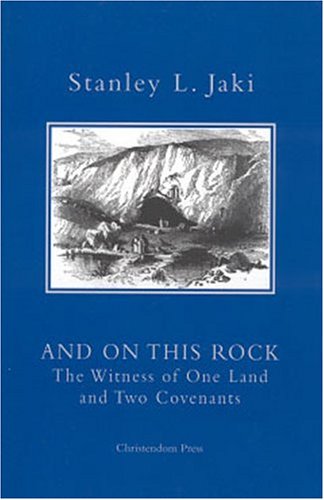
( Stanley Jaki examines the words Jesus spoke to Peter at...)
Stanley Jaki examines the words Jesus spoke to Peter at Caesar Philipi (Matthew 16:18): "Thou art Peter, and upon this rock I shall build my Church." The richness of their meaning is uncovered through Jaki's splendid discussion of the geography of biblical events and the Old Testament background to communal structure and leadership.
http://www.amazon.com/gp/product/0931888689/?tag=2022091-20

(Book by JAKI, Stanley L.)
Book by JAKI, Stanley L.
http://www.amazon.com/gp/product/0707304652/?tag=2022091-20
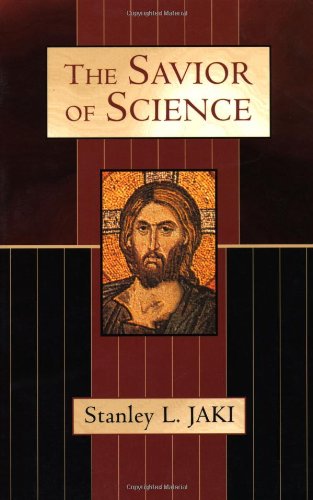
(An award-winning philosopher uncovers the Christian found...)
An award-winning philosopher uncovers the Christian foundations of modern science. Renowned historian and philosopher of science Stanley Jaki boldly illumines one of the best-kept secrets of science history— the vital role theology has historically played in fruitful scientific development. Beginning with an overview of failed attempts at a sustained science by the ancient cultures of Greece, China, India, and the early Muslim empire, Jaki shows that belief in Christ—a belief absent in all these cultures—secured for science its only viable birth starting in the High Middle Ages. In the second part of the book Jaki argues that Christian monotheism alone provides the intellectual safeguards for a valid cosmological argument, restores the sense of purpose destroyed by theories of evolution, and secures firm ethical guidelines against fearful abuses of scientific know-how.
http://www.amazon.com/gp/product/0802847722/?tag=2022091-20
http://www.amazon.com/gp/product/0707305349/?tag=2022091-20
(Book by Jaki, Stanley L.)
Book by Jaki, Stanley L.
http://www.amazon.com/gp/product/0707307244/?tag=2022091-20

http://www.amazon.com/gp/product/B0000CNIDI/?tag=2022091-20
( Two dangers confront the modern Christian regarding the...)
Two dangers confront the modern Christian regarding the apparent conflict between the role of miracles and the rigors of modern science. First, a naïveté that forces such shallow methods upon the scientific disciplines that the result is the evaporation of both reason and miracles. Second, the inherently irreligious spirit that empties the world of wonder out of homage to an outdated rationalism. Scientist and theologian Stanley Jaki makes a case for recognizing the needs of modern science and of establishing a proper understanding of the miraculous in history.
http://www.amazon.com/gp/product/0931888700/?tag=2022091-20

http://www.amazon.com/gp/product/B01181RXDG/?tag=2022091-20
http://www.amazon.com/gp/product/B00BPA1PEE/?tag=2022091-20
http://www.amazon.com/gp/product/0707302854/?tag=2022091-20
(This is the first systematic probing into perhaps the mos...)
This is the first systematic probing into perhaps the most puzzling, but least discussed fact of cultural history: the birth of science. Cultural history abounds in parallel achievements, but it happended only once, between 1250 and 1650, that rudimentary science turned into a self-sustaining enterprise. Such a singular process can hardly be without a lesson, the grasp of which might be of crucial importance for the future of mankind. To unfold this lesson the author, Stanley L. Jaki, Distinguished University Professor at Seton Hall University, New Jersey, and an internationally renowned historian and philosopher of science, first gives a detailed analysis of ancient Hindu, Chinese, Maya, Egyptian, Babylonian, and Greek cultures, all of which, especially the Greek, could boast a valuable start in science. Yet, in all of them, science suffered a stillbirth. They all failed to muster up a sufficient measure faith in progress, confidence in the rationality of the universe, appreciation of the quantitative method, and a depersonalized view of the process of motion, all qualities which are the main features of the scientific quest. Because the Koran overemphasized the will of the Creator, Muslim scholars fell prey to a mistrust in the validity of rational laws, and as a result science came to a standstill among the Arabs as well. Quite different was the case in the Christian, medieval West, where the biblical faith in the Creator permeated for the first time a whole culture and effectively produced the qualities described above. The ultimate result was the rise of classical physics. Such is the main theme of a highly original book, in which an astonishing wealth of information is marshalled to unfold, as the author states, 'the ultimate consequences of some basic presuppositions'. The work is a classic effort of synthesis, full of drama that vibrates through the long history of science.
http://www.amazon.com/gp/product/0701120231/?tag=2022091-20
(Book by Jaki, Stanley L.)
Book by Jaki, Stanley L.
http://www.amazon.com/gp/product/1897713002/?tag=2022091-20

http://www.amazon.com/gp/product/B010EWQGVA/?tag=2022091-20
http://www.amazon.com/gp/product/0226391434/?tag=2022091-20
http://www.amazon.com/gp/product/B0006C4CME/?tag=2022091-20
Physics and theology educator writer
JAKI, Stanley was born on August 17, 1924 in Gyor, Hungary. Son of Imre Jaki and Etelka Szabo.
Doctor of Systematic Theology, Istituto Pontificio di S. Anselmo, Rome, 1950. Doctor of Philosophy in Physics, Fordham University, 1957. Doctor of Laws (honorary), Center Michigan University, 1974.
Doctor of Letters (honorary), Steubenville University, 1986. Doctor of Letters (honorary), St. Anselm's College, 1988. Doctor of Letters (honorary), St. Vincent's College, 1989.
Doctor of Letters (honorary), Marquette University, 1989. Doctor of Letters (honorary), Fordham University, 1991. Doctor of Letters (honorary), Seton Hall University, 1991.
Visiting fellow program history and philosophy science, Princeton (New Jersey) U., 1960-1962;
with Institute for Advanced Study, Princeton (New Jersey) U., 1966-1967;
visiting professor Theological Seminary, Princeton (New Jersey) U., 1981;
member Center for Theological Inquiry, Princeton (New Jersey) U., 1984-1987;
member of faculty, Seton Hall U., South Orange, New Jersey, 1965-1975;
Distinguished professor, Seton Hall U., South Orange, New Jersey, since 1975. Gifford lecturer U. Edinburgh, Scotland, 1974-1976. Fremantle lecturer Balliol College, U. Oxford, England, 1977.
Macdonald lecturer U. Sydney, Australia, 1981. Farmington Institute lecturer, Oxford, 1988, 89. Visiting fellow Corpus Christi, Oxford, since 1978, Pere Marquette lecturer, 1992.
(Theology students, historians and students of the history...)
(This new collection of writings from America's foremost a...)
( Stanley Jaki examines the words Jesus spoke to Peter at...)
( Two dangers confront the modern Christian regarding the...)
(This is the first systematic probing into perhaps the mos...)
(the author puts the words of Christ regarding the papacy ...)
(Science is very much a late-corner in human history, nowa...)
(An award-winning philosopher uncovers the Christian found...)
(Book by Jaki, Stanley L.)
(Book by Jaki, Stanley L.)
(Book by Jaki, Stanley L.)
(Book by JAKI, Stanley L.)
(Book by Jaki, Stanley L.)
(Book by Jaki, Stanley L.)
(Will be shipped from US. Used books may not include compa...)
(Book by Stanley L. Jaki)
Member Pontifical Academy of Sciences, Academy National des Sciences, Belles-Lettres et Arts de Bordeaux, Olbers Gesellschaft (Bremen), Hellenic Society Humanistic Studies, History Science Society, Sigma Xi.
