

Background
Kasulis, Thomas Patrick was born on March 5, 1948 in Bridgeport, Connecticut, United States. Son of Joseph John and Albina Anna (Checkanouskas) Kasulis.
http://www.amazon.com/gp/product/B010EW60PC/?tag=2022091-20
http://www.amazon.com/gp/product/B01182GOJ4/?tag=2022091-20
http://www.amazon.com/gp/product/B00LMSGNJQ/?tag=2022091-20
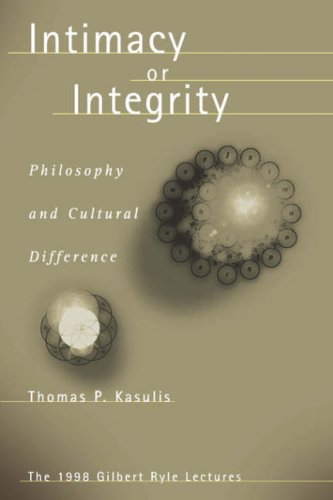
(How can I know something? How can I convince someone of t...)
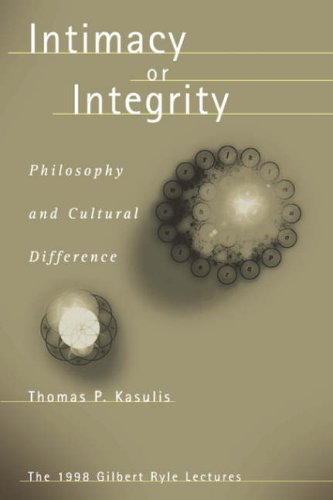
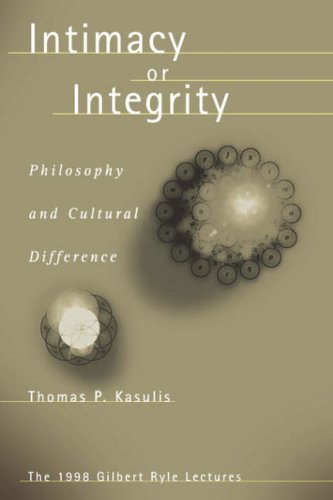
How can I know something? How can I convince someone of the rightness of my position? How does reality function? What is artistic creativity? What is the role of the state? It is well known that people from various cultures give dissimilar answers to such philosophical questions. After three decades in the cross-cultural study of ideas and values, Thomas Kasulis found that culture influences not only the answers to these questions, but often how one arrives at the answers. In generalizing cultural difference, Kasulis identifies two kinds of orientation: intimacy and integrity. Both determine how we think about relations among people and among things, and each is reasonable, effective, and consistent. Yet the two are so incompatible in their basic assumptions that they cannot successfully engage each other. Cultural difference extends beyond nations. Cultural identities crystallize in relation to religion, occupation, race, gender, class. Rather than attempt to transcend cultural difference, Kasulis urges a deeper awareness of its roots by moving beyond mere cultural relativism toward a cultural bi-orientationality that will allow us to adapt ourselves to different cultural contexts as the situation demands. Wonderfully clear and unburdened by jargon, Intimacy or Integrity is accessible to readers from a variety of perspectives and backgrounds. By analyzing the synergy between thought and culture, it increases our understanding of cultural difference and guides us in developing strategies for dealing with orientations different from our own.
http://www.amazon.com/gp/product/0824825594/?tag=2022091-20
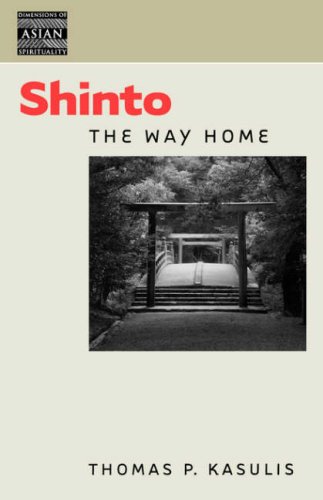
(Nine out of ten Japanese claim some affiliation with Shin...)
Nine out of ten Japanese claim some affiliation with Shinto, but in the West the religion remains the least studied of the major Asian spiritual traditions. It is so interlaced with Japanese cultural values and practices that scholarly studies usually focus on only one of its dimensions: Shinto as a "nature religion," an "imperial state religion," a "primal religion," or a "folk amalgam of practices and beliefs." Thomas Kasulis' fresh approach to Shinto explains with clarity and economy how these different aspects interrelate. As a philosopher of religion, he first analyzes the experiential aspect of Shinto spirituality underlying its various ideas and practices. Second, as a historian of Japanese thought, he sketches several major developments in Shinto doctrines and institutions from prehistory to the present, showing how its interactions with Buddhism, Confucianism, and nationalism influenced its expression in different times and contexts. In Shinto's idiosyncratic history, Kasulis finds the explicit interplay between two forms of spirituality: the "existential" and the "essentialist." Although the dynamic between the two is particularly striking and accessible in the study of Shinto, he concludes that a similar dynamic may be found in the history of other religions as well. Two decades ago, Kasulis' Zen Action/Zen Person brought an innovative understanding to the ideas and practices of Zen Buddhism, an understanding influential in the ensuing decades of philosophical Zen studies. Shinto: The Way Home promises to do the same for future Shinto studies.
http://www.amazon.com/gp/product/082482850X/?tag=2022091-20
http://www.amazon.com/gp/product/B00ZVOM5LW/?tag=2022091-20
Kasulis, Thomas Patrick was born on March 5, 1948 in Bridgeport, Connecticut, United States. Son of Joseph John and Albina Anna (Checkanouskas) Kasulis.
Bachelor, Yale University, 1970. Master of Public Health, Yale University, 1972. Doctor of Philosophy, Yale University, 1975.
Master of Arts, University Hawaii, 1973.
Assistant professor philosophy, U. Hawaii, Honolulu, 1975-1980;
from assistant professor to professor philosophy and religion, Northland College, Ashland, Wisconsin, 1981-1991;
professor comparative studies, The Ohio State University, Columbus, since 1991;
chair East Asian languages and literature, The Ohio State University, Columbus, 1993-1995;
chair comparative studies, The Ohio State University, Columbus, 1995-1998. Mellon faculty fellow in humanities Harvard University, Cambridge, Massachusetts, 1979-1980. Visiting facility researcher Osaka (Japan) U., 1982-1983.
Numata visiting professor University of Chicago, Illinois, 1988.
(How can I know something? How can I convince someone of t...)
(Nine out of ten Japanese claim some affiliation with Shin...)
Member Society for Asian and Comparative Philosophy (president 1988-1991), American Society for the Study of Religion (vice president), Society for Values in Higher Education.
Married Ellen Elizabeth Sponheimer, June 5, 1970. Children: Telemachus, Matthias, Benedict.
