

Background
Paley, Vivian Gussin was born on January 25, 1929 in Chicago, Illinois, United States. Daughter of Harry A. and Yetta M. Gussin.
http://www.amazon.com/gp/product/B012UKIJQO/?tag=2022091-20
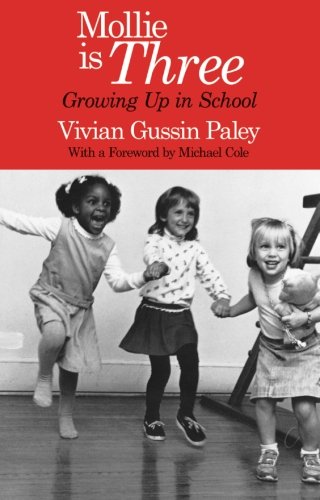
( "No adult can escape the adult perspective; but simply ...)
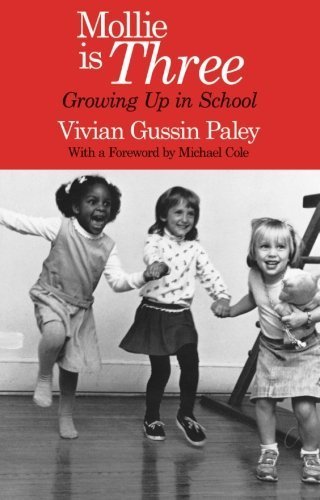
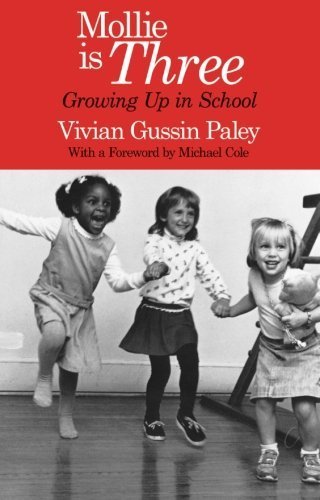
"No adult can escape the adult perspective; but simply recognizing its inevitable limitations in a children's world enables a few gifted educators to accept the existence and vilify of whole kindergartens full of different perspectives. One such person is Vivian Gussin Paley. . . . Her books. . .should be required reading wherever children are growing."—New York Times Book Review "With a delightful, almost magical touch, Paley shares her observations and insights about three-year-olds. The use of a tape recorder in the classroom gives her a second chance to hear students' thoughts from the doll corner to the playground, and to reflect on the ways in which young children make sense of the experience of school. . . . Paley lets the children speak for themselves, and through their words we reenter the world of the child in all its fantasy and inventiveness."—Harvard Educational Review "Paley's vivid and accurate descriptions depict both spontaneous and recurring incidents and outline increasingly complex interactions among the children. Included in the narrative are questions or ideas to challenge the reader to gain more insight and understanding into the motives and conceptualizations of Mollie and other children."—Karen L. Peterson, Young Children
http://www.amazon.com/gp/product/0226644944/?tag=2022091-20
http://www.amazon.com/gp/product/B00HTK3Y3Y/?tag=2022091-20
http://www.amazon.com/gp/product/B008WDMCBC/?tag=2022091-20
http://www.amazon.com/gp/product/B010WFQ5N8/?tag=2022091-20
http://www.amazon.com/gp/product/B010WHYSCQ/?tag=2022091-20
http://www.amazon.com/gp/product/B014I6UIU8/?tag=2022091-20
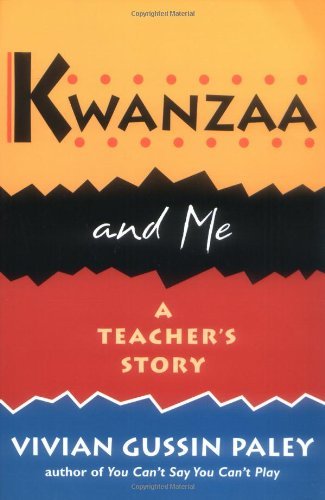
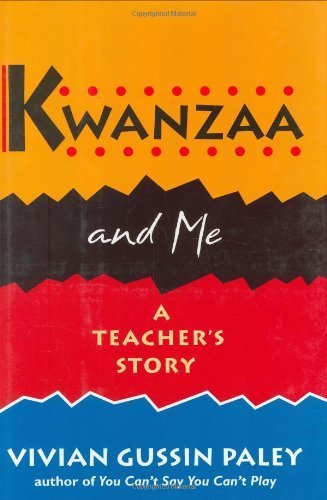
(Kwanzaa and Me : A Teachers Story by Vivian Gussin Paley....)
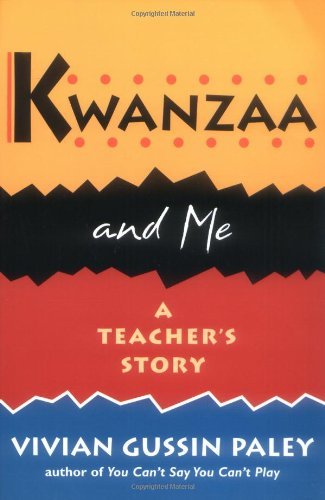
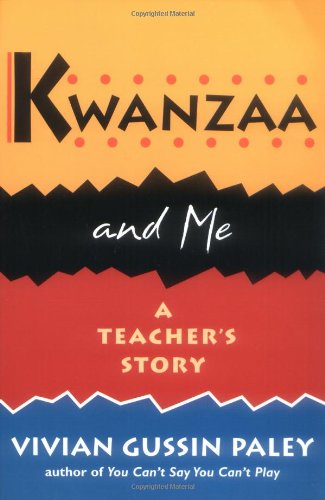
Kwanzaa and Me : A Teachers Story by Vivian Gussin Paley. Harvard University Press,1995
http://www.amazon.com/gp/product/B0047TH1AM/?tag=2022091-20
( "All these white schools I've been sent to are racist,...)
"All these white schools I've been sent to are racist," Sonya says. "I'd have done better in a black school. I was an outsider here." These are hard words for Vivian Paley, whose own kindergarten was one of Sonya's schools, the integrated classroom so lovingly and hopefully depicted by Paley in White Teacher. Confronted with the grown-up Sonya, now on her way to a black college, and with a chorus of voices questioning the fairness and effectiveness of integrated education, Paley sets out to discover the truth about the multicultural classroom from those who participate in it. This is an odyssey undertaken on the wings of conversation and storytelling in which every voice adds new meaning to the idea of belonging, really belonging, to a school culture. Here are black teachers and minority parents, immigrant families, a Native American educator, and the children themselves, whose stories mingle with the author's to create a candid picture of the successes and failures of the integrated classroom. As Paley travels the country listening to these stories, we see what lies behind recent moves toward self-segregation: an ongoing frustration with racism as well as an abiding need for a nurturing community. And yet, among these diverse voices, we hear again and again the shared dream of a classroom where no family heritage is obscured and every child's story enriches the life of the schoolhouse. "It's all about dialogue, isn't it?" asks Lorraine, a black third-grade teacher whose story becomes a central motif. And indeed, it is the dialogue that prevails in this warmly provocative and deeply engaging book, as parents and teachers learn how they must talk to each other, and to their children, if every child is to secure a sense of self in the schoolroom, no matter what the predominant ethnic background. Vivian Paley offers these discoveries to readers as a starting point for their own journeys toward community and kinship in today's schools and tomorrow's culture.
http://www.amazon.com/gp/product/0674505867/?tag=2022091-20

http://www.amazon.com/gp/product/B010TS2F5A/?tag=2022091-20

http://www.amazon.com/gp/product/B006WHHFE4/?tag=2022091-20
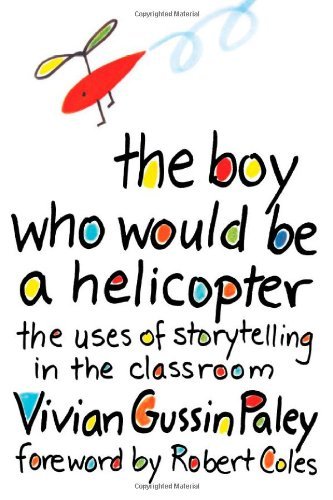
( How does a teacher begin to appreciate and tap the ric...)
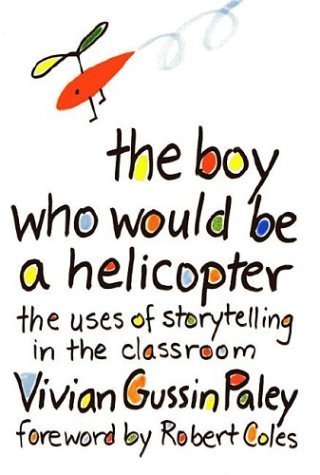
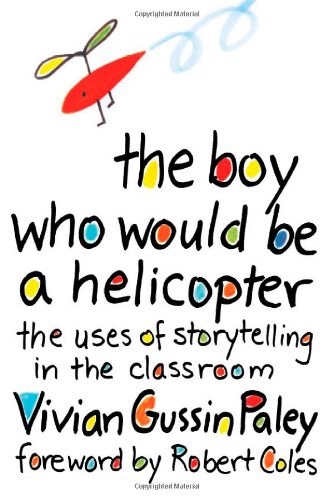
How does a teacher begin to appreciate and tap the rich creative resources of the fantasy world of children? What social functions do story playing and storytelling serve in the preschool classroom? And how can the child who is trapped in private fantasies be brought into the richly imaginative social play that surrounds him? The Boy Who Would Be a Helicopter focuses on the challenge posed by the isolated child to teachers and classmates alike in the unique community of the classroom. It is the dramatic story of Jason-the loner and outsider-and of his ultimate triumph and homecoming into the society of his classmates. As we follow Jason's struggle, we see that the classroom is indeed the crucible within which the young discover themselves and learn to confront new problems in their daily experience. Vivian Paley recreates the stage upon which children emerge as natural and ingenious storytellers. She supplements these real-life vignettes with brilliant insights into the teaching process, offering detailed discussions about control, authority, and the misuse of punishment in the preschool classroom. She shows a more effective and natural dynamic of limit-setting that emerges in the control children exert over their own fantasies. And here for the first time the author introduces a triumvirate of teachers (Paley herself and two apprentices) who reflect on the meaning of events unfolding before them.
http://www.amazon.com/gp/product/0674080319/?tag=2022091-20
http://www.amazon.com/gp/product/B003UYWU1A/?tag=2022091-20
http://www.amazon.com/gp/product/B010TS80TU/?tag=2022091-20
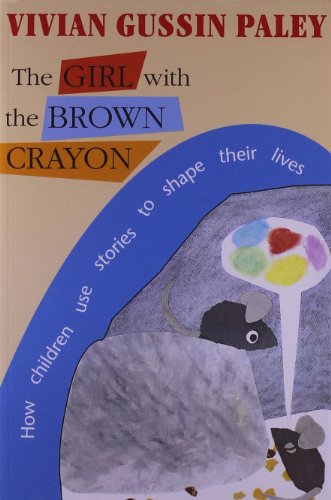
( Once again Vivian Paley takes us into the inquiring mi...)
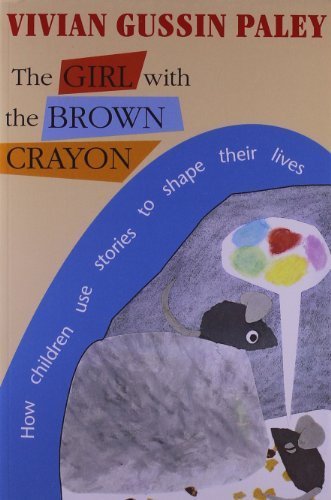
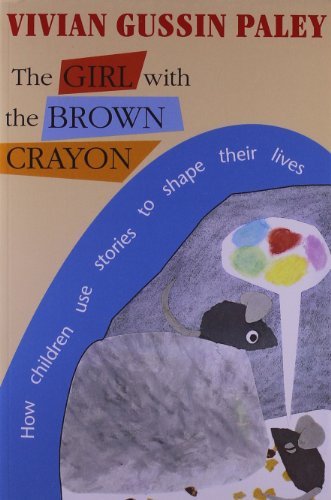
Once again Vivian Paley takes us into the inquiring minds and the dramatic worlds of young children learning in the kindergarten classroom. As she enters her final year of teaching, Paley tells in this book a story of farewell and a story of self-discovery--through the thoughts and blossoming spirit of Reeny, a little girl with a fondness for the color brown and an astonishing sense of herself. "This brown girl dancing is me," Reeny announces, as her crayoned figures flit across the classroom walls. Soon enough we are drawn into Reeny's remarkable dance of self-revelation and celebration, and into the literary turn it takes when Reeny discovers a kindred spirit in Leo Lionni--a writer of books and a teller of tales. Led by Reeny, Paley takes us on a tour through the landscape of characters created by Lionni. These characters come to dominate a whole year of discussion and debate, as the children argue the virtues and weaknesses of Lionni's creations and his themes of self-definition and an individual's place in the community. The Girl with the Brown Crayon tells a simple personal story of a teacher and a child, interweaving the themes of race, identity, gender, and the essential human needs to create and to belong. With characteristic charm and wonder, Paley discovers how the unexplored territory unfolding before her and Reeny comes to mark the very essence of school, a common core of reference, something to ponder deeply and expand on extravagantly.
http://www.amazon.com/gp/product/0674354427/?tag=2022091-20
http://www.amazon.com/gp/product/B014I8QQ8E/?tag=2022091-20
http://www.amazon.com/gp/product/B014I8QEC2/?tag=2022091-20
http://www.amazon.com/gp/product/B0140ENPFS/?tag=2022091-20
http://www.amazon.com/gp/product/B00HTKCPZC/?tag=2022091-20
(Vivian Paley presents a moving personal account of her ex...)
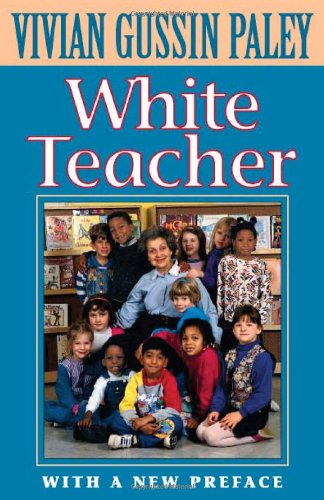
Vivian Paley presents a moving personal account of her experiences teaching kindergarten in an integrated school within a predominantly white, middle-class neighborhood. In a new preface, she reflects on the way that even simple terminology can convey unintended meanings and show a speaker's blind spots. She also vividly describes what her readers have taught her over the years about herself as a "white teacher."
http://www.amazon.com/gp/product/0674002733/?tag=2022091-20
(Girl with the Brown Crayon : How Children Use Stories to ...)
Girl with the Brown Crayon : How Children Use Stories to Shape Their Lives by Vivian Gussin Paley. Harvard University Press,1997
http://www.amazon.com/gp/product/B004HOO02E/?tag=2022091-20
http://www.amazon.com/gp/product/B0140ENL84/?tag=2022091-20

http://www.amazon.com/gp/product/B008UYWDAI/?tag=2022091-20

( Visiting a London nursery school, Vivian Paley observe...)
Visiting a London nursery school, Vivian Paley observes the schoolchildren's reception of another visitor, a handicapped boy named Teddy, who is strapped into a wheelchair, wearing a helmet, and barely able to speak. A predicament arises, and the children's response--simple and immediate--offers Paley the purest evidence of kindness she has ever seen. In subsequent encounters, "the Teddy story" draws forth other tales of impulsive goodness from Paley's listeners. Just so, it resonates through this book as one story leads to another--taking surprising turns, intersecting with the narrative unfolding before us, and illuminating the moral meanings that children may be learning to create among themselves. Paley's journey takes us into the different worlds of urban London, Chicago, Oakland, and New York City, and to a close-knit small town in Michigan's Upper Peninsula. Her own story connects those of children from nursery school to high school, and circles back to her elderly mother, whose experiences as a frightened immigrant girl, helped through a strange school and a new language by another child, reappear in the story of a young Mexican American girl. Thus the book quietly brings together the moral life of the very young and the very old. With her characteristic unpretentious charm, Paley lets her listeners and storytellers take us down unexpected paths, where the meeting of story and real life make us wonder: Are children wiser about the nature of kindness than we think they are?
http://www.amazon.com/gp/product/067400390X/?tag=2022091-20

http://www.amazon.com/gp/product/B010TSD0FE/?tag=2022091-20
Paley, Vivian Gussin was born on January 25, 1929 in Chicago, Illinois, United States. Daughter of Harry A. and Yetta M. Gussin.
Bachelor, University Chicago, 1947. Bachelor, Newcomb College, New Orleans, 1951. Master of Arts, Hofstra University, New York, 1961.
Doctor of Philosophy (honorary), Lewis and Clark University, Portland, Oregon, 2007. Doctor of Philosophy (honorary), Erikson Institute, Chicago, 2007.
Teacher Great Neck Public School, New York, 1963—1970, University Chicago, 1971—1995.
( How does a teacher begin to appreciate and tap the ric...)
( "No adult can escape the adult perspective; but simply ...)
( Visiting a London nursery school, Vivian Paley observe...)
(Vivian Paley presents a moving personal account of her ex...)
( Once again Vivian Paley takes us into the inquiring mi...)
(Girl with the Brown Crayon : How Children Use Stories to ...)
( "All these white schools I've been sent to are racist,...)
(Kwanzaa and Me : A Teachers Story by Vivian Gussin Paley....)
Married Irving O. Paley. Children: David, Robert.
