Background
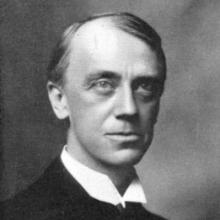
Walter Williams was born on July 2, 1864, at Boonville, Missouri, youngest of the six sons of Marcus Williams and Mary Jane Littlepage.


(Unlike some other reproductions of classic texts (1) We h...)
Unlike some other reproductions of classic texts (1) We have not used OCR(Optical Character Recognition), as this leads to bad quality books with introduced typos. (2) In books where there are images such as portraits, maps, sketches etc We have endeavoured to keep the quality of these images, so they represent accurately the original artefact. Although occasionally there may be certain imperfections with these old texts, we feel they deserve to be made available for future generations to enjoy.
https://www.amazon.com/Worlds-Journalism-Williams-Walter-1864-1935/dp/1313610445?SubscriptionId=AKIAJRRWTH346WSPOAFQ&tag=prabook-20&linkCode=sp1&camp=2025&creative=165953&creativeASIN=1313610445

( This work has been selected by scholars as being cultur...)
This work has been selected by scholars as being culturally important, and is part of the knowledge base of civilization as we know it. This work was reproduced from the original artifact, and remains as true to the original work as possible. Therefore, you will see the original copyright references, library stamps (as most of these works have been housed in our most important libraries around the world), and other notations in the work. This work is in the public domain in the United States of America, and possibly other nations. Within the United States, you may freely copy and distribute this work, as no entity (individual or corporate) has a copyright on the body of the work. As a reproduction of a historical artifact, this work may contain missing or blurred pages, poor pictures, errant marks, etc. Scholars believe, and we concur, that this work is important enough to be preserved, reproduced, and made generally available to the public. We appreciate your support of the preservation process, and thank you for being an important part of keeping this knowledge alive and relevant.
https://www.amazon.com/Press-Congress-World-Hawaii/dp/1371916470?SubscriptionId=AKIAJRRWTH346WSPOAFQ&tag=prabook-20&linkCode=sp1&camp=2025&creative=165953&creativeASIN=1371916470

( This work has been selected by scholars as being cultur...)
This work has been selected by scholars as being culturally important, and is part of the knowledge base of civilization as we know it. This work was reproduced from the original artifact, and remains as true to the original work as possible. Therefore, you will see the original copyright references, library stamps (as most of these works have been housed in our most important libraries around the world), and other notations in the work. This work is in the public domain in the United States of America, and possibly other nations. Within the United States, you may freely copy and distribute this work, as no entity (individual or corporate) has a copyright on the body of the work. As a reproduction of a historical artifact, this work may contain missing or blurred pages, poor pictures, errant marks, etc. Scholars believe, and we concur, that this work is important enough to be preserved, reproduced, and made generally available to the public. We appreciate your support of the preservation process, and thank you for being an important part of keeping this knowledge alive and relevant.
https://www.amazon.com/Eloquent-South-Handbook-Southern-Oratory/dp/1362087769?SubscriptionId=AKIAJRRWTH346WSPOAFQ&tag=prabook-20&linkCode=sp1&camp=2025&creative=165953&creativeASIN=1362087769

( This work has been selected by scholars as being cultur...)
This work has been selected by scholars as being culturally important, and is part of the knowledge base of civilization as we know it. This work was reproduced from the original artifact, and remains as true to the original work as possible. Therefore, you will see the original copyright references, library stamps (as most of these works have been housed in our most important libraries around the world), and other notations in the work. This work is in the public domain in the United States of America, and possibly other nations. Within the United States, you may freely copy and distribute this work, as no entity (individual or corporate) has a copyright on the body of the work. As a reproduction of a historical artifact, this work may contain missing or blurred pages, poor pictures, errant marks, etc. Scholars believe, and we concur, that this work is important enough to be preserved, reproduced, and made generally available to the public. We appreciate your support of the preservation process, and thank you for being an important part of keeping this knowledge alive and relevant.
https://www.amazon.com/Missouri-Autobiography-Walter-1864-1935-Williams/dp/1371416893?SubscriptionId=AKIAJRRWTH346WSPOAFQ&tag=prabook-20&linkCode=sp1&camp=2025&creative=165953&creativeASIN=1371416893

( This work has been selected by scholars as being cultur...)
This work has been selected by scholars as being culturally important, and is part of the knowledge base of civilization as we know it. This work was reproduced from the original artifact, and remains as true to the original work as possible. Therefore, you will see the original copyright references, library stamps (as most of these works have been housed in our most important libraries around the world), and other notations in the work. This work is in the public domain in the United States of America, and possibly other nations. Within the United States, you may freely copy and distribute this work, as no entity (individual or corporate) has a copyright on the body of the work. As a reproduction of a historical artifact, this work may contain missing or blurred pages, poor pictures, errant marks, etc. Scholars believe, and we concur, that this work is important enough to be preserved, reproduced, and made generally available to the public. We appreciate your support of the preservation process, and thank you for being an important part of keeping this knowledge alive and relevant.
https://www.amazon.com/Civil-Government-Isidor-1868-1954-Loeb/dp/136123170X?SubscriptionId=AKIAJRRWTH346WSPOAFQ&tag=prabook-20&linkCode=sp1&camp=2025&creative=165953&creativeASIN=136123170X

( This work has been selected by scholars as being cultur...)
This work has been selected by scholars as being culturally important, and is part of the knowledge base of civilization as we know it. This work was reproduced from the original artifact, and remains as true to the original work as possible. Therefore, you will see the original copyright references, library stamps (as most of these works have been housed in our most important libraries around the world), and other notations in the work. This work is in the public domain in the United States of America, and possibly other nations. Within the United States, you may freely copy and distribute this work, as no entity (individual or corporate) has a copyright on the body of the work. As a reproduction of a historical artifact, this work may contain missing or blurred pages, poor pictures, errant marks, etc. Scholars believe, and we concur, that this work is important enough to be preserved, reproduced, and made generally available to the public. We appreciate your support of the preservation process, and thank you for being an important part of keeping this knowledge alive and relevant.
https://www.amazon.com/Practice-Journalism-Treatise-Newspaper-Making/dp/1373592850?SubscriptionId=AKIAJRRWTH346WSPOAFQ&tag=prabook-20&linkCode=sp1&camp=2025&creative=165953&creativeASIN=1373592850

( This work has been selected by scholars as being cultur...)
This work has been selected by scholars as being culturally important, and is part of the knowledge base of civilization as we know it. This work was reproduced from the original artifact, and remains as true to the original work as possible. Therefore, you will see the original copyright references, library stamps (as most of these works have been housed in our most important libraries around the world), and other notations in the work. This work is in the public domain in the United States of America, and possibly other nations. Within the United States, you may freely copy and distribute this work, as no entity (individual or corporate) has a copyright on the body of the work. As a reproduction of a historical artifact, this work may contain missing or blurred pages, poor pictures, errant marks, etc. Scholars believe, and we concur, that this work is important enough to be preserved, reproduced, and made generally available to the public. We appreciate your support of the preservation process, and thank you for being an important part of keeping this knowledge alive and relevant.
https://www.amazon.com/Eloquent-South-Handbook-Southern-Oratory/dp/1362090247?SubscriptionId=AKIAJRRWTH346WSPOAFQ&tag=prabook-20&linkCode=sp1&camp=2025&creative=165953&creativeASIN=1362090247
Walter Williams was born on July 2, 1864, at Boonville, Missouri, youngest of the six sons of Marcus Williams and Mary Jane Littlepage.
Williams attended the Boonville high school.
After leaving school he worked as an apprentice printer for the Boonville Topic, which was taken over by the Advertiser a few years later. Before he was twenty he and other employees purchased the Advertiser, and Williams became editor.
His precocious talent for impressing others with his character and ability led to his election as president of the State Press Association in 1887.
In 1890 he became editor of the Columbia Herald, published by E. W. Stephens. From then until 1908 he served as editor of this successful country paper, and for short periods he also edited the Country Editor, the St. Louis Presbyterian, and the Daily State Tribune of Jefferson City. Williams's great personal charm and his ability as an organizer as well as the reputation he created for the Herald were responsible for his election to the presidency of the National Editorial Association in 1895.
In 1899 he was appointed a member of the board of curators of the University of Missouri, and he served as chairman of its executive committee for many years. As such he took over many of the functions of the presidency during the last years (1905 - 1908) of President Richard H. Jesse's incumbency. In the meantime the State Press Association had been petitioning the legislature to establish a chair or school of journalism at the university. A school was established in 1908 and Williams was chosen as the first dean - a fitting selection because he was a successful editor, whose experience in university administration made up for his lack of academic training. For his first faculty he chose two practising journalists from metropolitan papers.
Opening in 1908 as the first professional school of journalism, it attracted wide attention in the press and in university circles. As its guiding spirit, Williams insisted that the educational program should reproduce as nearly as possible the apprentice experience obtained in a good newspaper office and connect this experience with standard course work in the social sciences and humanities. From the beginning the publication of a typical newspaper, as a laboratory project, was the distinguishing characteristic of the school. Although other colleges and universities had taught journalism courses earlier than this, Williams's school at Missouri was the first to place that training on a professional level, and its plan vastly influenced other schools and departments which were subsequently established. Williams's retirement from his editorship did not separate him from his profession.
He served as president of the Press Congress of the World from 1915 to 1925, and was chosen as the first president of the American Association of Schools and Departments of Journalism, organized in 1916. His influence on the press was principally through the young men and women he taught who became members of the profession. Aside from his emphasis upon the practical aspects of journalism, he infused all who would listen with high ideals and a faith in the possibilities of a great press to lead in creating a great society. For the profession as a whole he wrote "The Journalist's Creed, " an oath of Hippocrates for newspaper men. His students found him a canny adviser and guide who could overlook errors and encourage even faintly discernible qualities of real worth. He did not confine his activities to editorial work and teaching journalism but lived to the full the life of his day and community. There were few activities in which he did not participate. For several years his Sunday-school class in the Presbyterian Church at Columbia was the largest in Missouri, if not the United States; the service clubs, the Freemasons, and the state and local governments called freely upon his services. He was a popular public speaker, especially regarded for his after-dinner oratory and for his wit as a toastmaster. He had a gift of epigrammatic statement, which he used with good effect both in speaking and writing. His interest in history, especially local history, led him to assist in founding the State Historical Society of Missouri and to be active in its management until his death.
To this interest he devoted considerable effort, writing or collaborating in writing a number of books on the subject. Other publications of his include Some Saints and Sinners in the Holy Land (1902); Eloquent Sons of the South (1909); Law in Shakespeare (1910); The Practice of Journalism (1911), with F. L. Martin; Legal Antiquities (1911); The World's Journalism (1915). He loved foreign travel, and saw every continent before his death, some several times. His interest in journalism education accompanied him, and he served as exchange professor to various foreign universities.
He assisted in the establishment of the journalism department of Yenching University at Peiping, China, and before the Japanese attack on China, students and professors were regularly exchanged between this department and the School of Journalism at the University of Missouri.
In 1930, although he had never attended a college, he became president of the University of Missouri at a time when that institution was badly in need of a leadership that had the confidence of the state. This he supplied, bringing the university through the early years of the depression in a remarkably efficient manner. His health broke down completely before his resignation and he died on July 29, 1935, of a complication of ailments a month later, in his seventy-second year.
Walter Williams was one of the most influential journalists, who founded the world’s first school of journalism at the University of Missouri. Walter Williams never attended college, although honorary degrees were conferred upon him by Missouri Valley College in 1900; Kansas State University in 1909 and Washington University in 1926. Before his death, he was initiated as an honorary brother of the Acacia Fraternity. A new journalism building on the Columbia, Missouri campus was named for him in 1936. A World War II Liberty ship, SS Walter Williams (hull MC No. 2291), launched in 1943 was named in his honor. Williams has a group of scholars named after him at the University of Missouri, who are journalism students directly admitted to the journalism program. The Walter Williams Club is the name of the alumni association of University of Missouri Journalism School graduates.
(Unlike some other reproductions of classic texts (1) We h...)
( This work has been selected by scholars as being cultur...)
( This work has been selected by scholars as being cultur...)
( This work has been selected by scholars as being cultur...)
( This work has been selected by scholars as being cultur...)
( This work has been selected by scholars as being cultur...)
( This work has been selected by scholars as being cultur...)
Though his height was only average, his erect carriage made him appear to be tall. A protruding lower lip, together with a peculiar light from his eyes, gave him the appearance of a very merry, albeit stately and dignified, old philosopher.
On June 30, 1892, Walter Williams married Hulda Blanford Harned, by whom he had three children.
On October 22, 1927, he married Sara Lawrence Lockwood, ssistant professor in the department of journalism at the University of Missouri.