

Background
He was born in Newtownards, County Down.

http://www.amazon.com/gp/product/B01K91EAYG/?tag=2022091-20

http://www.amazon.com/gp/product/B011T7H3AC/?tag=2022091-20
http://www.amazon.com/gp/product/B01FELML7Y/?tag=2022091-20
( Daft Eddie; or, the Smugglers of Strangford Lough: A Ta...)
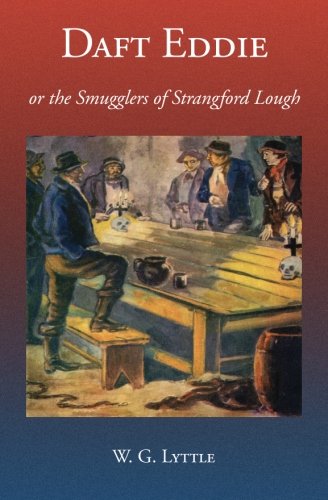
Daft Eddie; or, the Smugglers of Strangford Lough: A Tale of Killinchy first appeared as a serial in the author’s own newspaper, the North Down Herald and Bangor Gazette, in 1889. Based on actual events in the Ards peninsula, County Down, during the Eighteenth Century, it tells the tale of a band of local smugglers that went by the name of ‘The Merry Hearts of Down’. But its criminal activities extended well beyond mere smuggling, and in his novel Lyttle relates a story of kidnap, extortion and murder. The eponymous hero, Eddie, is a simple lad from Mahee Island in Strangford Lough who shadows the gang’s every move and aids in the search for an abducted magistrate and his daughter. This new edition includes an introduction to the author and his work, additional footnotes, and a glossary of words used in the dialogue.
http://www.amazon.com/gp/product/1910375233/?tag=2022091-20
( More than two centuries after the 1798 rebellion in Ire...)
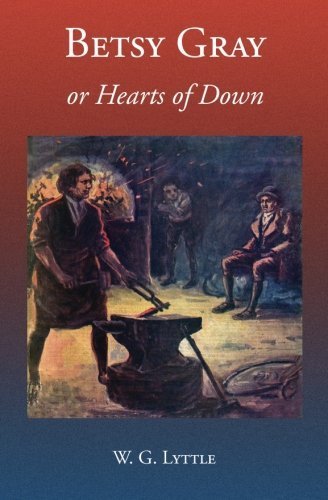
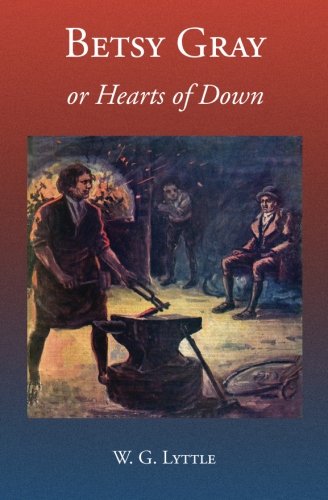
More than two centuries after the 1798 rebellion in Ireland the legend of Betsy Gray still refuses to die. The story remains as compelling as ever. In the company of her brother George, and her lover, Willy Boal, she is reputed to have ridden into the Battle of Ballynahinch wearing a green silk dress and brandishing a brightly burnished sword; but who she really was, where she came from, or even if she ever existed at all, are questions of contention yet. Whereas W. G. Lyttle’s novel Betsy Gray, first published in 1888, is not entirely historical, the author was evidently convinced of her identity and that she came from Gransha, near Bangor, County Down. Whatever the truth, his account of events in the area before, during and after the rising, based largely on interviews he conducted with locals whose relatives had suffered in it, continues to grip the imagination today. This new edition includes an introduction to the author and his work, an essay on the legend of Betsy Gray, additional footnotes and a glossary of words used in the dialogue.
http://www.amazon.com/gp/product/1910375217/?tag=2022091-20
He was born in Newtownards, County Down.
He worked as a junior reporter, schoolteacher, and editor, among other occupations. He was well known as an entertainer, often in the guise of his alter-ego "Robin", a jovial country farmer who regaled his audiences in Ulster-Scots dialect. Foreign most of the 1870s Lyttle lived in Belfast where he began to write and perform his humorous monologues.
From 1880 he owned and edited the North Down Herald.
Lyttle moved the newspaper to Bangor in 1883 where it became the North Down Herald and Bangor Gazette, a strong Liberal and Home Rule paper. He published his humorous monologues as Robin’s Readings and continued to give public performances.
Lyttle is probably best remembered today for his novel Betsy Gray, or, The Hearts of Down. lieutenant first appeared in serial form in the Herald, beginning on 7 November 1885.
Lyttle provides a vivid, if not entirely historically accurate, account of the Rebellion in County Down, and the events immediately leading up to the insurrection.
His name is usually given as Wesley Guard Lyttle, due to an error in his obituary in the Belfast News-Letter, 2 November 1896.
( Daft Eddie; or, the Smugglers of Strangford Lough: A Ta...)
( More than two centuries after the 1798 rebellion in Ire...)
