Background
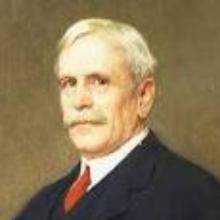
William Rutherford Mead was born on August 20, 1846 in Brattleboro, Vermont. He was the son of Larkin Goldsmith and Mary Jane (Noyes) Mead.


https://www.amazon.com/Recent-Present-Partners-McKim-Architects/dp/1258804646?SubscriptionId=AKIAJRRWTH346WSPOAFQ&tag=prabook-20&linkCode=sp1&camp=2025&creative=165953&creativeASIN=1258804646

(McKim, Mead & White is the best-known architecture firm o...)
McKim, Mead & White is the best-known architecture firm of late nineteenth and early twentieth century America, having built many iconic buildings of America's Gilded Age, from Columbia University and Boston Public Library, to mansions for the nineteenth century's wealthiest, including Frederick Vanderbilt, John Jacob Astor, Henry Frick, J.P. Morgan, and Andrew Carnegie (now the Cooper Hewitt, Smithsonian Design Museum), as well as the American Academy in Rome. Selected Works of McKim, Mead & White, published in association with the Institute of Classical Architecture & Art, collects the work of these important architects during their most prolific period, condensing four volumes into one magnificent edition.
https://www.amazon.com/Selected-Works-McKim-White-1879-1915/dp/1616897570?SubscriptionId=AKIAJRRWTH346WSPOAFQ&tag=prabook-20&linkCode=sp1&camp=2025&creative=165953&creativeASIN=1616897570
William Rutherford Mead was born on August 20, 1846 in Brattleboro, Vermont. He was the son of Larkin Goldsmith and Mary Jane (Noyes) Mead.
Mead spent two years at Norwich University, Northfield, Vermont, and graduated from Amherst College in 1867.
Having been influenced toward architecture by his admiration for the classical Capitol of Vermont at Montpelier, Mead spent a year in an engineer's office, and, in July 1868, entered the office of Russell Sturgis, architect, in New York as a paid student. There he was under the guidance of George Fletcher Babb, who afterwards became a formative influence in the firm of McKim, Mead & White, and a life-long friend of the three partners. In 1871 Mead went to Florence for a year and a half, living with his brother, Larkin G. Mead, the sculptor, and continuing his studies in the Academia de Belle Arte, where his interest in Renaissance architecture developed. Returning in the autumn of 1872, Mead fell in with C. F. McKim. For five years they shared an office at 57 Broadway and helped each other. In 1878 they formed a partnership under the name of McKim, Mead & Bigelow; in 1879, Stanford White took the place of William B. Bigelow. In the firm of McKim, Mead & White, Mead managed the office, often conceived the basic scheme of the plan (as in the Capitol at Providence), and acted efficiently as critic of the designs of both his creative partners, who were bent primarily on producing works of art. The association was a companionship both in and out of business hours and Mead's influence was potent. He was especially helpful to the multitude of young men who got their early training in that office. On the death of McKim in 1909, Mead took up his partner's work as president of the American Academy in Rome, an institution founded after the World's Columbian Exposition (Chicago, 1893) to give to American students of the fine arts opportunity to become familiar, under competent direction, with the masterpieces of all time, and thus to prepare them to solve the problems their own practice would present, and especially to train their appreciation of beauty as the fundamental requirement in works of dignity and permanence. Mead died in Paris and his body was placed with his brother Larkin's in the American Cemetery in Florence.
Mead was one of the founders of the McKim, Mead, and White, a noted Gilded Age architectural firm. For eighteen years, Mead was the stabilizing influence in the American Academy in Rome, the fast-growing and expanding institution, for the training of architects, painters, sculptors, landscape architects, and musicians. A loyal alumnus of Amherst, he had a large part in replanning and rebuilding the college along the lines of effective amenity; he left a considerable fund to foster the artistic side of education.
(McKim, Mead & White is the best-known architecture firm o...)
On November 13, 1884, he married, at Budapest, Olga Kilyeni, whom he had known in New York. They had no children.
1795 - 6 July 1869
1806 - 24 August 1876
21 January 1833 - 19 August 1899
19 March 1848 - 21 May 1890
3 January 1835 - 15 October 1910
1850 - 18 April 1936
August 24, 1847 – September 14, 1909 Was an American Beaux-Arts architect of the late 19th century.
November 9, 1853 – June 25, 1906 Was an American architect and partner in the architectural firm McKim, Mead & White, the frontrunner among Beaux-Arts firms.