Background
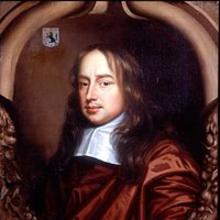
William Pierrepont was born about 1607. He was the second son of Robert Pierrepont, 1st Earl of Kingston.

William Pierrepont was born about 1607. He was the second son of Robert Pierrepont, 1st Earl of Kingston.
Returned to the Long Parliament in 1640 as member for Great Wenlock, he threw his influence on the side of peace and took part for the parliament in the negotiations with Charles I at Oxford in 1643.
Pierrepont was a member of the committee of both kingdoms, and represented the parliamentary party during the deliberations at Uxbridge in 1645, but from that time, according to Clarendon. Pierrepont favoured the resumption of negotiations with the king in 1647, and in the following year his efforts on behalf of peace at Newport, where again he represented the parliamentarians, brought upon him some slight censure from Cromwell. For his services at Newport he was thanked by parliament, but he retired from active political life soon afterwards, as he disliked the "purging" of the House of Commons by Colonel Pride and the proceedings against the king.
In spite of his moderate views Pierrepont enjoyed the personal friendship of Cromwell, but, although elected, he would not sit in the parliament of 1656, nor would he take the place offered to him in the Protector’s House of Lords. When Richard Cromwell succeeded his father, Pierrepont was an unobtrusive but powerful influence in directing the policy of the government, and after a short period of retirement in Richard’s fall he was chosen, early in 1660, a member of the council of state. He represented Nottinghamshire in the Convention Parliament of 1660, and probably was instrumental in saving the lives of some of the parliamentary leaders. At the general election of 1661 he was defeated, and, spending the remainder of his life in retirement, he died in 1678.
A moderately active Member, he made 16 other speeches, and was probably appointed to 36 committees. He took part in drawing up the instructions, the directions for the army, navy and revenue commissioners, the letter of congratulation to the King on his safe arrival, and the petition for a day of public thanksgiving. He helped to manage a conference on the queen mother’s jointure and two on the indemnity bill, and to prepare for conferences on three orders issued by the Lords and on army and navy debts. He was twice sent to accompany the Privy Councillors on messages to the King. He was appointed to the revenue committee on 31 July, and was one of the Members ordered to raise a loan of £100, 000 in the City.
He supported the Parliamentary cause in the English Civil War.
Pierrepont married Elizabeth, daughter of Sir Thomas Harris, Bart. , of Tong Castle, Shropshire, by whom he had five sons and five daughters. His eldest son, Robert (d. 1666), was the father of Robert, 3rd earl, William, 4th earl, and Evelyn, 1st duke of Kingston, and his third son, Gervase (1649–1715), was created in 1714 baron Pierrepont of Hanslope, a title which became extinct on his death.
1st earl of Kingston
1st Duke of Kingston-upon-Hull
3rd Earl of Kingston-upon-Hull
4th Earl of Kingston-upon-Hull
Baron Pierrepont of Hanslope