Background
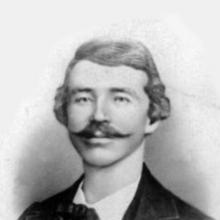
Quantrill was born in Canal Dover, Ohio, the eldest of twelve children of Thomas Henry Quantrill, who came from Hagerstown, Maryland, and Caroline Cornelia Clarke, a native of Chambersburg, Pennsylvania. Four of the children died in infancy. His father died of tuberculosis in 1854, leaving the family heavily in debt; his mother then operated their home as a boarding house to support the household.
The family lived in poverty after his father's death. Quantrill left home in 1855 for Mendota, Illinois, and later returned to Ohio before heading west with settlers in 1857.
Education
Quantrill received schooling for brief periods in Ohio and Illinois. He later taught school in Ohio when he was sixteen, continued teaching after leaving home for Mendota, Illinois, and taught in Fort Wayne, Indiana, from February 1856. He returned to Canal Dover late that year. His subsequent teaching in Lawrence, Kansas, continued until the schoolhouse closed in 1860.
Career
Quantrill supported his family by teaching school in Ohio and continued teaching after leaving home for Mendota, Illinois, in 1855. There he also unloaded timber from rail cars in local lumberyards. Authorities briefly arrested him for murder after a man was killed; Quantrill maintained that he had acted in self-defense, and he was released because there were no eyewitnesses. Police urged him to leave town. He taught in Fort Wayne, Indiana, from February 1856 and returned to Canal Dover late that year.
In February 1857, Quantrill left Ohio with Henry Torrey and Harmon Beeson, who agreed to pay for his land in return for his work. They settled by the Marais des Cygnes River in Kansas Territory. After a dispute over the claim, Quantrill sued the two men and received a court award of $63, of which he was paid half. He later stole oxen, firearms, and blankets from Beeson; he was caught and returned the oxen and weapons, while the blankets were recovered only after they had rotted. Beeson became hostile, although Quantrill remained friends with Torrey. Quantrill subsequently joined hometown friends seeking to settle near Tuscarora Lake, but neighbors accused him of stealing from cabins and expelled him in January 1858.
In early 1858, Quantrill joined a U.S. Army expedition to Salt Lake City as a teamster. He gambled at poker at Fort Bridger, won substantial sums, and lost them all in one hand. He later joined Missouri men who worked for pay protecting pro-slavery farmers from Jayhawkers, traveling back to Utah and then Colorado before returning to Lawrence, Kansas, in 1859. He taught at a schoolhouse there until it closed in 1860, then partnered with brigands and engaged in cattle rustling and other money-making schemes. During 1860 he lived near Lawrence among Native Americans or white associates whom the existing account characterized as disreputable; thefts and murders were attributed to him. A warrant charged him with horse stealing, but he fled before arrest. After returning to Kansas, he was arrested on that charge and escaped to Missouri with assistance.
Quantrill's political position shifted sharply over slavery. In a January 1858 letter to his friend W. W. Scott, he denounced the Lecompton Constitution as a “swindle,” praised antislavery figure James Henry Lane, and condemned local Democrats. In a February 1860 letter to his mother, he instead defended slavery, expressed hatred of Lane, and said that the execution of abolitionist John Brown had been too lenient.
In 1861, Quantrill traveled to Texas with Marcus Gill. They met Joel B. Mayes, a Confederate sympathizer and Cherokee war chief who taught Quantrill guerrilla methods, including ambush, camouflage, and surprise attacks. Quantrill joined Mayes and the Cherokee in fighting with General Sterling Price's Confederate forces at Wilson's Creek and the First Battle of Lexington in August and September. For a time, he was irregularly associated with the Confederate Army. After Lexington, he became a guerrilla leader.
In late September 1861, Quantrill organized a pro-Confederate partisan band at Blue Springs, Missouri. Ten men followed him full-time by Christmas: William Haller, George Todd, Joseph Gilcrist, Perry Hoy, John Little, James Little, Joseph Baughan, William H. Gregg, James A. Hendricks, and John W. Koger. Members who joined in 1862 included John Jarrett, John Brown (not the abolitionist), Cole Younger, William T. “Bloody Bill” Anderson, and Jesse and Frank James. On March 7, 1862, Quantrill's men attacked a small U.S. Army outpost at Aubry, Kansas, and ransacked the town. Four days later, he joined Confederate forces under Colonel John T. Hughes in an attack on Independence, Missouri. The Confederate government subsequently issued him a formal commission as a captain.
On September 7, 1862, Quantrill and about 140 men seized Olathe, Kansas, and captured 125 U.S. Army soldiers. On October 5, they attacked and destroyed Shawneetown, Kansas; Anderson later returned and burned the settlement as it was being rebuilt. On November 5, Quantrill joined Colonel Warner Lewis in an assault on Lamar, Missouri, where a company of the 8th Missouri Volunteer Cavalry guarded a U.S. Army outpost. The defenders repelled the raiders, who burned part of the town as they withdrew. Union authorities formally declared Quantrill and his men outlaws in 1862. His band also took part in the Confederate capture of Independence in August that year.
Quantrill's best-known campaign was the August 21, 1863, attack on Lawrence, Kansas, a center of antislavery politics and a base for Jayhawker and pro-Union incursions into Missouri. In the weeks beforehand, Union General Thomas Ewing Jr. ordered the detention of civilians aiding Quantrill's Raiders. Female relatives of guerrillas were held in a makeshift Kansas City jail; on August 14, its collapse killed four young women and seriously injured others. The dead included Josephine Anderson, sister of Bill Anderson, and another of Anderson's sisters, Mary, was permanently disabled. Quantrill's men believed the collapse had been deliberate. Some historians have also connected the raid to earlier Jayhawker attacks and the burning of Osceola, Missouri, though the timing of Quantrill's plans is disputed.
At dawn on August 21, Quantrill led about 450 fighters down from Mount Oread into Lawrence. U.S. Senator James Henry Lane, a principal target, escaped through a cornfield wearing his nightshirt. On Quantrill's orders, the raiders killed around 150 men and boys considered capable of bearing arms. They left at about 9 a.m., with nearly all of Lawrence's buildings burning, including all but two businesses. On August 25, Ewing issued General Order No. 11 in retaliation. It compelled residents of three and a half Missouri counties along the Kansas border to leave, except for people in a few designated towns. Union troops then burned buildings and planted fields and killed livestock to deprive guerrillas of supplies; the devastated area became known as the “Burnt District.”
In early October 1863, Quantrill and his men rode south to spend the winter in Texas. On October 6, he attacked Fort Blair at Baxter Springs, Kansas. After the raiders were repelled, they surprised and destroyed a U.S. Army relief column under General James G. Blunt; Blunt escaped, while nearly 100 U.S. soldiers were killed. On May 18, 1864, Quantrill's sympathizers lynched Collin County sheriff Captain James L. Read in Texas. Read had shot the Calhoun brothers, members of Quantrill's force who had killed a farmer in Millwood.
Quantrill's band fractured during its time in Texas, where he and his roughly 400 men quarreled. His lieutenant Anderson formed a separate company; Quantrill briefly joined Anderson in fall 1864 during a fight north of the Missouri River. By early 1865, Quantrill commanded only a few dozen bushwhackers. He led raids in western Kentucky after Confederate generals Robert E. Lee and Joseph E. Johnston surrendered their forces to Ulysses S. Grant and William T. Sherman, respectively, on April 9 and April 26.
On May 10, 1865, U.S. troops ambushed Quantrill's group at Wakefield, Kentucky. While trying to flee on a skittish horse, he was shot in the back and paralyzed from the chest down. The unit was led by Edwin W. Terrell, a guerrilla hunter tasked by District of Kentucky commander General John M. Palmer with finding high-profile targets. Palmer and Kentucky Governor Thomas E. Bramlette wanted to prevent Quantrill from repeating his earlier campaigns in Missouri. Wounded, Quantrill was taken by wagon to a military prison hospital in Louisville, north of Broadway at Tenth Street. He died there on June 6, 1865, aged 27.
Quantrill was first buried in an unmarked grave at what became St. John's Cemetery in Louisville. His boyhood friend, newspaper reporter William W. Scott, later said that he exhumed the grave in 1887 and took the remains to Dover at Quantrill's mother's request. The remains were supposedly buried there in 1889, but Scott also tried to sell what he claimed were Quantrill's bones, leaving their identity uncertain. In the early 1990s, the Missouri division of the Sons of Confederate Veterans persuaded the Kansas State Historical Society to negotiate with Dover authorities. Three arm bones, two leg bones, and hair said to be Quantrill's were reburied in 1992 at the Old Confederate Veteran's Home Cemetery in Higginsville, Missouri. Grave markers bearing his name are consequently found in Louisville, Dover, and Higginsville.
Reports published in Canada and the United States in August 1907 recounted J. E. Duffy's claim that he encountered Quantrill, living as John Sharp, at Quatsino Sound on northern Vancouver Island. Duffy, a former Michigan cavalryman who had fought Quantrill's raiders, said Sharp admitted his identity and discussed Kansas raids. In the account, Sharp said he survived the Kentucky ambush despite bayonet and bullet wounds, went to South America and lived for years in Chile, then returned to the United States. He was said to have worked as a cattleman in Fort Worth, Texas, and as a cowpuncher and drover in Oregon before moving to British Columbia in the 1890s, where he logged, trapped, and cared for a mine at Coal Harbour, Quatsino. Within weeks of the news reports, two men traveled from Victoria to Quatsino and left on a coastal steamer the following day. Sharp was found severely beaten that day and died hours later without identifying his attackers; police did not solve the killing.
Other postwar stories also claimed that Quantrill survived. One legend held that he escaped custody, settled in Arkansas under the name L. J. Crocker, and died in 1917. Major Cornelius Boyle's family believed Quantrill served as a bodyguard for the Provost Marshal General during a postwar visit to Mexico, where Jubal Early was also seeking an alternative settlement. These accounts remain claims rather than established endings to his life.
Quantrill's career and the Lawrence attack have been depicted in films, television, literature, music, and theater. Film portrayals include Dark Command (1940), in which John Wayne opposes a schoolteacher-turned-guerrilla called William Cantrell, played by Walter Pidgeon; Renegade Girl (1946), with Ray Corrigan as Quantrill; Fighting Man of the Plains (1949), with James Griffith; Kansas Raiders (1950), with Brian Donlevy and Jesse James portrayed by Audie Murphy; and Best of the Badmen (1951), whose plot concerns the postwar remnants of the band. Red Mountain (1951) features John Ireland as Quantrill, and Stories of the Century (1954) presents the Lawrence raid with Bruce Bennett as “Charles” Quantrill. Leo Gordon played him in Quantrill's Raiders (1958), and Young Jesse James (1960) portrays his influence on Jesse James. The Legend of the Golden Gun (1979) follows two men seeking to kill him, while Lawrence: Free State Fortress (1998) depicts the Lawrence attack. In Ride with the Devil (1999), Quantrill and the raiders appear as murderous figures alongside the fictionalized “Black John Ambrose,” based loosely on Anderson.
Literary depictions include James Carlos Blake's biographical novel Wildwood Boys (2000), centered on Anderson, and Asa “Forrest” Carter's The Rebel Outlaw: Josey Wales, later republished as Gone to Texas, whose protagonist had belonged to a raiding party led by Anderson; it inspired the 1976 film The Outlaw Josey Wales. Bradley Denton's alternate-history story “The Territory” (1992) places Samuel Clemens among the raiders at Lawrence and received nominations for the Hugo, Nebula, and World Fantasy awards for best novella. Frank Gruber's “Quantrell's Flag,” published in Adventure magazine from March to May 1940, appeared as the book Quantrell's Raiders, bound with Rebel Road. In Charles Portis's True Grit, and its 1969 and 2010 film adaptations, Rooster Cogburn claims membership in Quantrill's Raiders, prompting Laboeuf to condemn the border gang's killing of men and children at Lawrence. Daniel Woodrell's Woe to Live On (1987), adapted by Ang Lee as Ride with the Devil (1999), includes a recreation of the Lawrence attack and a brief appearance by Quantrill, played by John Ales. The 1999 novelization of Wild Wild West by Bruce Bethke mentions him among the wartime associates of the fictional General “Bloodbath” McGrath. Debra Doyle and James D. Macdonald's Lincoln's Sword (2010) recounts the Lawrence raid from Cole Younger's perspective. John J. Miller's “Hewn in Pieces for the Lord,” in the anthology Drakas!, imagines Quantrill surviving the Confederacy's fall and joining the Security Directorate of the fictional Draka society in Africa. Mason Stone's Shadow of the Outlaw: Quantrill's Initiation (2021) is historical fiction about his adult life.
Chuck Mead's song “The Devil by Their Side,” on the 2014 album Free State Serenade, portrays the Lawrence attack. Quantrill also appears in Robert Schenkkan's series of one-act plays The Kentucky Cycle and in Steven Spielberg's 2005 miniseries Into the West, which depicts the Lawrence attack.