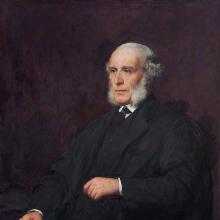
Background
Wright was born in Sandhurst, Berkshire, England, to Colonel Charles Wright and Harriet, née Frere.

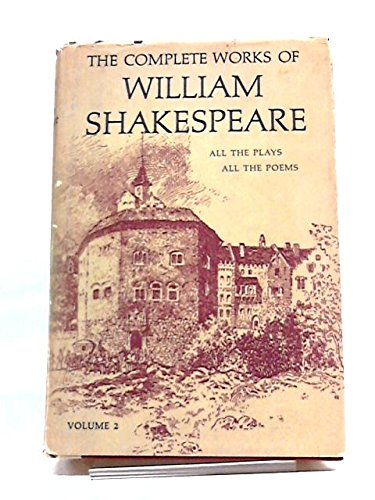
(Small rip in book cover)
Small rip in book cover
http://www.amazon.com/gp/product/B000KE9RVE/?tag=2022091-20

(The Authorised Version of the Bible, commonly known as th...)
The Authorised Version of the Bible, commonly known as the King James Bible, was first published in 1611. The most widely accepted rendering of the Scriptures for four hundred years, the 1611 Bible has become a classic of the English language, and countless of its original phrases have passed into standard idiomatic English. Most present-day editions incorporate conservative modernisations of spelling and punctuation introduced over a century and a half by subsequent editors and printers: the text that is commonly available is that of the 1769 revision, not that of 1611. There were two printings undertaken by Robert Barker, the King's printer in that year, and there are many variations between these two issues. This edition, produced by the Cambridge scholar William Aldis Wright in the early twentieth century, accurately and uniquely represents the original text in a clear and readable form, together with a list of the variations between the two printings of 1611 - a feature that no conventional facsimile edition can offer.
http://www.amazon.com/gp/product/0521179319/?tag=2022091-20

(Shakes I (vol 26) of Britannica's Great Books of the West...)
Shakes I (vol 26) of Britannica's Great Books of the Western World are 1/4 leather bound very high quality books. They display nicely as a set or as individual volumes. Like all products made by Encyclopedia Britannica, Inc. these books will last generations. Contents: -The First Part of King Henry the Sixth -The Second Part of King Henry the Sixth -The Third Part of King Henry the Sixth -The Tragedy of Richard the Third -The Comedy of Errors -Titus Andronicus -The Taming of the Shrew -The Two Gentlemen of Verona -Love's Labour's Lost -Romeo and Juliet -The Tragedy of King Richard the Second -A Midsummer Night's Dream -The Life and Death of King John -The Merchant of Venice -The First Part of King Henry the Fourth -The Second Part of King Henry the Fourth -Much Ado About Nothing -The Life of King Henry the Fifth -Julius Caesar -As You Like It
http://www.amazon.com/gp/product/B002TMUVI8/?tag=2022091-20
(This is a pre-1923 historical reproduction that was curat...)
This is a pre-1923 historical reproduction that was curated for quality. Quality assurance was conducted on each of these books in an attempt to remove books with imperfections introduced by the digitization process. Though we have made best efforts - the books may have occasional errors that do not impede the reading experience. We believe this work is culturally important and have elected to bring the book back into print as part of our continuing commitment to the preservation of printed works worldwide.
http://www.amazon.com/gp/product/1116569973/?tag=2022091-20

http://www.amazon.com/gp/product/B00AUQXT02/?tag=2022091-20

http://www.amazon.com/gp/product/B00AUQXU10/?tag=2022091-20

(The Authorised Version of the Bible, commonly known as th...)
The Authorised Version of the Bible, commonly known as the King James Bible, was first published in 1611. The most widely accepted rendering of the Scriptures for four hundred years, the 1611 Bible has become a classic of the English language, and countless of its original phrases have passed into standard idiomatic English. Most present-day editions incorporate conservative modernisations of spelling and punctuation introduced over a century and a half by subsequent editors and printers: the text that is commonly available is that of the 1769 revision, not that of 1611. There were two printings undertaken by Robert Barker, the King's printer in that year, and there are many variations between these two issues. This edition, produced by the Cambridge scholar William Aldis Wright in the early twentieth century, accurately and uniquely represents the original text in a clear and readable form, together with a list of the variations between the two printings of 1611 - a feature that no conventional facsimile edition can offer.
http://www.amazon.com/gp/product/0521179300/?tag=2022091-20
Wright was born in Sandhurst, Berkshire, England, to Colonel Charles Wright and Harriet, née Frere.
In 1833, after officer training at the Royal Military College, Sandhurst, Wright served with the 50th Regiment in New Zealand and on Norfolk Island. He sold his army commission in 1838 and trained as a surveyor in New South Wales. He joined the New South Wales Survey Department under Major Thomas Mitchell on 27 July 1838.
Wright became commissioner of crown lands for the Wellington District on 13 June 1843, and then, in late 1846, for the Wimmera.
He was appointed chief commissioner of the goldfields on 1 May 1852 by Lieutenant-Governor Charles Louisiana Trobe. Wright was later appointed a police magistrate in the Jamieson district.
This position he retained until he was appointed secretary for railways on 29 July 1862. Wright acted in this latter capacity for a number of years, giving general satisfaction to the successive responsible heads of the department, and proving himself an efficient public officer
When the previous sheriff of Victoria, Claud Farie, died in 1871, Wright, by his own request, was appointed to the position, which he continued to hold up to the time of his death.
Wright married Mary Meek on 28 August 1866. He died in Brighton, Victoria at the home of George Higinbotham sometime on the morning of 1 February 1877 after dining there the previous night, and was buried in Street Kilda Cemetery.
He edited the plays of Shakespeare published in the " Clarendon Press" series, also with W. G. Clark the " Cambridge " Shakespeare (1863-1866; 2nd ed. 1891-1893) and the " Globe" edition (1864).
He published (1899) a facsimile of the Milton MS. in the Trinity College library, and edited Milton's poems with critical notes (1903).
(Shakes I (vol 26) of Britannica's Great Books of the West...)
(The Authorised Version of the Bible, commonly known as th...)
(The Authorised Version of the Bible, commonly known as th...)
(This is a pre-1923 historical reproduction that was curat...)
(Small rip in book cover)
Wright appointed as a member of the Victorian Legislative Council on 29 August 1853 and held that position until the original Council was abolished in March 1856.