


Background
Andrew Ballantyne was born on August 26, 1956.

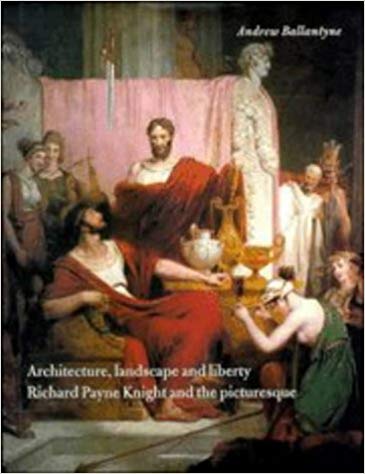
(Andrew Ballantyne's study of the prominent late-Georgian ...)
Andrew Ballantyne's study of the prominent late-Georgian critic Richard Payne Knight is based on his writings on aesthetics and his influence on the principles of taste in the eighteenth century. Knight played an important role in the controversy about picturesque taste and its application to garden design, which became a major preoccupation during the second half of the century. Knight's ideas were given concrete expression in his writings and verses, of which his Analytic Inquiry into the Principles of Taste was the most influential.
https://www.amazon.com/Architecture-Landscape-Liberty-Richard-Picturesque/dp/0521462002/?tag=2022091-20
1997
(This highly original and sophisticated look at architectu...)
This highly original and sophisticated look at architecture helps us to understand the cultural significance of the buildings that surround us. It avoids the traditional style-spotting approach and instead gives us an idea of what it is about buildings that moves us, and what it is that makes them important artistically and culturally. The book begins by looking at how architecture acquires meaning through tradition and concludes with the exoticism of the recent avant-garde period. Illustrations of particular buildings help to anchor the general points with specific examples, from ancient Egypt to the present day.
https://www.amazon.com/Architecture-Short-Introduction-Andrew-Ballantyne/dp/0192801791/?tag=2022091-20
2002
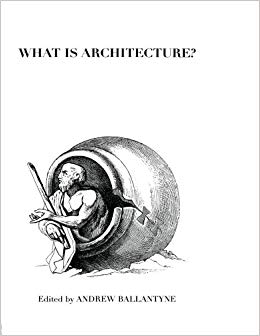
(Architecture can influence the way we feel and can help u...)
Architecture can influence the way we feel and can help us along as we go about our lives, or sabotage our habitual ways of doing things. The essays collected here challenge, and help to define a view of architecture which ranges from the minimal domesticity of Diogenes' barrel to the exuberant experiments of the contemporary avant-garde. There are essays by philosophers, architects and art historians, including Roger Scruton, Bernard Tschumi, Demetri Pophyrios, Kenneth Frampton, Diane Ghirardo and David Goldblatt.
https://www.amazon.com/What-Architecture-Andrew-Ballantyne/dp/0415256275/?tag=2022091-20
2002
(Architecture Theory is a comprehensive and groundbreaking...)
Architecture Theory is a comprehensive and groundbreaking one-volume overview of, and introduction to, contemporary critical discourse in architecture. In bringing critical theory and Continental philosophy to bear upon architecture, it provides a solid framework for a fully up-to-date theory of architecture, one that reflects the latest developments and concerns. The book is divided into four sections-groundwork; constructing the "individual"; pluralities; instrumentality-each covering a core theme in contemporary architecture theory. In each section, an introductory essay by Andrew Ballantyne provides valuable context, exposition, and analysis. This is followed by a selection of writings on architecture and other related cultural concerns from major contemporary thinkers, including Zvizvek, Irigaray, Lefebvre, Lyotard, Kristeva, Nancy, Virilio, Deleuze, and Negri.
https://www.amazon.com/Architecture-Theory-Reader-Philosophy-Culture/dp/0826464084/?tag=2022091-20
2005
(The work of Gilles Deleuze and Felix Guattari has been in...)
The work of Gilles Deleuze and Felix Guattari has been inspirational for architects and architectural theorists in recent years. It has influenced the design work of architects as diverse as Greg Lynn and David Chipperfield, and is regularly cited by avant-gardist architects and by students, but usually without being well understood. The first collaboration between Deleuze and Guattari was Anti-Oedipus: Capitalism and Schizophrenia, which was taken up as a manifesto for the post-structuralist life and was associated with the spirit of the student revolts of 1968. Their ideas promote creativity and innovation, and their work is wide-ranging, complex and endlessly stimulating. They range across politics, psychoanalysis, physics, art, and literature, changing preconceptions along the way. Deleuze & Guattari for Architects is a perfect introduction for students of architecture in the design studio at all levels, students of architecture pursuing undergraduate and postgraduate courses in architectural theory, academics and interested architectural practitioners.
https://www.amazon.com/Deleuze-Guattari-Architects-Thinkers/dp/0415421160/?tag=2022091-20
2007
(From the pyramids of Ancient Egypt to the Sydney Opera Ho...)
From the pyramids of Ancient Egypt to the Sydney Opera House, Andrew Ballantyne explores the history and cultural significance of architecture. He provides readers with the necessary background to understand the language of architecture and its economic, social, political, and aesthetic significance. Ballantyne eloquently explores what makes a building timeless and what this illuminates about human society. From the pyramids of Ancient Egypt to the Sydney Opera House, Andrew Ballantyne explores the history and cultural significance of architecture. He provides readers with the necessary background to understand the language of architecture and its economic, social, political, and aesthetic significance. Ballantyne eloquently explores what makes a building timeless and what this illuminates about human society. From the pyramids of Ancient Egypt to the Sydney Opera House, Andrew Ballantyne explores the history and cultural significance of architecture. He provides readers with the necessary background to understand the language of architecture and its economic, social, political, and aesthetic significance. Ballantyne eloquently explores what makes a building timeless and what this illuminates about human society.
https://www.amazon.com/Architecture-Brief-Insight-Andrew-Ballantyne/dp/B007MXLU20/?tag=2022091-20
2007

(Investigating various ways in which the cultures of the t...)
Investigating various ways in which the cultures of the town and the countryside interact in architecture, original essays in this book written by an international range of recognized theorists will help all students of architecture and urban design understand how the urban and rural relate. Taking a broad historical sweep, this collection draws on a symposium of the Society of Architectural Historians of Great Britain.
https://www.amazon.com/Rural-Urban-Architecture-Between-Cultures/dp/0415552133/?tag=2022091-20
2009
(Traditionally, architecture has been preoccupied with the...)
Traditionally, architecture has been preoccupied with the resolution of form. That concern helps to make photogenic buildings, which have received a great deal of attention. This book looks instead at the idea of the flows, which connects things together and moves between things. It is more difficult to discuss, but more necessary because it is what makes things work. Architects have to think about flow - the flow of people through buildings, the flow of energy into buildings, and waste out of them - but usually the effects of flow do not find expression. The essays gathered here present a collection of exploratory ideas and offer an understanding of buildings, people and settlements through concepts of flow.
https://www.amazon.com/Architecture-Space-Flows-Andrew-Ballantyne/dp/0415585414/?tag=2022091-20
2011
(With its distinctive gables and arches, Tudor-style archi...)
With its distinctive gables and arches, Tudor-style architecture is recognized around the world as a symbol of British culture; it represents the idea of home to British citizens in the United Kingdom and abroad. Some love it, others hate it, but the Tudoresque is still being built - to give a house an old-fashioned air or to create a sense of exotica. Yet few people know anything about how Tudor Revival buildings came to be. To fill this gap is Tudoresque, an insightful book that explores the origin of the style, tracing its roots to the antiquarian enthusiasm of the eighteenth century. It looks at the Tudoresque cottage style, which later influenced 1930s architecture, and the Tudor-style manor house particularly favored in the nineteenth century. While the style has been discouraged since the 1920s (and is especially reviled by modernists) it continues to be a popular choice - particularly when the architect doesn’t have the upper hand. The authors here show how the style is the mainstream of twentieth-century British architecture and explore how it has traveled abroad. From Tudor Village in Queens to Stan Hywet Hall in Akron to Malaysia, Shanghai, and Singapore, Tudor Revival has found a comfortable home across the globe. These black and white gabled buildings are important not so much because they are great architecture, but because they are everywhere. Illustrated with images from more than 200 years of the Tudor Revival, and including examples from Britain, America, India and East Asia, this knowledgable and entertaining book will be an indispensable guide to one of the world’s most iconic architectural styles.
https://www.amazon.com/Tudoresque-Pursuit-Ideal-Andrew-Ballantyne/dp/1861898118/?tag=2022091-20
2011
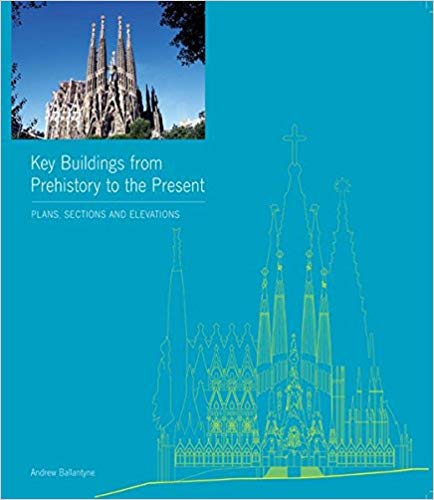
(This book features around 150 of the most important build...)
This book features around 150 of the most important buildings in the history of world architecture - from the pyramids and the Parthenon to some of the most significant works by recent architects. The quality and number of the line drawings, together with the authoritative text by a renowned architectural historian, allow all the buildings to be understood in detail and make this an invaluable resource for students.
https://www.amazon.com/Key-Buildings-Prehistory-Present-Elevations/dp/1856698378/?tag=2022091-20
2012
(Do animals have rights? Do human beings have obligations ...)
Do animals have rights? Do human beings have obligations to them? How are their spiritual lives? How should we understand their welfare? These are core problems about debates on animal rights in contemporary time, relating to not only philosophical thinking but also peoples behaviors in daily life. From the perspective of history and reality, combining the ways of social organizations and individuals treating animals, this book discusses these problems deeply, appealing to people for attention and introspection on animal rights.
https://www.amazon.com/Animal-Rights-Very-Short-Introduction/dp/7513530912/?tag=2022091-20
2013

(In this book, Andrew Ballantyne rescues Ruskin from the d...)
In this book, Andrew Ballantyne rescues Ruskin from the dustbin of history’s trifles to reveal a deeply attuned thinker, one whose copious writings had a tremendous influence on all classes of society, from roadmenders to royalty. Ballantyne examines a crucial aspect of Ruskin’s thinking: the notion that art and architecture have moral value. Telling the story of Ruskin’s childhood and enduring devotion to his parents - who fostered his career as a writer on art and architecture - he explores the circumstances that led to Ruskin’s greatest works, such as Modern Painters, The Seven Lamps of Architecture, The Stones of Venice, and Unto This Last. He follows Ruskin through his altruistic ventures with the urban poor, to whom he taught drawing, motivated by a profound conviction that art held the key to living a worthwhile life. Ultimately, Ballantyne weaves Ruskin’s story into a larger one about Victorian society, a time when the first great industrial cities took shape and when art could finally reach beyond the wealthy elite and touch the lives of everyday people.
https://www.amazon.com/Ruskin-Critical-Lives-Andrew-Ballantyne/dp/1780234295/?tag=2022091-20
2015
(This work has been selected by scholars as being cultural...)
This work has been selected by scholars as being culturally important and is part of the knowledge base of civilization as we know it. This work was reproduced from the original artifact and remains as true to the original work as possible. Therefore, you will see the original copyright references, library stamps (as most of these works have been housed in our most important libraries around the world), and other notations in the work. This work is in the public domain in the United States of America, and possibly other nations. Within the United States, you may freely copy and distribute this work, as no entity (individual or corporate) has a copyright on the body of the work. As a reproduction of a historical artifact, this work may contain missing or blurred pages, poor pictures, errant marks, etc. Scholars believe, and we concur, that this work is important enough to be preserved, reproduced, and made generally available to the public. We appreciate your support of the preservation process and thank you for being an important part of keeping this knowledge alive and relevant.
https://www.amazon.com/Northern-DEntrecasteaux-Diamond-Jenness/dp/1375941151/?tag=2022091-20
2017
Andrew Ballantyne was born on August 26, 1956.
Andrew Ballantyne was awarded a Bachelor of Arts, a Master of Arts, and Ph.D. degrees. He also holds a diploma in architecture.
British educator Andrew Ballantyne has written and edited several books on architecture, including Architecture, Landscape, and Liberty: Richard Payne Knight and the Picturesque. In this book, Ballantyne profiles the accomplishments of Richard Payne Knight (1751-1824), an eccentric and wealthy English gentleman who pursued diverse scholarly interests. Knight designed his own home, Downton Castle, which broke with architectural tradition in its asymmetrical design. Knight’s tastes were influenced by his admiration of ancient Greece, and he did not mind challenging popular trends and ideas. Ballantyne sifts through Knight’s ideas and writings, which include the long poem “The Landscape," the prose work Principles of Taste, and a study of phallic worship, The Worship of Priapus.
In Architectural Review David Watkin called the book a “brilliant study, which should be read by all students of the Enlightenment." Watkin also noted that Ballantyne “convincingly reconciles the passionate paradoxes in Knight’s intellectual career." According to Kerry Downes in the Times Literary Supplement. “Ballantyne argues that Knight s misfortune was never to manage to convey to the public his highly unconventional but consistent and complete world view." Downes suggested that “For those without the leisure or the stomach for Knight’s own writings, this book is a boon. It is long, and losing one's place or one’s thread is easy enough. But it brings its subject vividly to life in ways not open to the best of painters."
What Is Architecture? is a collection of essays edited by Ballantyne. including his own work, “The Nest and the Pillar of Fire." In this introductory essay, Ballantyne discusses how architecture is comprised of both the mundane and the extraordinary. Other contributors to the book include Robert Scruton, Demetri Porphyrios. Neil Leach, and David Goldblatt. Times Literary Supplement critic Robert Maxwell concluded, “the big question about how free an art architecture really is remaining open, but Ballantyne has made an impressive assault on the initial uncertainties."
Reviewing Architecture: A Very Short Introduction for the Times Literary Supplement. Maxwell he described that book as “treating [architecture] as a subject open to culture, and definable only within the culture." Rather than discussing or defining architectural styles, in this volume, Ballantyne identifies the qualities that give buildings emotional and artistic impact.
Andrew Ballantyne currently works at the School of Architecture, Planning, and Landscape, Newcastle University as a professor of architecture. Andrew does research in Ethics, Metaphysics, and Aesthetics. Their current project is "Deleuze." Also taught at universities of Sheffield and Bath, and previously worked as a practicing architect.
Andrew Ballantyne has been the Chairman of the Society of Architectural Historians of Great Britain and has written extensively on architectural history and theory, including Tudoresque: In Pursuit of the Ideal Home (2011), and the bestselling Architecture: A Very Short Introduction (2002). The last book named was translated into 23 languages including Chinese, Greek, and Hungarian.
(Do animals have rights? Do human beings have obligations ...)
2013(Investigating various ways in which the cultures of the t...)
2009(In this book, Andrew Ballantyne rescues Ruskin from the d...)
2015(With its distinctive gables and arches, Tudor-style archi...)
2011(This book features around 150 of the most important build...)
2012(Andrew Ballantyne's study of the prominent late-Georgian ...)
1997(Architecture Theory is a comprehensive and groundbreaking...)
2005(This highly original and sophisticated look at architectu...)
2002(From the pyramids of Ancient Egypt to the Sydney Opera Ho...)
2007(Architecture can influence the way we feel and can help u...)
2002(This work has been selected by scholars as being cultural...)
2017(The work of Gilles Deleuze and Felix Guattari has been in...)
2007(Traditionally, architecture has been preoccupied with the...)
2011Andrew Ballantyne is a member of the Royal Institute of British Architects.


