

Background
Brian Butterworth was born on January 3, 1944, in London, England, United Kingdom. He is a son of Harry Butterworth and Cissie Butterworth.


Merton College, England, United Kingdom
In 1966 Brian Butterworth received a Bachelor of Arts degree from Merton College, Oxford.

University of London, London, England, United Kingdom
In 1972 Brian Butterworth obtained a Doctor of Philosophy degree from the University of London.
Merton College, England, United Kingdom
In 1966 Brian Butterworth received a Bachelor of Arts degree from Merton College, Oxford.
University of London, London, England, United Kingdom
In 1972 Brian Butterworth obtained a Doctor of Philosophy degree from the University of London.

https://www.amazon.com/Marked-Life-Critical-Assessment-Universities/dp/B001O9PYAM/?tag=2022091-20
1971
https://www.amazon.com/Language-Production-Development-Writing-Processes/dp/B000V00KTK/?tag=2022091-20
1984

https://www.amazon.com/Explanations-Language-Universals-Brian-Butterworth/dp/3110097974/?tag=2022091-20
1984
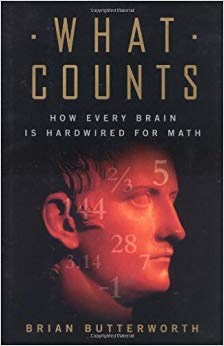
(Though he admits to not being particularly good at math, ...)
Though he admits to not being particularly good at math, Butterworth, the founder of the Mathematical Cognition journal, contends that we all possess an inherent "numerosity" sense developed to different degrees of course. The author bases his case on empirical research and historical speculation.
https://www.amazon.com/What-Counts-Every-Brain-Hardwired/dp/0684854171/?tag=2022091-20
1999
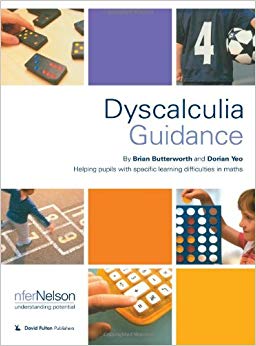
(Based on current knowledge of the condition, Dyscalculia ...)
Based on current knowledge of the condition, Dyscalculia Guidance is an accessible and practical manual for teachers to help them best to support pupils with dyscalculia.
https://www.amazon.com/Dyscalculia-Guidance-Specific-Learning-Difficulties/dp/0708711529/?tag=2022091-20
2004
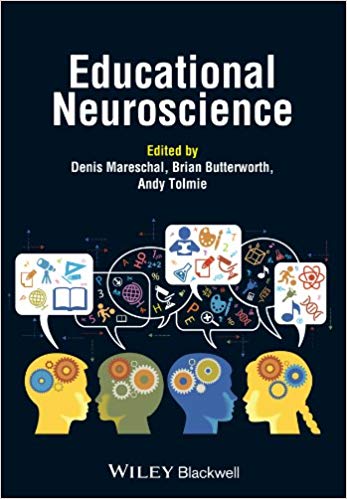
(Educational Neuroscience presents a series of readings fr...)
Educational Neuroscience presents a series of readings from educators, psychologists, and neuroscientists that explore the latest findings in developmental cognitive neurosciences and their potential applications to education.
https://www.amazon.com/Educational-Neuroscience-Denis-Mareschal/dp/1118725891/?tag=2022091-20
2013
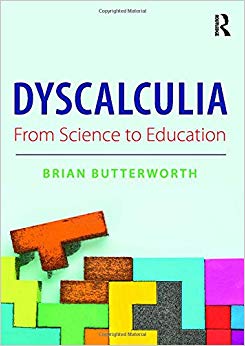
(Dyscalculia is caused by developmental differences in the...)
Dyscalculia is caused by developmental differences in the structures and patterns of activation in the brain. Affected learners require timely and tailored interventions, informed and shaped by neurological findings. In this ground-breaking text, Professor Butterworth explains the latest research in the science of dyscalculia in a clear, non-technical way. Crucially, he shows that dyscalculia is caused by a core deficit in the ability to accurately and swiftly represent the number of objects in a set, an ability that underpins learning arithmetic, and clearly differentiates dyscalculia from other forms of early mathematical learning difficulties. Butterworth uniquely links research to pedagogical practice, to explain how science can be used for the identification of dyscalculia, and for the development of strategies to best help affected learners acquire arithmetical competence. The text provides robust interventions that focus on helping pupils to strengthen their ability to process numerosities and link them to the familiar number symbols, counting words and digits. It shows that science has clear and specific implications both for assessment and intervention.
https://www.amazon.com/Dyscalculia-Science-Education-Brian-Butterworth/dp/1138688614/?tag=2022091-20
2018
Brian Butterworth was born on January 3, 1944, in London, England, United Kingdom. He is a son of Harry Butterworth and Cissie Butterworth.
In 1966 Brian Butterworth received a Bachelor of Arts degree from Merton College, Oxford. In 1972 he obtained a Doctor of Philosophy degree from the University of London.
From 1978 to 1983 Brian Butterworth was an editor-in-chief of LinguisticsIn 1983 became co-founder and joint editor of Language and Cognitive Processes. In 1993 he was a founder and editor of Mathematical Cognition, a journal. He held visiting positions at numerous institutions, including Melbourne University, Padua University, Trieste University, Massachusetts Institute of Technology (MIT), and the Max Planck Institute at Mijmegen. He taught at Cambridge University for eight years.
His research interests lie in the domains of cognitive psychology, the neuropsychology of numbers and arithmetic, neural network models of reading and arithmetic and reading and acquired dyslexia in English, Japanese and Chinese.
Professor Butterworth is interested in how the brain processes numerical information. His research employs many different approaches from many different disciplines. These include fMRI, functional Near Infrared Spectroscopy, TMS, twin studies, studies of Australian aboriginal learners, studies of both typically and atypically developing learners (including those with dyscalculia, Turner Syndrome and Williams Syndrome), and patterns of dissociation in neurological patients, as well as normally competent adults.
He also builds neural network models of adult competence and is working on developing methods for helping people who have difficulty with arithmetic, including those with congenital learning difficulties (such as dyscalculia).
(Educational Neuroscience presents a series of readings fr...)
2013(Though he admits to not being particularly good at math, ...)
1999(Based on current knowledge of the condition, Dyscalculia ...)
2004(Dyscalculia is caused by developmental differences in the...)
2018Brian Butterworth is a member of the Experimental Psychology Society, the British Neuropsychology Society, the British Association for the Advancement of Science (now the British Science Association), the British Psychological Society.
Brian Butterworth is married Diana Laurillard. They have two children: Amy, Anna.

