During his first two years at the University of Berlin, Jacobi divided his interests among philosophical, classical, and mathematical studies. Seeing that time would not permit him to follow all his interests, he decided to concentrate on mathematics. In the fall of 1824 Jacobi passed his preliminary examination for Oberlehrer, thereby acquiring permission to teach not only mathematics but also Greek and Latin to all high school grades, and ancient and modern history to junior high school students.
Career
Gallery of Carl Jacobi
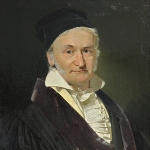
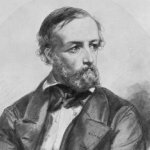
Portrait of Carl Gustav Jacob Jacobi.
Gallery of Carl Jacobi
Portrait of Carl Gustav Jacob Jacobi.
Gallery of Carl Jacobi
Portrait of Carl Gustav Jacob Jacobi.
Achievements
Membership
Royal Society
Royal Society, London, England
Jacobi was a member of the Royal Society.
Royal Prussian Academy of Sciences
Jacobi was a member of the Royal Prussian Academy of Sciences.
Royal Swedish Academy of Sciences
Royal Swedish Academy of Sciences, Stockholm, Sweden
Jacobi was a member of the Royal Swedish Academy of Sciences.
Saint Petersburg Academy of Sciences
Saint Petersburg Academy of Sciences, Saint Petersburg, Russia
Jacobi was a member of the Saint Petersburg Academy of Sciences.
French Academy of Sciences
French Academy of Sciences, Paris, France
Jacobi was a member of the French Academy of Sciences.
American Academy of Arts and Sciences
American Academy of Arts and Sciences, Cambridge, Massachusetts, United States
Jacobi was a member of the American Academy of Arts and Sciences.
Academy of Sciences of Turin
Academy of Sciences of Turin, Turin, Italy
Jacobi was a member of the Academy of Sciences of Turin.
Awards
Pour le Mérite Order for Sciences and Arts
Jacobi was awarded the Pour le Mérite Order for Sciences and Arts.
During his first two years at the University of Berlin, Jacobi divided his interests among philosophical, classical, and mathematical studies. Seeing that time would not permit him to follow all his interests, he decided to concentrate on mathematics. In the fall of 1824 Jacobi passed his preliminary examination for Oberlehrer, thereby acquiring permission to teach not only mathematics but also Greek and Latin to all high school grades, and ancient and modern history to junior high school students.
Carl Gustav Jacob Jacobi was a German mathematician who did important work on elliptic functions, partial differential equations, and mechanics. Although he was anticipated in many of his discoveries about elliptic functions by Carl Gauss and Niels Abel, Jacobi is nevertheless considered one of the founders of the subject. He was also the first Jewish mathematician to be appointed professor at a German university.
Background
Carl Gustav Jacob Jacobi was born on December 10, 1804, in Potsdam, Germany. The second son of Simon Jacobi, a Jewish banker, and his wife Rachel Lehmann, the precocious boy, originally called Jacques Simon, grew up in a wealthy and cultured family. His brother Moritz, three years older, later gained fame as a physicist in Saint Petersburg. His younger brother, Eduard, carried on the banking business after his father’s death. He also had a sister, Therese.
Education
After being educated by his mother’s brother, Jacobi entered the Gymnasium at Potsdam in November 1816. Promoted to the highest class after a few months in spite of his youth, he had to remain there for four years because he could not enter the university until he was sixteen. When he graduated from the Gymnasium in the spring of 1821, he excelled in Greek, Latin, and history and had acquired a knowledge of mathematics far beyond that provided by the school curriculum. He had studied Euler’s Introductio in analysin infinitorum and had attempted to solve the general fifth-degree algebraic equation.
During his first two years at the University of Berlin, Jacobi divided his interests among philosophical, classical, and mathematical studies. Seeing that time would not permit him to follow all his interests, he decided to concentrate on mathematics. University lectures in mathematics at that time were at a very elementary level in Germany, and Jacobi therefore in private study mastered the works of Euler, Lagrange, and other leading mathematicians.
In the fall of 1824 Jacobi passed his preliminary examination for Oberlehrer, thereby acquiring permission to teach not only mathematics but also Greek and Latin to all high school grades, and ancient and modern history to junior high school students. When - in spite of being of Jewish descent - he was offered a position at the prestigious Joachimsthalsche Gymnasium in Berlin in the following summer, he had already submitted a Ph.D. thesis to the university. The board of examiners included the mathematician E. H. Dirksen and the philosopher Friedrich Hegel. Upon application, he was given permission to begin work on the Habilitation immediately.
Jacobi’s first lecture, given during the winter term 1825-1826, was devoted to the analytic theory of curves and surfaces in three-dimensional space. He greatly impressed his audience by the liveliness and clarity of his delivery, and his success became known to the Prussian ministry of education. There being no prospect for a promotion at Berlin in the near future, it was suggested that Jacobi transfer to the University of Königsberg, where a salaried position might be available sooner. When he arrived there in May 1826, the physicists Franz Neumann and Heinrich Dove were just starting their academic careers, and Friedrich Bessel, then in his early forties, occupied the chair of astronomy. Joining these colleagues, Jacobi soon became interested in applied problems. His first publications attracted wide attention among mathematicians. On December 28, 1827, he was appointed associate professor, a promotion in which Legendre’s praise of his early work on elliptic functions had had a share. Appointment as full professor followed on July 7, 1832, after a four-hour disputation in Latin.
For eighteen years Jacobi was at the University of Königsberg, where his tireless activity produced amazing results in both research and academic instruction. Jacobi created a sensation among the mathematical world with his penetrating investigations into the theory of elliptic functions, carried out in competition with Abel. Most of Jacobi’s fundamental research articles in the theory of elliptic functions, mathematical analysis, number theory, geometry, and mechanics were published in Crelle’s Journal für die reine und angewandte Mathematik. With an average of three articles per volume, Jacobi was one of its most active contributors and quickly helped to establish its international fame. Yet his tireless occupation with research did not impair his teaching. On the contrary - never satisfied to lecture along trodden paths, Jacobi presented the substance of his own investigations to his students. He would lecture up to eight or ten hours a week on his favorite subject, the theory of elliptic functions, thus demanding the utmost from his listeners. He also inaugurated what was then a complete novelty in mathematics - research seminars - assembling the more advanced students and attracting his nearest colleagues.
C. W. Borchardt, E. Heine, L. O. Hesse, F. J. Richelot, J. Rosenhain, and P. L. von Seidel belonged to the newly formed Jacobi school; they contributed much to the dissemination not only of Jacobi’s mathematical creations but also of the new research-oriented attitude in university instruction. The triad of Bessel, Jacobi, and Neumann thus became the nucleus of a revival of mathematics at German universities.
In the summer of 1829 Jacobi journeyed to Paris, visiting Gauss in Göttingen on his way and becoming acquainted with Legendre, Fourier, Poisson, and other eminent French mathematicians. In July 1842 Bessel and Jacobi, accompanied by Marie Jacobi, were sent by the king of Prussia to the annual meeting of the British Association for the Advancement of Science in Manchester, where they represented their country splendidly. They returned via Paris, where Jacobi gave a lecture before the Academy of Sciences.
Together with Borchardt and Dirichlet and the latter’s wife, he traveled in a leisurely manner to Italy, lectured at the science meeting in Lucca, and arrived in Rome on November 16, 1843. In the stimulating company of these friends and of the mathematicians L. Schläili and J. Steiner, who also lived in Rome at that time, and further blessed by the favorable climate, Jacobi’s health improved considerably. He started to compare manuscripts of Diophantus’ Arithmetica in the Vatican Library and began to resume publishing mathematical articles. By the end of June 1844 he had returned to Berlin. He was granted royal permission to move there with his family because the severe climate of Königsberg would endanger his health. Jacobi received a bonus on his salary to help offset the higher costs in the capital and to help with his medical expenses. As a member of the Prussian Academy of Sciences, he was entitled, but not obliged, to lecture at the University of Berlin. Because of his poor health, however, he lectured on only a very limited scale.
After 1848, a petition of Jacobi’s to become officially associated with the University of Berlin, and thus to obtain a secure status, was denied by the ministry of education. Moreover, in June 1849 the bonus on his salary was retracted. Jacobi, who had lost his inherited fortune in a bankruptcy years before, had to give up his Berlin home. He moved into an inn and his wife and children took up residence in the small town of Gotha, where life was considerably less expensive.
Toward the end of 1849 Jacobi was offered a professorship in Vienna. Only after he had accepted it did the Prussian government realize the severe blow to its reputation which would result from his departure. Special concessions from the ministry and his desire to stay in his native country finally led Jacobi to reverse his decision. His family, however, was to remain at Gotha for another year, until the eldest son graduated from the Gymnasium. Jacobi, who lectured on number theory in the summer term of 1850, joined his family during vacations and worked on an astronomical paper with his friend P. A. Hansen.
Early in 1851, after another visit to his family, Jacobi contracted influenza. Hardly recovered, he fell ill with smallpox and died within a week. His close friend Dirichlet delivered the memorial lecture at the Berlin Academy on July 1, 1852, calling Jacobi the greatest mathematician among the members of the Academy since Lagrange and summarizing his eminent mathematical contributions.
The outburst of Jacobi’s creativity at the very beginning of his career, combined with his self-conscious attitude, early caused him to seek contacts with some of the foremost mathematicians of his time. A few months after his arrival at Königsberg he informed Gauss about some of his discoveries in number theory, particularly on cubic residues, on which he published a first paper in 1827. Jacobi had been inspired by Gauss’s Disquisitiones arithmeticae and by a note on the results which Gauss had recently presented to the Göttingen Academy, concerning biquadratic residues. Obviously impressed, Gauss asked Bessel for information on the young mathematician and enclosed a letter for Jacobi.
Another contact, established by a letter from Jacobi on August 5, 1827, initiated an important regular mathematical correspondence with Legendre that did not cease until Legendre’s death. Its topic was the theory of elliptic functions, of which Legendre had been the great master until Abel and Jacobi came on the scene. Their first publications in this subject appeared in September 1827 - Abel’s fundamental memoir Recherches sur les fonctions elliptiques in Crelle’s Journal and Jacobi’s Extraits de deux lettres in Astronomische Nachrichten. From these articles it is clear that both authors were in possession of essential elements of the new theory. They had developed these independently: Abel’s starting point was the multiplication, Jacobi’s the transformation, of elliptic functions; both of them were familiar with Legendre’s work.
The systematic study of elliptic integrals and their classification into the first, second, and third kinds was the work of Legendre, who had cultivated this field since 1786. The leading French mathematicians of his day were interested in the application of mathematics to astronomy and physics. Therefore, although Legendre had always emphasized the applicability of his theories (for instance, by computing tables of elliptic integrals), they did not appreciate his work. Gauss, on the other hand, was well aware of the importance of the subject, for he had previously obtained the fundamental results of Abel and Jacobi but had never published his theory. Neither had he given so much as a hint when Legendre failed to exploit the decisive idea of the inverse function.
It was this idea, occurring independently to both Abel and Jacobi, which enabled them to take a big step forward in the difficult field of transcendental functions. Here Abel’s investigations were directed toward the most general question; By producing an almost endless stream of formulas concerning elliptic functions, he obtained his insights and drew his conclusions about the character and properties of these functions. He also recognized the relation of this theory to other fields, such as number theory.
Among Jacobi’s work in mathematical physics is research on the attraction of ellipsoids and a surprising discovery in the theory of configurations of rotating liquid masses. Maclaurin had shown that a homogeneous liquid mass may be rotated uniformly about a fixed axis without change of shape if this shape is an ellipsoid of revolution. D’Alembert, Laplace, and Lagrange had studied the same problem; but it was left for Jacobi to discover that even an ellipsoid of three different axes may satisfy the conditions of equilibrium.
The theory of determinants, which begins with Leibniz, was presented systematically by Jacobi early in 1841. He introduced the “Jacobian” or functional determinant; a second paper - also published in Crelle’s Journal - is devoted entirely to its theory, including relations to inverse functions and the transformation of multiple integrals.
Jacobi was also interested in the history of mathematics. In January 1846 he gave a public lecture on Descartes which attracted much attention. In the same year A. von Humboldt asked him for notes on the mathematics of the ancient Greeks as material for his Kosmos and Jacobi readily complied - but Humboldt later confessed that some of the material went beyond his limited mathematical knowledge. In the 1840s Jacobi became involved in the planning of an edition of Euler’s works. He corresponded with P. H. von Fuss, secretary of the Saint Petersburg Academy and great-grandson of the famous mathematician, who had discovered a number of Euler’s unpublished papers. Jacobi drew up a very detailed plan of distributing the immense number of publications among the volumes of the projected edition. Unfortunately, the project could be realized only on a much reduced scale.
Carl Gustav Jacob Jacobi was one of the greatest German mathematicians, and was also considered by many as the most inspiring teacher of his time. One of his greatest accomplishments was his theory of elliptic functions and their relation to the elliptic theta function. Theta functions are of great importance in mathematical physics because of their role in the inverse problem for periodic and quasi-periodic flows. The equations of motion are integrable in terms of Jacobi's elliptic functions in the well-known cases of the pendulum, the Euler top, the symmetric Lagrange top in a gravitational field and the Kepler problem. He also made fundamental contributions in the study of differential equations and to rational mechanics, notably the Hamilton-Jacobi theory.
It was in algebraic development that Jacobi's particular power mainly lay, and he made important contributions of this kind in many areas of mathematics, as shown by his long list of papers in Crelle's Journal and elsewhere from 1826 onwards.
Jacobi was the first to apply elliptic functions to number theory, for example proving Fermat's two-square theorem and Lagrange's four-square theorem, and similar results for 6 and 8 squares. His other work in number theory continued the work of C. F. Gauss: new proofs of quadratic reciprocity and introduction of the Jacobi symbol; contributions to higher reciprocity laws, investigations of continued fractions, and the invention of Jacobi sums. He was also one of the early founders of the theory of determinants.
He was one of the first to introduce and study the symmetric polynomials that are now known as Schur polynomials, giving the so-called bialternant formula for these, which is a special case of the Weyl character formula, and deriving the Jacobi-Trudi identities. He also discovered the Desnanot-Jacobi formula for determinants, which underlie the Plucker relations for Grassmannians.
Planetary theory and other particular dynamical problems likewise occupied his attention from time to time. While contributing to celestial mechanics, he introduced the Jacobi integral for a sidereal coordinate system.
He was awarded the Pour le Mérite Order for Sciences and Arts.
In order to begin a university career, Jacobi became a Christian at the age of twenty.
Politics
In the revolutionary year of 1848 Jacobi became involved in a political discussion in the Constitutional Club. During an impromptu speech he made some imprudent remarks which brought him under fire from monarchists and republicans alike. Hardly two years before, in the dedication of volume I of his Opuscula mathematica to Friedrich Wilhelm IV, he had expressed his royalist attitude; now he had become an object of suspicion to the government.
Views
Jacobi was inclined to investigate mathematical problems for their intrinsic interest. Mathematics, as he understood it, had a strong Platonic ring. Most of his work is characterized by linkage of different mathematical disciplines. He introduced elliptic functions not only into number theory but also into the theory of integration, which in turn is connected with the theory of differential equations where, among other things, the principle of the last multiplier is due to Jacobi. Most of his investigations on first-order partial differential equations and analytical mechanics were published posthumously as Vorlesungen über Dynamik. Taking W. R. Hamilton’s research on the differential equations of motion as a starting point, Jacobi also carried on the work of the French school. He sought the most general substitutions that would transform canonical differential equations into such equations. The transformations are to be such that a canonical differential equation (of motion) is transformed into another differential equation which is again canonical. He also developed a new theory for the integration of these equations, utilizing their relation to a special Hamiltonian differential equation. This method enabled him to solve several very important problems in mechanics and astronomy.
Quotations:
"It is true that M. Fourier had the opinion that the principal end of mathematics was the public utility and the explanation of natural phenomena; but such a philosopher as he should have known that the unique end of science is the honor of the human mind, and that from this point of view a question of number is as important as a question of the system of the world."
"Any progress in the theory of partial differential equations must also bring about progress in mechanics."
"Wherever mathematics is mixed up with anything, which is outside its field, you will find attempts to demonstrate these merely conventional propositions a priori, and it will be your task to find out the false deduction in each case."
Membership
Jacobi was a member of many scientific societies, including the Royal Society, the Royal Prussian Academy of Sciences, the Royal Swedish Academy of Sciences, the Saint Petersburg Academy of Sciences, the French Academy of Sciences, the American Academy of Arts and Sciences, and the Academy of Sciences of Turin.
Foreign member
Royal Society
,
United Kingdom
Member
Royal Prussian Academy of Sciences
,
Germany
Foreign member
Royal Swedish Academy of Sciences
,
Sweden
Foreign member
Saint Petersburg Academy of Sciences
,
Russia
Foreign member
French Academy of Sciences
,
France
Foreign member
American Academy of Arts and Sciences
,
United States
Foreign member
Academy of Sciences of Turin
,
Italy
Personality
Jacobi was a kindred spirit in the way he created his mathematics. He was a prolific writer and even more prolific calculator; he drew a good deal of insight from immense algorithmical work; labored in many fields of mathematics; and at any moment could draw from the vast armory of mathematical methods just those weapons which would promise the best results in the attack on a given problem. He possessed an extraordinary talent for handling the most complicated mathematical apparatus. Such were Jacobi’s forceful personality and sweeping enthusiasm that none of his gifted students could escape his spell: they were drawn into his sphere of thought, worked along the manifold lines he suggested, and later even represented a “school.”
Physical Characteristics:
Early in 1843 Jacobi became seriously ill with diabetes. Dirichlet, after he had visited Jacobi for a fortnight in April, procured a donation (through the assistance of Alexander von Humboldt) from Friedrich Wilhelm IV, which enabled Jacobi to spend some months in Italy, as his doctor had advised. The time spent in Italy helped him to get better.
Connections
On September 11, 1831, Jacobi married Marie Schwinck, the daughter of a formerly wealthy Kommerzienrat who had lost his fortune in speculative transactions. They had five sons and three daughters.