

Background
Edward Tyrrel Channing was born on December 12, 1790 in Newport, Rhode Island, United States. He was the son of William and Lucy (Ellery) Channing, and brother of William Ellery Channing and Walter Channing.


(Unlike some other reproductions of classic texts (1) We h...)
Unlike some other reproductions of classic texts (1) We have not used OCR(Optical Character Recognition), as this leads to bad quality books with introduced typos. (2) In books where there are images such as portraits, maps, sketches etc We have endeavoured to keep the quality of these images, so they represent accurately the original artefact. Although occasionally there may be certain imperfections with these old texts, we feel they deserve to be made available for future generations to enjoy.
https://www.amazon.com/Lectures-Read-Seniors-Harvard-College/dp/129021140X?SubscriptionId=AKIAJRRWTH346WSPOAFQ&tag=prabook-20&linkCode=sp1&camp=2025&creative=165953&creativeASIN=129021140X
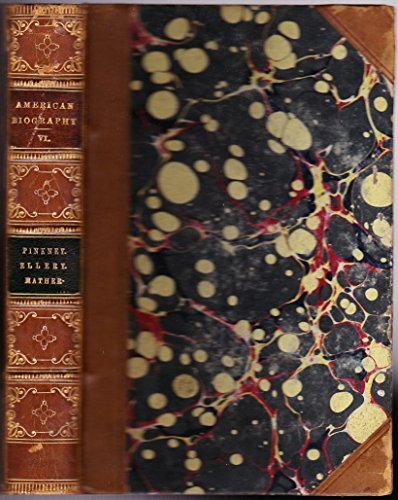
(William Pinkney was an American statesman and diplomat, a...)
William Pinkney was an American statesman and diplomat, and the seventh U.S. Attorney General. / William Ellery was a signer of the United States Declaration of Independence as a representative of Rhode Island. / Cotton Mather, FRS was a socially and politically influential New England Puritan minister, prolific author, and pamphleteer.
https://www.amazon.com/Library-American-Biography-William-Pinkney/dp/B01ACC6ETQ?SubscriptionId=AKIAJRRWTH346WSPOAFQ&tag=prabook-20&linkCode=sp1&camp=2025&creative=165953&creativeASIN=B01ACC6ETQ
Edward Tyrrel Channing was born on December 12, 1790 in Newport, Rhode Island, United States. He was the son of William and Lucy (Ellery) Channing, and brother of William Ellery Channing and Walter Channing.
At the age of thirteen Edward entered Harvard College. Owing to his participation in the student rebellion of 1807, he did not receive his degree in course, but was awarded an honorary Master of Arts degree in 1819. Later he studied law with his elder brother, Francis and was admitted to the bar in 1813.
About 1813 Channing began the practice of law in Boston. In 1814-1815, Channing, Willard Phillips, President Kirkland of Harvard, Richard H. Dana, and a few others, formed an association, of which Channing was secretary, for the publication of a bi-monthly magazine, to be called the New England Magazine and Review. When, however, it was learned that William Tudor was projecting a periodical, they transferred their labors and good will to him, and in May 1815 the first number of the North American Review appeared. In 1817 Tudor retired from the editorship, and the publication passed into the hands of a club composed of the members of the original association with some additions.
In May 1818 Channing succeeded Jared Sparks as editor and, assisted by Richard H. Dana, edited the seventh, eighth, and ninth volumes, until his appointment in October 1819 as Boylston professor of rhetoric and oratory at Harvard. His sketch of his grandfather, William Ellery, in Jared Sparks’s Library of American Biography, opens with the remark that “there are men who exercise an important influence within a limited sphere, in a thousand nameless ways, and, it may be, without a distinct consciousness of it on their own part, or that of others, who pass out of life without one strong result, one striking manifestation to make them of public importance. ” In the main this was true of Channing himself. For thirty-two years his life was strictly academic. Except for the sketch just mentioned and an occasional magazine article, he published practically nothing. After his death his Lectures Read to the Seniors in Harvard College (1856) appeared. Their wisdom and charm make them profitable reading still.
He retired from his professorship at the age of sixty, as he had long before decided he would do, and died at Cambridge five years later.
(Unlike some other reproductions of classic texts (1) We h...)
(William Pinkney was an American statesman and diplomat, a...)
Channing was elected a Fellow of the American Academy of Arts and Sciences in 1823.
Channing had sound scholarship, exquisite taste in literature, and ability to teach. He “probably trained as many conspicuous authors, ” wrote T. W. Higginson, “as all other American instructors put together”, and Edward Everett Hale declared, “I had but four teachers in college, Channing, Longfellow, Peirce, and Bachi. The rest heard me recite but taught me nothing”.
Quotes from others about the person
“He deserves the credit of the English of Emerson, Holmes, Sumner, Clarke, Bellows, Lowell, Higginson, and other men whom he trained”.
In 1826 Channing married his cousin, Henrietta A. S. Ellery.

