

Background
Greif, Geoffrey Leonard was born on April 13, 1949 in Baltimore. Son of Leonard L. and Ann (Burgunder) Greif.

(Group Work With Populations at Risk, Third Edition is a f...)
Group Work With Populations at Risk, Third Edition is a fundamental resource for practitioners in health and mental health settings and a comprehensive guidebook of group work skills. Geared toward students and professionals gaining a beginning understanding of groups, this volume describes how to work with vulnerable populations that include returning war veterans, Latino and Latina immigrants, women and men who were abused as children, children of divorce, and people struggling with substance abuse, AIDS, cancer, or chronic mental illness. Each chapter describes the population and reviews the relevant literature, identifies themes and practice principles, presents a case illustration, provides evaluation guidance, and refers readers to key references and web resources. Each one is designed to stand alone for easy reference, and overviews of skill building and evidence-based practice make this a timely, comprehensive resource for group leaders regardless of specialty.
http://www.amazon.com/gp/product/B00J65MWK6/?tag=2022091-20

(When Beating the Odds: Raising Academically Successful Af...)
When Beating the Odds: Raising Academically Successful African American Males appeared in 1998, it was hailed as "a crucial book" (Baltimore Sun) and "undoubtedly one of the most important tools the African American parent can possess" (Kweisi Mfume, President NAACP). Now, in response to enormous demand, the authors turn their attention to African American young women. Statistics indicate that African American females, as a group, fare poorly in the United States. Many live in single-parent households-either as the single-parent mother or as the daughter. Many face severe economic hurdles. Yet despite these obstacles, some are performing at exceptional levels academically. Based on interviews with many of these successful young women and their families, Overcoming the Odds provides a wealth of information about how and why they have succeeded--what motivates them, how their backgrounds and family relationships have shaped them, even how it feels to be a high academic achiever. They also discuss the challenges of moving into African American womanhood, from maintaining self-esteem to making the right choices about their professional and personal lives. Most important, the book offers specific and inspiring examples of the practices, attitudes, and parenting strategies that have enabled these women to persevere and triumph. For parents, educators, policy makers, and indeed all those concerned about the education of young African American women, Overcoming the Odds is an invaluable guidebook on creating the conditions that lead to academic-and lifelong-success.
http://www.amazon.com/gp/product/0195126424/?tag=2022091-20

http://www.amazon.com/gp/product/B012TQLHLS/?tag=2022091-20

http://www.amazon.com/gp/product/B00Y2SNRR4/?tag=2022091-20

http://www.amazon.com/gp/product/B010WHZ7QW/?tag=2022091-20

http://www.amazon.com/gp/product/B013J9ZV9I/?tag=2022091-20

http://www.amazon.com/gp/product/B012UKJ23S/?tag=2022091-20

http://www.amazon.com/gp/product/0669208159/?tag=2022091-20

http://www.amazon.com/gp/product/B009CPMDY0/?tag=2022091-20

(Today, young Black men are more likely to be killed or se...)
Today, young Black men are more likely to be killed or sent to prison than to graduate from college. Yet, despite all the obstacles, some are achieving at the highest academic and professional levels. Beating the Odds tells their remarkable stories and shows us what African American families have done to raise academically successful sons, sons who are among the top two percent of African American males in terms of SAT scores and grades. The result of extensive and innovative research, Beating the Odds goes beyond mere analysis--and beyond the relentlessly negative media images--to show us precisely how young Black men can succeed despite the roadblocks of racism, the temptations of crime and drugs, and a popular culture that values being "cool" over being educated. By interviewing parents and children from a range of economic and educational backgrounds and from both single and two-parent homes, the authors identify those constants that contribute to academic achievement and offer step-by-step guidance on six essential strategies for effective parenting: child-focused love; strong limit-setting and discipline; continually high expectations; open, consistent, and strong communication; positive racial identity and positive male identity; and full use of community resources. The proof of the effectiveness of such strategies is in the sons themselves, who speak eloquently in these pages about their struggles and successes in both the classroom and the often hostile world that surrounds it. Essential reading for parents, teachers, and school administrators, Beating the Odds offers insight, guidance, and hope for anyone concerned about the plight of young African American men and the society they live in.
http://www.amazon.com/gp/product/0195102193/?tag=2022091-20

http://www.amazon.com/gp/product/B00Y2SNVBQ/?tag=2022091-20

(An up-to-the-minute report on how today's dads are meetin...)
An up-to-the-minute report on how today's dads are meeting the challenges of single parenthood, offering an enlightening look at the joys, frustrations, and successes of fathers who are raising their children alone.
http://www.amazon.com/gp/product/0669198498/?tag=2022091-20
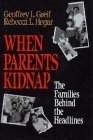
(What happens when a child is kidnapped from home by his o...)
What happens when a child is kidnapped from home by his or her own parent? What are the emotional and psychological consequences of living in hiding for weeks, months, or even years for a child? How does the parent left behind cope with having no knowledge of the child's whereabouts or well-being? And what could lead a parent to inflict such a painful existence on his or her own child? This text provides a look at the problem of the abduction of children by their parents, portraying the experiences of both the parents searching for their children, and the abductors who have taken them. The reader is given depictions of life on the run and learn, how children who have been in hiding for months and sometimes years cope with moving from town to town and from school to school, and how reunion with the searching parent affects them. Greif and Hegar set the stage for policy change by identifying five common scenarios that end in abduction, and point out how changes in custody and divorce law could help to eliminate, or to more quickly resolve, abduction of children. Geoffrey Greif has also written "The Daddy Track and the Single Father" and "Single Fathers".
http://www.amazon.com/gp/product/0029129753/?tag=2022091-20

(The breakdown of the family has moved in recent years to ...)
The breakdown of the family has moved in recent years to the forefront of national consciousness. All manner of social ills, from poor academic performance to teenage drug use and gang crime, have been attributed to high divorce rates and the collapse of the traditional two-parent family. Targets of particularly harsh criticism are parents who lose all contact with their children after a divorce. So-called "deadbeat dads" are denounced in political speeches and ridiculed on billboard advertisements; mothers who lose touch with their children are stigmatized as emotionally unstable or lacking maternal instincts. Everyone seems to understand the importance of children being raised by two-parent families and the damage that can occur when one parent loses contact completely. What is significantly less clear is why this loss of contact occurs and what can be done to prevent it. In Out of Touch, Geoffrey Greif explores these issues with clarity, compassion, insight, and an evenhandedness rarely encountered in an arena far more susceptible to acrimonious debate than sympathetic understanding. Setting out to find the reality beneath the catchall categorization of out-of-touch parents as deadbeats, substance abusers, child mistreaters, or criminals, Greif focuses on those parents who tried and, for a vast array of reasons, failed to maintain contact with their children. It is their voices, in a discussion dominated up till now by the custodial parent, that we most need to hear, Greif argues, if we are to uncover ways to avoid such failures in the future. Rather than offering dry statistics and abstract generalizations, Greif lets us hear these voices directly in 26 in-depth interviews with estranged parents and with children caught in the crossfire of painful divorces. Extending over a period of two to ten years, these interviews, and Greif's perceptive analyses of them, reveal the whole spectrum of logistical, emotional, and legal difficulties that keep parents and children apart. From the ordinary problems of visitation rights and child support to the more complex and troubling issues--bitter court battles, accusations of sexual abuse, domestic violence, children rejecting a parent, child kidnapping, and many others--Out of Touch vividly and often heartbreakingly presents all the ways that fathers and mothers, even with the best intentions, can lose contact with their children. But the book does more than tell the stories of failed relationships. Its concluding chapter offers a series of specific and extremely helpful suggestions for families--parents, children, grandparents--who find themselves in danger of complete estrangement. Greif outlines how families can employ support systems, communication skills, mediation, and many other strategies to overcome the most difficult obstacles that occur after a divorce. It is here that the lessons gleaned from the broken relationships of the past become invaluable advice for the future. Informed by fresh perspectives, moving personal accounts, and a clear-sighted approach to a tangled issue, Out of Touch is a timely and deeply important book about both the forces that drive parents and children apart and the understanding that can keep them together.
http://www.amazon.com/gp/product/0195095359/?tag=2022091-20
Greif, Geoffrey Leonard was born on April 13, 1949 in Baltimore. Son of Leonard L. and Ann (Burgunder) Greif.
Bachelor, Ohio Wesleyan University, 1971; Master of Social Work, University of Pennsylvania, 1974; Doctor of Social Work, Columbia University, 1983.
Social worker Camden (New Jersey) School System, 1974-1976. Psychiatric social worker Drenk Guidance Center, Burlington, New Jersey, 1976-1979. Teacher Widener University, Chester, Pennsylvania, 1981-1984.
From assistant professor to professor University Maryland, Baltimore, since 1984, associate dean, 1996—2007. Consultant, supervisor Community Counseling Center, Cockeysville, Maryland, 1985-1990. Consultant drug program Sinai Hospital, Baltimore, 1990-1996.
Board directors Radio Station WYPR. Visiting professor University Sydney, 2007.
(What happens when a child is kidnapped from home by his o...)
(When Beating the Odds: Raising Academically Successful Af...)
(An up-to-the-minute report on how today's dads are meetin...)
(Group Work With Populations at Risk, Third Edition is a f...)
(Today, young Black men are more likely to be killed or se...)
(The breakdown of the family has moved in recent years to ...)
(Book by Greif, Geoffrey)
Board directors Parents Anonymous, Baltimore, 1985-1992, Park School, Baltimore, 1987-2000, Albert Schweitzer Fellows, Baltimore, since 1999. Chair Governor's Commission on Sexual Orientation Discrimination, 2000-2001. Vice president WYPR Radio.
Married Maureen Lefton, December 28, 1975. Children: Jennifer, Alissa.
