(This is a pre-1923 historical reproduction that was curat...)
This is a pre-1923 historical reproduction that was curated for quality. Quality assurance was conducted on each of these books in an attempt to remove books with imperfections introduced by the digitization process. Though we have made best efforts - the books may have occasional errors that do not impede the reading experience. We believe this work is culturally important and have elected to bring the book back into print as part of our continuing commitment to the preservation of printed works worldwide. This text refers to the Bibliobazaar edition.
(This scarce antiquarian book is a facsimile reprint of th...)
This scarce antiquarian book is a facsimile reprint of the original. Due to its age, it may contain imperfections such as marks, notations, marginalia and flawed pages. Because we believe this work is culturally important, we have made it available as part of our commitment for protecting, preserving, and promoting the world's literature in affordable, high quality, modern editions that are true to the original work.
Rational living: some practical inferences from modern psychology
(This book was digitized and reprinted from the collection...)
This book was digitized and reprinted from the collections of the University of California Libraries. It was produced from digital images created through the libraries’ mass digitization efforts. The digital images were cleaned and prepared for printing through automated processes. Despite the cleaning process, occasional flaws may still be present that were part of the original work itself, or introduced during digitization. This book and hundreds of thousands of others can be found online in the HathiTrust Digital Library at www.hathitrust.org.
The Appeal of the Child: Two Sermons Delivered Before Graduating Classes of the Oberlin Kindergarten Training School (Classic Reprint)
(Excerpt from The Appeal of the Child: Two Sermons Deliver...)
Excerpt from The Appeal of the Child: Two Sermons Delivered Before Graduating Classes of the Oberlin Kindergarten Training School
For them to breathe. These swift, eager utterances of Christ meant the emancipa tion of children, just as his teaching con cerning divorce had meant the emanei patiou of women. His disciples cannot forget them. The two incidents I have mentioned, both, therefore, find a record in all three of the synoptic gospels, and the favorite address of John's epistles, little children, seems like an echo of his Mas ter here. It was this same feeling that made the good shepherd with a lamb in his arms or over his shoulders the favor ite figure in the catacombs. He alone fulfilled Isaiah's tender prophecy: He shall gather the lambs in his arms, and carry them in his bosom.
About the Publisher
Forgotten Books publishes hundreds of thousands of rare and classic books. Find more at www.forgottenbooks.com
This book is a reproduction of an important historical work. Forgotten Books uses state-of-the-art technology to digitally reconstruct the work, preserving the original format whilst repairing imperfections present in the aged copy. In rare cases, an imperfection in the original, such as a blemish or missing page, may be replicated in our edition. We do, however, repair the vast majority of imperfections successfully; any imperfections that remain are intentionally left to preserve the state of such historical works.
(Excerpt from It's All in the Day's Work
Has learned how ...)
Excerpt from It's All in the Day's Work
Has learned how many are the things no fellow can do, and, therefore, from hour to hour and from day to day, would do as a matter of course, just what befits a man, and under either praise or commiseration is inclined quite honestly to say, Oh, it's all in the day's Work.
About the Publisher
Forgotten Books publishes hundreds of thousands of rare and classic books. Find more at www.forgottenbooks.com
This book is a reproduction of an important historical work. Forgotten Books uses state-of-the-art technology to digitally reconstruct the work, preserving the original format whilst repairing imperfections present in the aged copy. In rare cases, an imperfection in the original, such as a blemish or missing page, may be replicated in our edition. We do, however, repair the vast majority of imperfections successfully; any imperfections that remain are intentionally left to preserve the state of such historical works.
(This book was digitized and reprinted from the collection...)
This book was digitized and reprinted from the collections of the University of California Libraries. It was produced from digital images created through the libraries’ mass digitization efforts. The digital images were cleaned and prepared for printing through automated processes. Despite the cleaning process, occasional flaws may still be present that were part of the original work itself, or introduced during digitization. This book and hundreds of thousands of others can be found online in the HathiTrust Digital Library at www.hathitrust.org.
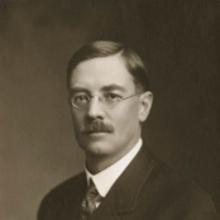
Henry Churchill King was an American theologian, educator, and author. He served as the 6th President of Oberlin College from 1902 to 1927.
Background
Henry Churchill King was born on September, 18, 1858 at Hillsdale, Michigan, United States. He was the fifth son and sixth child of the eight children of Henry Jarvis and Sarah (Lee) King. His father was secretary-treasurer of Hillsdale College.
Education
Henry was educated in the public schools of his native town. Thereafter he entered Hillsdale College but transferred to Oberlin at the end of his sophomore year. He received the degree of Bachelor of Arts in 1879 and that of Bachelor of Divinity degree from the Oberlin Theological Seminary in 1882. In 1883 he studied philosophy at Harvard. He spent the year 1893-1894 in study at Berlin, where he came under the influence of Lotze's philosophy and Ritschl's theology.
Career
In 1884 King became associate professor of mathematics at Oberlin College. In 1890 he was appointed associate professor, and in 1891 professor, of philosophy. His course on Lotze's Microcosmus became known as one of the most comprehensive in the college curriculum. In 1897 he succeeded President James H. Fairchild as professor of theology in the Oberlin Theological Seminary, a position which he held until 1925.
In 1902, having served for several years as academic dean, King was elected president of Oberlin, to succeed John H. Barrows. The leitmotif of his long administration (1903 - 1927) was sounded in the words, "reverence for personality, " "primacy of the person, " which occur in his inaugural address and constantly recur in all his writings. By "personality" he meant the "whole man, " physical, intellectual, esthetic, moral, religious.
Outside of Oberlin King was in great demand as a foundation lecturer, as a speaker at student conferences, and as a leader in religious and educational movements. He was one of the original members of the board of trustees of the Carnegie Foundation for the Advancement of Teaching. He was active in the Congregational Commission on Missions, the Congregational National Council, and the Congregational Foundation for Education.
In 1918-1919, he was director of the religious work of the Young Men's Christian Association among the American troops in France. Following this service, he was appointed, with Charles R. Crane, to the Inter-Allied Commission on Mandates in Turkey. The Crane-King report, the result of months of painstaking investigation, was pigeonholed at the Peace Conference. The fatigues and disappointments of this mission, together with administrative and financial difficulties which confronted him after his return to Oberlin, undermined his health, and he retired in 1927, to spend the rest of his life in a tragically enfeebled condition.
After becoming president he published only two formal theological works, The Ethics of Jesus (1910) and Fundamental Questions (1917); but his baccalaureate sermons, together with many books on moral or religious themes and numerous short articles, constitute a body of applied Christian doctrine more valuable than any theological system he might have written. Among his more influential books in the field of moral and religious education were: Personal and Ideal Elements in Education (1904), Rational Living (1905), Letters to Sunday-Schoolteachers (1906) abd others. The central idea that runs through all King's writings is that the laws of life are the laws of a deepening personal friendship; first, "mutual self-revelation and answering trust, " then, "mutual self-giving, " binding God to men and men to each other.
Achievements
It was as a theologian that King became nationally prominent, with his publications of Reconstruction in Theology (1901) and Theology and the Social Consciousness (1902). During his leadership, Oberlin College came to lay extraordinary emphasis upon music, the fine arts, morals, and religion. With very limited funds and equipment, he built up a faculty and a school spirit strong in what he called "character-begetting power. " From this point of view, Oberlin under King was comparable to Rugby under Arnold.
King was prominent in the councils of the Congregational Church.
Membership
King headed many important bodies, including the Religious Education Association, Ohio College Association, the American Missionary Association and the Association of American Colleges.
Personality
A shy, self-depreciating man with thick-lensed glasses and a somewhat muffled voice, King had more the presence of a thinker than of an orator or man of action. He was best described as a religious philosopher of the idealistic school, receptive to modern knowledge but fervently loyal to the Christian tradition. Many, under the guidance of his liberal evangelicalism, accepted biological evolution and Biblical criticism without loss of their religious faith. A disciple of Lotze's personalism and Ritschl's social gospel, he did much to interpret these views to the American churches.
Connections
On July 7, 1882, King married Julia M. Coates, of Brecksville, Ohio, a college classmate. Four sons were born to them, Harold Lee, Philip Coates, Donald Storrs, and Edgar Weld.