Background
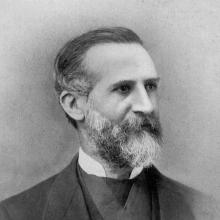
John William Mallet was born on October 10, 1832, near Dublin, Ireland. He was the eldest of six children of Robert Mallet, an engineer, and a fellow of the Royal Society, and Cordelia Watson Mallet.


123 St Stephen's Green, Saint Peter's, Dublin, D02 YN77, Ireland
Mallet studied chemistry at the Royal College of Surgeons in Ireland.

College Green, Dublin 2, Ireland
In 1853, John received a Bachelor of Arts degree at Trinity College, Dublin.

Wilhelmsplatz 1, 37073 Göttingen, Germany
In 1852, John received a Doctor of Philosophy degree from the University of Göttingen.


123 St Stephen's Green, Saint Peter's, Dublin, D02 YN77, Ireland
Mallet studied chemistry at the Royal College of Surgeons in Ireland.
College Green, Dublin 2, Ireland
In 1853, John received a Bachelor of Arts degree at Trinity College, Dublin.
Wilhelmsplatz 1, 37073 Göttingen, Germany
In 1852, John received a Doctor of Philosophy degree from the University of Göttingen.


https://www.amazon.com/Earthquake-Catalogue-British-Association-Discussion/dp/1298968739/ref=sr_1_5?dchild=1&keywords=John+William+Mallet&qid=1590400149&sr=8-5
1858

https://www.amazon.com/lecture-delivered-before-University-Virginia/dp/5518562101?SubscriptionId=AKIAJRRWTH346WSPOAFQ&tag=prabook-20&linkCode=sp1&camp=2025&creative=165953&creativeASIN=5518562101
1868

https://www.amazon.com/Physiological-Creatin-Creatinin-Nutrients-Classic/dp/1528426649?SubscriptionId=AKIAJRRWTH346WSPOAFQ&tag=prabook-20&linkCode=sp1&camp=2025&creative=165953&creativeASIN=1528426649

https://www.amazon.com/Shenandoah-Alum-Springs-County-Washington/dp/0266059171?SubscriptionId=AKIAJRRWTH346WSPOAFQ&tag=prabook-20&linkCode=sp1&camp=2025&creative=165953&creativeASIN=0266059171

https://www.amazon.com/Cotton-Geological-Meteorological-Conditions-Cultivation/dp/B00B5DR5SQ?SubscriptionId=AKIAJRRWTH346WSPOAFQ&tag=prabook-20&linkCode=sp1&camp=2025&creative=165953&creativeASIN=B00B5DR5SQ

https://www.amazon.com/Syllabus-Course-Lectures-General-Chemistry/dp/1348019182/ref=sr_1_10?dchild=1&keywords=John+William+Mallet&qid=1590400149&sr=8-10
John William Mallet was born on October 10, 1832, near Dublin, Ireland. He was the eldest of six children of Robert Mallet, an engineer, and a fellow of the Royal Society, and Cordelia Watson Mallet.
After studying chemistry at the Royal College of Surgeons in Ireland, Mallet entered Trinity College in 1849, publishing about this time his first scientific contribution, "Notice of a New Chemical Examination of Killinite," in the Journal of the Geological Society of Dublin.
In 1852, John received a Doctor of Philosophy degree from the University of Göttingen and in 1853 he received a Bachelor of Arts degree at Trinity College, Dublin.
Mallet assisted his father in experiments on the velocity of shock-transmission from gunpowder explosions through rock and lose earth and had commenced the preparation of a "Catalogue of Recorded Earthquakes from B. C. 1606 to A. D. 1842," which was published in the Report of the British Association for the Advancement of Science for 1852, 1853, and 1854.
Coming to America in 1853, he was an assistant professor of analytical chemistry at Amherst College for several months in 1854, then became chemist to the state geological survey of Alabama (1855-1856) and professor of chemistry at the state university (1855-1860). From the papers of Michael Tuomey he edited "The Second Biennial Report on the Geology of Alabama" (1858). He also undertook an exhaustive scientific study of the culture of cotton.
For this work specimens of plants, soils, and rocks were secured from India, Algeria, Africa, and America; soils were analyzed; density, cohesion, capillarity, and absorption of gases were determined; stems, roots, seeds, fibers were separately analyzed. The resulting treatise was published in book form under the title, "Cotton: the Chemical, Geological, and Meteorological Conditions Involved in Its Successful Cultivation" (1862) and appeared the same year in the Proceedings of the Royal Society of London.
Enlisting as a private in the service of the Confederacy shortly after the outbreak of the Civil War, Mallet became in November 1861 an officer on the staff of General R. E. Rodes, and in 1862 was given general supervision of the ordnance laboratories of the Confederacy. After the war, for a group of Northern capitalists, he made a survey for petroleum in Louisiana and Texas (1865).
He was a professor of chemistry in the medical department of the University of Louisiana, 1865-1867; at the University of Virginia, 1867-1883; in the University of Texas, 1883-1884; and in Jefferson Medical College (present-day Thomas Jefferson University), 1884-1885. He then returned to the University of Virginia, where he remained, as professor emeritus after 1908, until his death.
He insisted that each of his students make some investigation and so add his fragment to the sum total of knowledge. His own publications comprised more than one hundred papers on new compounds, minerals, and chemical and physical phenomena. In 1881-1882, he made investigations of drinking waters, reporting the results in the Annual Report of the National Board of Health, 1882 (1883). Three times (1886, 1888, 1896), Mallet was a member of the Assay Commission.
In 1877-1878, he lectured at Johns Hopkins University. He was one of the founders of the American Chemical Society and its president in 1882, a member of several European chemical societies, and a fellow of the Royal Society of London. He served as a member of the International Committee on Atomic Weights, 1899; and of the International Congress of Applied Chemistry in Berlin, 1903, and Rome, 1906.
John William Mallet is known for his work as a professor of chemistry in numerous universities in the United States. He worked at the University of Virginia for 40 years and became professor emeritus. He was one of the founders of the American Chemical Society and its president in 1882, he was a member of several European chemical societies, and a fellow of the Royal Society of London.
Mallet Assembly was located in Mallet Hall was named in his honor.
John was an Episcopalian.
Mallet's scientific work spanned a wide area, including general and applied chemistry and chemical mineralogy. He developed methods for determining the organic substance in drinking water and characterized meteorites and rare terrestrial minerals. In particular, he examined the occurrence of silver in the ashes of South American volcanoes. He precisely determined the density of solid mercury, the molecular weight of hydrofluoric acid, and the atomic weights of lithium, aluminum, and gold.
John William Mallet was a member of Royal Society, College of Physicians of Philadelphia, Medical Society of Virginia, American Academy of Arts and Sciences, American Association for the Advancement of Science, Society of Arts in London, American Chemical Society (of which he was president in 1882), Société Chimique de France, German Chemical Society, American Philosophical Society.

Royal Society , United Kingdom

Medical Society of Virginia , United States

American Academy of Arts and Sciences , United States

American Association for the Advancement of Science , United States
Royal Society of Arts , United Kingdom

American Chemical Society , United States

Société Chimique de France , France

German Chemical Society , Germany

American Philosophical Society , United States
As a lecturer Mallet was systematic, concise, clear in his presentation, and explanation of facts. Although he was a resident of the United States for more than fifty years, Mallet never relinquished his status as a British subject.
Mallet was married in 1857 to Mary Elizabeth Ormond of Tuscaloosa, Alabama, who died in 1886; and in 1888 to Marie Josephine Pages of Louisiana. Three children were born of his first marriage.