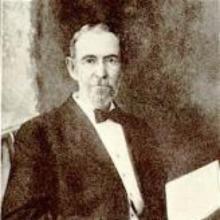
Background
Johnson Oatman was born on April 21, 1856, in Norman, Oklahoma. His parents were Johnson Oatman and Rachel Ann Cline.

(NO, NOT ONE! - Jack Schrader lends this historic chestnut...)
NO, NOT ONE! - Jack Schrader lends this historic chestnut a 'gospel' touch in his newest choral setting for SATB with piano accompaniment. Choirs and congregants alike will enjoy this nostalgic journey proclaiming that "Jesus knows all about our struggles, he will guide till the day is done." - Sheet Music - SATB - SATB - SATB - Jack Schrader - Johnson Oatman, Jr. - George C. Hugg - Hymntune - Sheet Music - 8 Pages.
https://www.amazon.com/NO-NOT-ONE-Schrader-Johnson/dp/B01CEVR9PQ?SubscriptionId=AKIAJRRWTH346WSPOAFQ&tag=prabook-20&linkCode=sp1&camp=2025&creative=165953&creativeASIN=B01CEVR9PQ
( Digital Sheet Music of Count Your Blessings Composed b...)
Digital Sheet Music of Count Your Blessings Composed by: Edwin O. Excell;Johnson Oatman Jr. Performed by: Johnson Oatman Jr.
https://www.amazon.com/Count-Your-Blessings-Edwin-Excell-ebook/dp/B00DK3WQ0G?SubscriptionId=AKIAJRRWTH346WSPOAFQ&tag=prabook-20&linkCode=sp1&camp=2025&creative=165953&creativeASIN=B00DK3WQ0G
Johnson Oatman was born on April 21, 1856, in Norman, Oklahoma. His parents were Johnson Oatman and Rachel Ann Cline.
Johnson Oatman learned to sing with his father, was educated at Herbert's Academy, Vincentown, and at the New Jersey Collegiate Institute, Bordentown (now the Bordentown Military School).
Johnson Oatman joined the Methodist church, was licensed as a local preacher, and was ordained deacon by Bishop Stephen M. Merrill at Burlington on March 24, 1895, but he did not enter the itinerant ministry. For a while Johnson was in business with his father at Lumberton, New York, later conducting the business of a life-insurance company at Mount Holly. Failing health in 1893 compelled Oatman to retire from his business and he then settled at Ocean Grove. The summer meetings at this resort were congenial to his religious nature and with returning health and strength, and encouraged by his surroundings, he found what proved to be the outlet for his spiritual nature. It was not his desire to take charge of a church, but to do his preaching through songs.
Oatman's first gospel song, "I am walking with my Master, " was written in 1892 and was set to music by John R. Sweney, who published it the following year. Encouraged by the latter he began to feel that his real work in life was to spread the gospel through his songs and he began to express in verse the emotions and sentiments of his own life. "When our Ships come sailing home, " inspired by his stay near the ocean, was also set to music by Sweney, and was one of the favorites of its author, but it did not become so popular as some of his other hymns. "No, not one, " has appeared in more recent hymn books than any other of his songs. Written in 1895, it was copied into thirty-five different collections within a single year, and it has been translated into many languages. "Count your Blessings" was likewise incorporated into many hymnals, and "Higher Ground", and "Sweeter than all" were widely sung.
Johnson Oatman wrote the words of at least seven thousand hymns which have been set to music by such composers as J. Howard Entwisle, Adam Geibel, A. J. Showalter, Charles H. Gabriel, George C. Hugg, and William J. Kirkpatrick. His most famous hymns are: I am walking with my Master; When our Ships come sailing home; No, not one; Count your Blessings; Higher Ground; Sweeter than all.
(NO, NOT ONE! - Jack Schrader lends this historic chestnut...)
( Digital Sheet Music of Count Your Blessings Composed b...)
On July 21, 1878, Johnson Oatman was married to Wilhelmina Ried of Lumberton, with whom he lived until her death in 1909. A son and two daughters were born to them.