

Background
Dana was born in Montreal, Canada; the son of Alberto and Clemy (Sassoon) Dana.




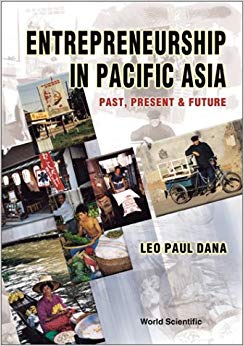
(Entrepreneurs are now internationalising, and many more a...)
Entrepreneurs are now internationalising, and many more are likely to internationalise in the future. Yet, most small firms expand in an opportunistic fashion, because entrepreneurs seldom have the time and resources to gather reliable data about opportunities in foreign countries.Leo-Paul Dana has conducted extensive international field research with a view to compiling key information on the business environment throughout Pacific Asia. Thus, the book is not just another “how to” guide. It reflects what is happening in an important region of our global economy.With this book, businessmen and business analysts, investors, academics and business students will gain invaluable insights into the conditions and opportunities for enterprise in these countries in this region.
http://www.amazon.com/gp/product/9810239300/?tag=2022091-20
1999
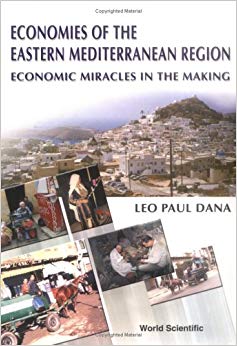
(It used to be that international business and the small e...)
It used to be that international business and the small enterprise sector were almost mutually exclusive. Internationalization was generally limited to large corporations, while small firms tended to be local. Those days are gone. Increasing global competition is changing the nature of knowledge necessary for success in commerce. Firms will need to seek opportunities beyond familiar turf and traditional markets. For that reason, this book examines business issues and the environment for enterprise in a variety of contexts around the Middle East.The information provided helps entrepreneurs decide where to invest, where to focus their expansion efforts and where to be especially cautious. Thus, this guide — written in easy-to-understand language — can help entrepreneurs avoid costly mistakes. It is more than a book — it is an investment!
http://www.amazon.com/gp/product/9810244746/?tag=2022091-20
2001
(Learn how to compete in international markets! The nature...)
Learn how to compete in international markets! The nature of business has changed, and Global Marketing Co-Operation and Networks explains how and why former competitors are now joining forces. Exploring co-operation, networks, and internationalization, this collection provides you with an indispensable framework for grasping the ongoing changes in global business. In addition, it includes a new, broad-based theory of international entrepreneurship that will help you master the intricacies of global marketing. Global Marketing Co-Operation and Networks features both empirical research and conceptual studies. It provides you with important research findings about the impact of internationalization on entrepreneurs, smaller firms, and multinational giants. This valuable book contains up-to-date information from top researchers in entrepreneurship from Canada, the United States, the United Kingdom, Australia, New Zealand, and Singapore. Global Marketing Co-Operation and Networks gives insight into the often confusing world of international business, explaining such difficult issues as: building networks to link smaller firms that have specialized knowledge and multinational firms that have marketing prowess establishing an international market presence with the help of supply and distribution networks that are already in place using group dynamics to establish successful networking choosing the best time to internationalize taking advantage of government-funded overseas trade missions to develop international markets Global Marketing Co-Operation and Networks is an essential resource for executives and entrepreneurs hoping to break into international business, as well as students and researchers interested in international economics, globalization, networking, and marketing strategies.
http://www.amazon.com/gp/product/0789013037/?tag=2022091-20
2001
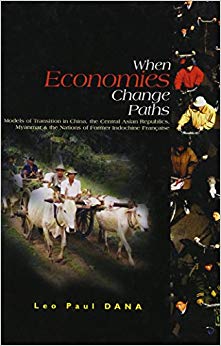
(While firms are attempting to expand into the global envi...)
While firms are attempting to expand into the global environment, many of the formerly communist nations are often misunderstood. Based on field research involving in-depth interviews in China, Central Asia, Myanmar and Indochina, this book provides academics, investors and policy-makers with an introductory overview of enterprise in these transitional economies. A theoretical framework precedes surveys of individual countries. Each chapter has been carefully refereed by national experts. Diligently referenced, the book includes citations of 250 relevant publications, guiding the future researcher through an extensive bibliography. This book is detailed, yet reader-friendly. It combines rigor with vigor, providing valuable insights into the rapidly emerging economies of Asia.
http://www.amazon.com/gp/product/9810249497/?tag=2022091-20
2002
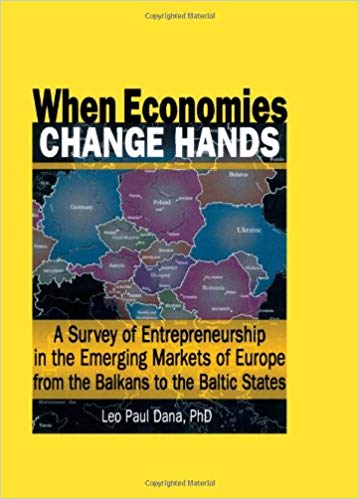
(Gain a comprehensive understanding of the development of ...)
Gain a comprehensive understanding of the development of entrepreneurship across Eastern Europe Throughout Eastern Europe, post-Communist countries transitioning to market-based economies are obtaining a variety of results due to diverse policy approaches. When Economies Change Hands evaluates the nature of entrepreneurship in this region, the consequences of central planning, the reasons for internal subsistence activity, and the emergence of the sex trade in Eastern Europe. The wealth of information in this resource is clearly presented and includes thought-provoking policy prescriptions for the future. It is challenging to predict the direction emerging markets will take, particularly when dealing with the wide-ranging social and economic situations taking place in post-Communist Eastern Europe. When Economies Change Hands can help. This reference volume for policymakers, educators, investors, and researchers provides a much-needed and timely survey of the transitioning markets of post-Communist Europe. It examines the historical, sociocultural, and economic impacts of market transition. The text includes a discussion of the creation and distribution of wealth in the countries of Eastern Europe that will leave you better informed about the dynamics of transitioning economies and the growth of entrepreneurship across Eastern Europe.
http://www.amazon.com/gp/product/078901646X/?tag=2022091-20
2005
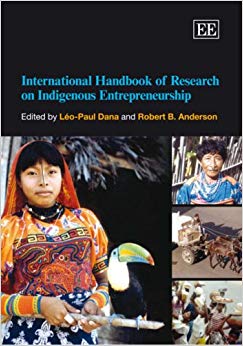
(The comprehensive and thoroughly accessible International...)
The comprehensive and thoroughly accessible International Handbook of Research on Indigenous Entrepreneurship aims to develop a multidisciplinary theory explaining entrepreneurship as a function of cultural perceptions of opportunity. The Handbook presents a multitude of fascinating, superbly illustrated studies on the facets of entrepreneurship amongst indigenous peoples. Chapters elaborating on the history, culture, values and objectives underpinning indigenous entrepreneurship introduce the subject, providing essential background information. A series of sections then convey the variances and idiosyncrasies of indigenous entrepreneurship in Africa, Asia, Europe, the Americas and the South Pacific. The Handbook concludes by drawing on its original, rich and varied empirical studies to explain why people from different cultures possess different indigenous values, and therefore different entrepreneurship experiences and practices, even when exposed to similar stimuli. Proposing that what is an opportunity for some people is less so for others with different ideals, and that opportunity recognition is largely culturally determined, this unique, colourful account of indigenous enterprise will provide an intriguing read for those with an interest in entrepreneurship and development studies.
http://www.amazon.com/gp/product/1843768348/?tag=2022091-20
2007

(This exhaustive, interdisciplinary Handbook explores the ...)
This exhaustive, interdisciplinary Handbook explores the phenomena of immigration and ethnic minority entrepreneurship in light of marked changes since the mid-twentieth century and the advent of easier, more affordable travel and more open and integrated national economies. The international contributors, key experts in their respective fields, illustrate that myriad ethnic minorities exist across the globe, and that their entrepreneurship can and does significantly influence national economies. The contributors go on to promote our understanding of which factors make for successful entrepreneurship, and, perhaps more importantly, how negative political consequences that members of successful entrepreneurial ethnic minorities might face can be minimized. This extensive collection of current research on entrepreneurship in minority communities is a welcome addition to the growing literature and will be warmly welcomed by those with an interest in entrepreneurship, sociology and business in general.
http://www.amazon.com/gp/product/1845427335/?tag=2022091-20
2008
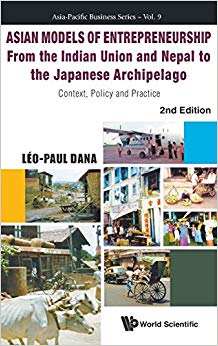
(In this book, Leo-Paul Dana makes it clear that much can ...)
In this book, Leo-Paul Dana makes it clear that much can be learnt about the nature of entrepreneurial activity when we delve into the unique characteristics of different nations of South Asia, South-east Asia and East Asia. Through in-depth analyses and comprehensive reviews of many Asian countries, the profound differences both among and within countries of the region become vividly apparent. Dana juxtaposes the explosion in entrepreneurial growth within China against the struggles to build an entrepreneurial community in Japan, or the enlightened public policy leadership in Singapore against the crisis-driven developments in Korea. The range of factors identified within each of the 15 countries examined by Dana is not an example of random influences on the entrepreneurial process, because they can be construed in more systematic and logical ways. Thus, the book uncovers the Chinese model of gradual transition, the Royal Cambodian model, and the Doi-Moi model, among many others. The reader is challenged to grasp these different models, and identify their commonalities and differences. Readership: Business undergraduates; practitioners and entrepreneurs who are interested in conducting business in Asia.
http://www.amazon.com/gp/product/9814590258/?tag=2022091-20
2014
Dana was born in Montreal, Canada; the son of Alberto and Clemy (Sassoon) Dana.
Dana earned his Bachelor of Arts degree in 1980 and a Master of Business Administration degree in 1983 from McGill University. In 1995, he was given a Doctor of Philosophy degree from Ecole des Hautes Etudes Commerciales de Montréal (nowadays HEC-Montreal).
Dana began his career as a lecturer at Concordia University in 1984. Eight years later he took the same position at McGill University. Then in 1997, Leo joined the University of Pittsburgh Semester at Sea Program, in conjunction with the Institute for Shipboard Education. A year later he became a deputy director of the international business MBA programme at Nanyang Technological University.
In 2007, he was appointed an adjunct professor of Faculty of Business Administration at the University of Regina and held it until 2013. Leo is a full professor at Montpellier Business School. In addition, he served as expert witness for the government Canada and House of Commons Standing Committee. Dana worked as a lecturer at the University of Canterbury and a visiting professor of entrepreneurship at INSEAD.
(This exhaustive, interdisciplinary Handbook explores the ...)
2008(Gain a comprehensive understanding of the development of ...)
2005(The comprehensive and thoroughly accessible International...)
2007(In this book, Leo-Paul Dana makes it clear that much can ...)
2014(Learn how to compete in international markets! The nature...)
2001(While firms are attempting to expand into the global envi...)
2002(It used to be that international business and the small e...)
2001(Entrepreneurs are now internationalising, and many more a...)
1999Dana is a senior advisor to the World Association for Small and Medium Enterprises, since 1994.


