Background
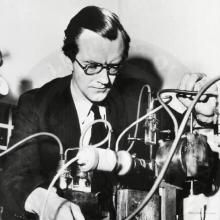
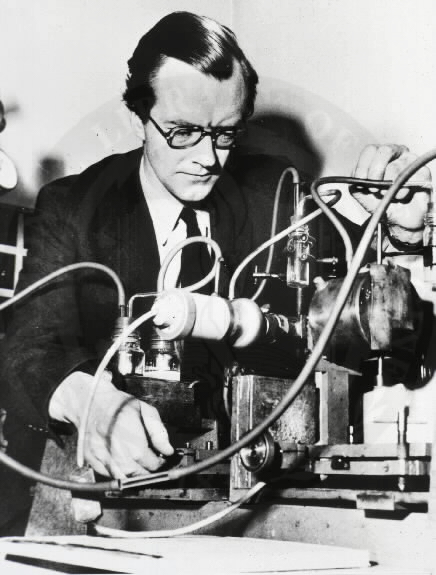
WILKINS, Maurice Hugh Frederick was born on December 15, 1916 in Pongaroa, New Zealand. Son of late E. H. Wilkins and of Eveline Whittaker.
http://www.amazon.com/gp/product/B011WA4QL0/?tag=2022091-20
(Quick, who won the Nobel Prize for discovering the double...)
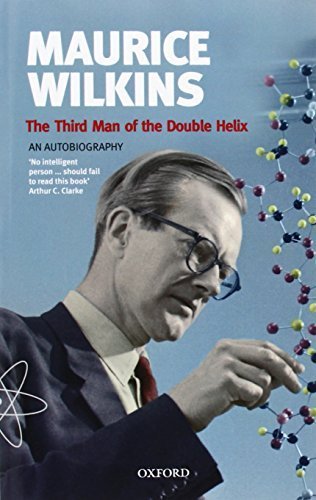
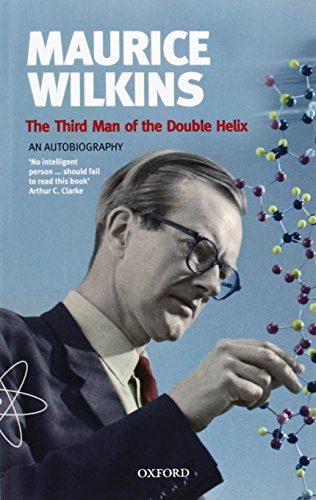
Quick, who won the Nobel Prize for discovering the double helical structure of DNA? Most people would say Watson and Crick. But most people would make Maurice Wilkins very upset. The Rodney Dangerfield of biology, Wilkins shared the prize with Watson and Crick but missed out on the limelight, due largely to Watson's hit book, The Double Helix. Wilkins thought the book was so misleading he asked Harvard University Press not to publish it. Things have quieted down a bit now, and Wilkins is now telling the story his way. This book tells how he showed his colleagues the x-ray picture that gave them their crucial insight, and about his interactions with Rosalind Franklin, the researcher who actually created the picture, and who also received very little credit for her role in the discovery. This year marks the 50th anniversary of the DNA discovery. Finally Wilkins gets to have his say.
http://www.amazon.com/gp/product/019280667X/?tag=2022091-20
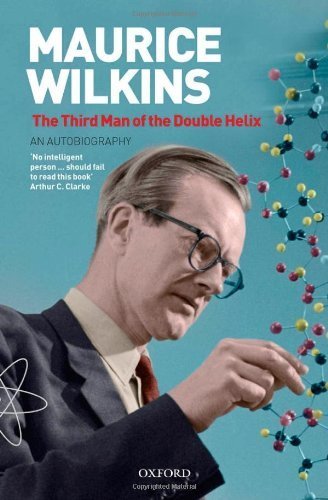
http://www.amazon.com/gp/product/B0020U10KC/?tag=2022091-20
WILKINS, Maurice Hugh Frederick was born on December 15, 1916 in Pongaroa, New Zealand. Son of late E. H. Wilkins and of Eveline Whittaker.
Doctor of Philosophy, University Birmingham, Cambridge, 1940. Doctor of Laws, University Glasgow, 1972. Doctor of Science, Birmingham University, 1992.
Doctor of Science, Trinity College, Dublin, 1992. Doctor of Science, University London, 1998.
Research with Manhattan Project,, University of California, Berkeley, 1944; lecturer, St. Andrews U., 1945; member of faculty, Kings College, London, since 1946; deputy director biophysics unit Medical Research Council,, Kings College, London, 1955-1970; director biophysics unit, Kings College, London, 1970-1972; director neurobiology unit, Kings College, London, 1972-1974; professor molecular biology, Kings College, London, 1962-1970; professor biophysics, Kings College, London, 1970-1981; also director Medical Research Council cell biophysics unit (formerly Medical Research Council neurobiology unit), Kings College, London, 1974-1980; professor emeritus, Kings College, London, since 1981.
(Quick, who won the Nobel Prize for discovering the double...)
Fellow Royal Society. Member British Biophysics Society (past chairman), American Society Biological Chemists (honorary), British Society for Social Responsibility in Science (president 1969), American Academy Arts and Sciences (foreign honorary).
Married Patricia Ann Chidgey, March 12, 1959. Children: Sarah Fenella, George Hugh, Emily Lucy Una, William Henry.