Background
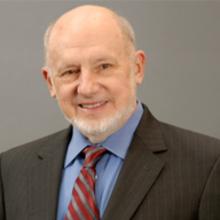
WINTER, Sidney Graham was born in 1935 in Iowa City, Iowa, United States of America.
http://www.amazon.com/gp/product/0674272285/?tag=2022091-20
WINTER, Sidney Graham was born in 1935 in Iowa City, Iowa, United States of America.
University of Iowa (one year)
Swarthmore College, B.A. (Highest Honors), Economics, 1956
Yale University, M.A., 1957, Ph.D., Economics, 1964
Fellow of the American Econometric Society, 1978; Fellow of the American Association for the Advancement of Science, 1990
Academic Positions Held Wharton: 1993-present (named Deloitte and Touche Professor of Management, 1993; Co-Director, Reginald H. Jones Center for Management Policy, Strategy, and Organization, 1999-2007). Previous appointments: Yale University; University of Michigan; University of California, Berkeley
Chief Economist, U.S. General Accounting Office, 1989-93; Research Economist, The RAND Corporation 1966-68, 1959-61; Staff Member, Council of Economic Advisers, 1961-62. Acting Assistant Professor, Assistant Professor, Acting Association Professor, University California Berkeley, 1963-1966.
Professional Leadership Scientific Advisory Board, Danish Research Unit on Industrial Dynamics (DRUID); Associate Editor, Industrial & Corporate Change. Professor Economics Research Association, Institute, Institution Public Policy Studies, University Michigan, 1968-1976. Visiting Professor of Economics, Yale University, 1976, University California Davis, 1983. Professor Economics and Management, Yale University, New Haven, Connecticut, United States of America, since 1977. Association Editor, Journal of Economic Theory, 71, Administration Science Quarterly, 1969-1972, Behavioral Science, 1968-1979. Founding Co-editor, Journal of Economic Behaviour and Organization, since 1980.
As a graduate student, I set out to do a dissertation on the determinants of corporate spending on research and development. The quest for an appropriate theoretical framework for this sort of empirical inquiry led me to abandon that specific dissertation topic, but has contributed the dominant themes for much of my work. At an early stage I became convinced that the methodological doctrine of ‘as if profit maximisation, allegedly supported by the ‘natural selection’ argument, did not provide compelling reasons for rejecting direct behavioural evidence at the level of the individual firm.
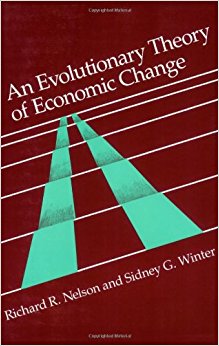
My work since then — much of it reported in An Evolutionary Theory of Economic Change (with R. R. Nelson) — has focussed on the development of an evolutionary economics of the firm and industry, a theoretical framework capable of accommodating behavioural
evidence at the firm level, but also explicit about the long-run constraints that market systems impose on behaviour. The economics of technological change remains the primary arena of application of this framework. Recently, the problem of productive knowledge, particularly the question of what it means for a firm to ‘know’ something, has become an important subsidiary focus, along with the problem of understanding the ‘life-cycle’ dynamics of firm and industry evolution.

An Evolutionary Theory of Economic Change, 1982