Background
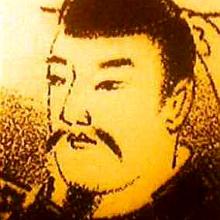
Tennō Kōtoku was born on 22 Aoril 597 in Japan. His name was Imperial Prince Karu.

孝徳天皇
Tennō Kōtoku was born on 22 Aoril 597 in Japan. His name was Imperial Prince Karu.
In 645, after Imperial Prince Naka no Oe, Nakatomi no Kamatari, and others of their party had assassinated Soga no Iruka and wiped out the Soga family, Empress Kogyoku, who was the mother of Prince Naka no Oe and the reigning sovereign at the time, turned over the throne to Prince Kara, making him the thirty-seventh ruler.
As leader of the coup d’état against the Soga family, Prince Naka no Oc should by rights have succeeded to the throne, but it was decided to make Prince Kara, the empress’s younger brother, the ruler instead in order to avoid friction with the older and previously established elements within the government. As a result, the emperor in time became estranged from Prince Naka no Oe and the other members of his powerful group.
Among the political acts carried out during his reign was the adoption in 645 of the nengó (era name) Taika, the first time that an era name had been formally assigned in Japanese history. 646 saw the promulgation of the so- called Taika Reforms, a set of new laws and institutional innovations designed to create a strong centralized government after the model of that of the T’ang dynasty of China, with the emperor as supreme ruler at its head.
This, along with the establishment of the shogunate system by Mina- moto no Yoritomo and the Meiji Restoration, constitutes one of the three most important social and political innovations in the history of Japan.