

Background
Fong, Wen Chih was born on December 9, 1930 in Shanghai, People's Republic of China. Son of Tse-tsing and Jen-yen (Sha) Fong. came to the United States, 1948, naturalized, 1961.
http://www.amazon.com/gp/product/B000PS1KPG/?tag=2022091-20
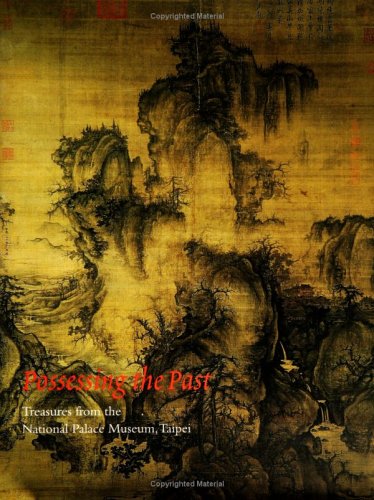
(The story of Chinese art from its foundations in the Bron...)
The story of Chinese art from its foundations in the Bronze Age and the first empires through the rich diversity of art produced during the Sung, Yuan, Ming, and Ch'ing dynasties.
http://www.amazon.com/gp/product/0300086547/?tag=2022091-20
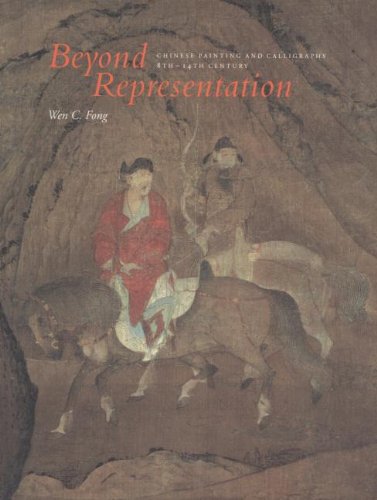
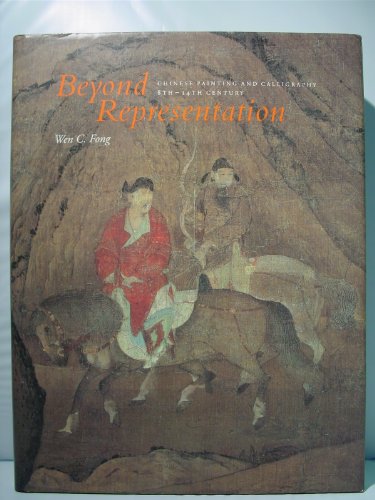
( Beyond Representation surveys Chinese painting and call...)
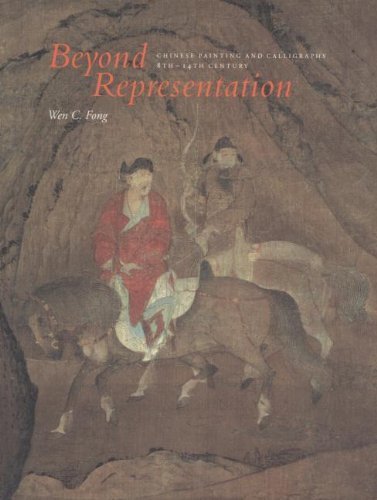
Beyond Representation surveys Chinese painting and calligraphy from the eighth to the fourteenth century, a period during which Chinese society and artistic expression underwent profound changes. A fourteenth-century Yuan dynasty (1279–1368) literati landscape painting presents a world that is totally different from that portrayed in the monumental landscape images of the early Sung dynasty (960–1279). To chronicle and explain the evolution from formal representation to self-expression is the purpose of this book. Wen C. Fong, one of the world's most eminent scholars of Chinese art. takes the reader through this evolution, drawing on the outstanding collection of Chinese painting and calligraphy in The Metropolitan Museum of Art, New York. Focusing on 118 works, each illustrated in full color, the book significantly augments the standard canon of images used to describe the period, enhancing our sense of the richness and complexity of artistic expression during this six-hundred-year era. Placing equal emphasis on stylistic analysis, social context, and cultural values. Professor Fong considers several issues in Chinese art history: style and its social functions, the changing fortunes of the artist, antiquity and synthesis as guiding principles, and the Chinese view of creativity and change. In this exploration he highlights three areas of artistic accomplishment: narrative painting, the depiction of landscape, and the calligraphy and calligraphic painting of the scholar officials. Moving from art to history he outlines the schism within the Confucian state during the later Sung and the Yuan dynasties between the ruling imperial ideology and the humanist philosophy of the scholar officials, with the consequent rise of literati painting as the true voice of the Chinese artistic sensibility. The branching off into official and private narrative is mirrored in religious painting: while professional craftsmen continued the practice of courtly techniques in the painting of icons, Taoist and Ch'an Buddhist painters adopted scholarly aesthetic principles to create new, highly individualistic images and styles. Unlike narrative representation, which had a long history of development prior to the Sung, landscape painting began to emerge as a preeminent art form in the tenth century, reaching its zenith during the Northern Sung (960–1177), a golden age of art and cultural development. From the second half of the eleventh century, painters turned increasingly from more objective naturalistic landscape to landscape imbued with human emotion, breaking away from officially sanctioned pictorial conventions to create more symbolic representations of single flowers, rocks, and trees. By the time of the Yuan dynasty, following the Mongol conquest of 1279, objective representation in art had been replaced by imagery that drew on the artist's inner response to the world. At this time, the painter began to inscribe poems and incorporate calligraphy in his works, the meaning of the painted subject made complex by personal and symbolic associations enhanced by its expression in language. With the multiple relations between word, image, and calligraphy forming the basis of a new art, Chinese painting entered its richest and most diverse stage of development. (This title was originally published in 1992/93.)
http://www.amazon.com/gp/product/0300194188/?tag=2022091-20
(. dw, lge fmt, 1980)
. dw, lge fmt, 1980
http://www.amazon.com/gp/product/0500233179/?tag=2022091-20
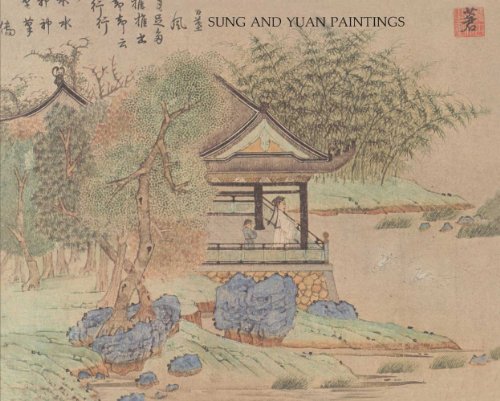
( The acquisition by the Metropolitan Museum of Art of t...)
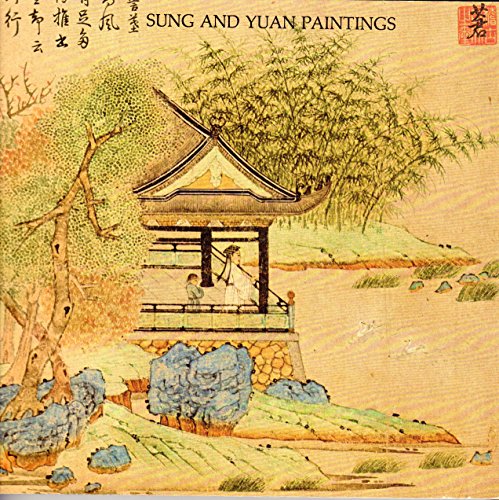
The acquisition by the Metropolitan Museum of Art of twenty-five paintings of the Sung and Yüan dynasties from the collection of Mr. C. C. Wang must be considered one of the finer moments in the collecting history of the institution. The quality of each handscroll, album leaf, and hanging scroll is satisfyingly high. In its totality the collection is of the utmost importance because the group fills what has up to now been a serious gap in the Museum’s oriental holdings. Although the Museum is strong in Chinese sculpture, porcelain, decorative arts, and monumental painting, its examples of the early classic” period of Chinese landscape and figure style have been inadequate. The Bahr collection of Sung and Yüan paintings gained by the Metropolitan in 1947, although containing some works of art of considerable quality, must be viewed upon reflection more as a valuable study collection than as a series of masterworks. Thus the acquisition of these major holdings of the C. C. Wang collection is felicitous indeed. This book was originally published in 1973 and has gone out of print. This edition is a print-on-demand version of the original book.
http://www.amazon.com/gp/product/0300203381/?tag=2022091-20
http://www.amazon.com/gp/product/B0107103H6/?tag=2022091-20
(Emperor Ch'ien-lung, who ruled China from 1736 to 1795, a...)
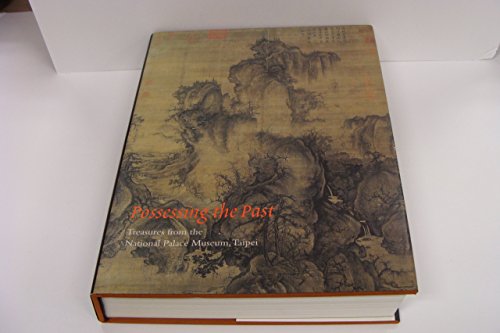
Emperor Ch'ien-lung, who ruled China from 1736 to 1795, amassed an extensive collection of Chinese art which today forms the core of the holdings of the National Palace Museum, Taipei. Drawing on this rich resource, this work provides a history of imperial Chinese art and culture from the Neolithic period to 18th century. It reproduces some of the great monuments of Chinese culture: key works by leading calligraphers of the T'ang dynasty, life-size imperial portraits from the Sung to the Ming period, and some of the finest examples of imperial ceramics, textiles and other decorative arts from the Sung to the Ch'ing dynasty. The authors also offers a cultural and historical context for the art, focusing on both the evolution of Chinese civilization and the cultural dynamics of the country's history. The book accompanies a major exhibition at the Metropolitan Museum, New York (from March 1996), and subsequently in Chicago, San Francisco and Washington, DC.
http://www.amazon.com/gp/product/0810964945/?tag=2022091-20
(This book presents a survey of Chinese painting from the ...)
This book presents a survey of Chinese painting from the eighth to the 14th century, a period during which the nature of China's pictorial art changed dramatically. Illustrated by works in the collection of The Metropolitan Museum of Art, New York, the author begins by describing the advent toward the end of the Bronze Age of figural representation in Chinese art, and next traces the development of Chinese landscape painting from the third to the tenth century. He then moves on to discuss the art of the Sung dynasty, when the imperial government was increasingly absolute and repressive. In this period artists shifted from a realistic rendition of nature to more symbolic representation of single flowers, rocks and trees. By the time of the Yuan dynasty, following the Mongol conquest of 1279, objective representation in art had been replaced by imagery that drew on the artist's inner response to his world. Because it was believed that the meaning of a painted subject, made complex by personal and symbolic associations, could no longer be expressed without language, the painter began to inscribe poems and incorporate calligraphy in his works, the multiple relationships among word, image and calligraphy forming the basis of a new art. At this stage Chinese art entered its richest and most diverse stage f development.
http://www.amazon.com/gp/product/0300057016/?tag=2022091-20
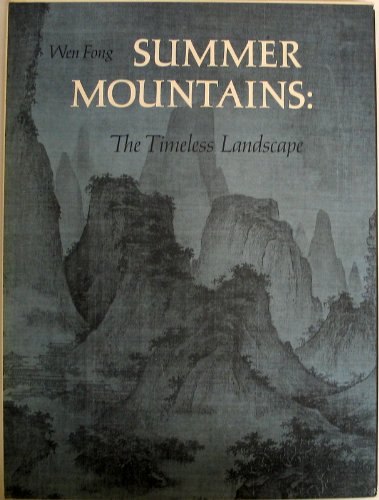
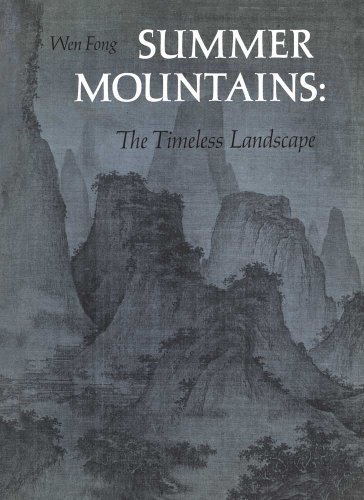
( Landscape has been the dominant subject in Chinese pai...)
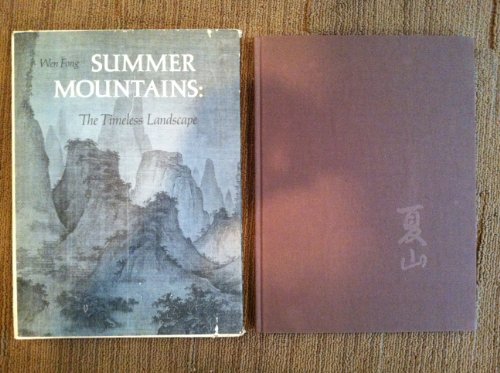
Landscape has been the dominant subject in Chinese painting ever since it emerged as the pre-eminent art form of the Northern Sung period (960–1127). The recent acquisition by the Metropolitan Museum, as a gift of the Dillon Fund, of a superb large Northern Sung handscroll, Summer Mountains, provides the opportunity to consider in some detail the landscape art of this period, together with its antecedents and later permutations. Developing during the war-filled years of the tenth century, Northern Sung landscape painting produced timeless images that were followed and imitated for centuries. This art reached its apogee in the third quarter of the eleventh century. After the fall of the Northern Sung, it continued to be popular in the north, both under the Chin tartar and then the Mongol rule during the twelfth and thirteenth centuries. In the meantime the painters of the Southern Sung (1127–1276), south of the Yangtze River, developed a simplified style that described the softer landscapes of the south. There were three revivals of the Northern Sung grand manner in landscape painting, the first during the Yüan period (1277–1368), when the Mongols dominated the whole of China, the second in the fifteenth century, after the Ming overthrew the Mongols, the third at the turn of the eighteenth century, in the early Ch'ing (Manchu) period. Although landscape painting during the Yüan period and afterward was essentially different from that of the Northern Sung, it continued to evoke motifs and themes made popular by the Northern Sung masters. Traditionally attributed to Yen Wen-kuei, a painter active about 980–1010, the Metropolitan Museum's Summer Mountains is, instead, as work in Yen's style, probably painted about 1050. But since Yen's style remained influential for centuries, an analysis of the Yen Wen-kuei tradition becomes a capsule account of the development of Chinese landscape painting between 1000 and 1700. As one attempts to date the many works in the Yen Wen-kuei tradition, it is necessary to keep in mind the following: When a painter works in the manner of an older master, he first adopts the characteristic brushwork idioms, the form elements, and the compositional motifs. But in expanding his interpretation and giving it new articulation, he necessarily deviates from the original and makes subtle changes. In short, the later painter shows in his work not the real earlier master but a transformed image of him. These changes are not "slips of hand" or "misunderstandings"; instead, they are positive signs of the later painter's own style. Even a more or less mechanical copy, which, in the absence of the original work may be historically useful in reconstructing it, inevitably reveals something of its own time. This book was originally published in 1975 and has gone out of print. This edition is a print-on-demand version of the original book.
http://www.amazon.com/gp/product/0870991353/?tag=2022091-20
http://www.amazon.com/gp/product/B013J9QNFO/?tag=2022091-20
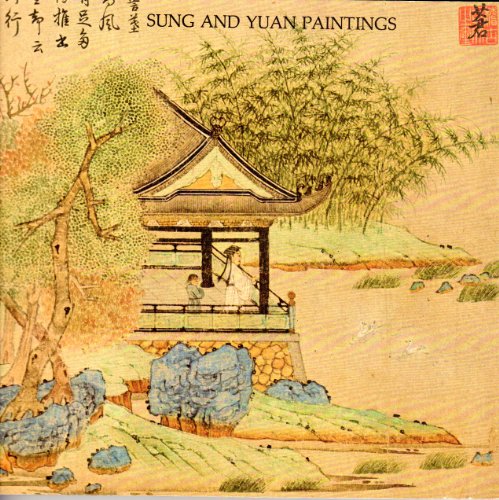
(Excellent condition, spine is tight but with some marks o...)
Excellent condition, spine is tight but with some marks on cover. Ships fast from NY.
http://www.amazon.com/gp/product/0870990837/?tag=2022091-20
http://www.amazon.com/gp/product/B002J4IWLO/?tag=2022091-20
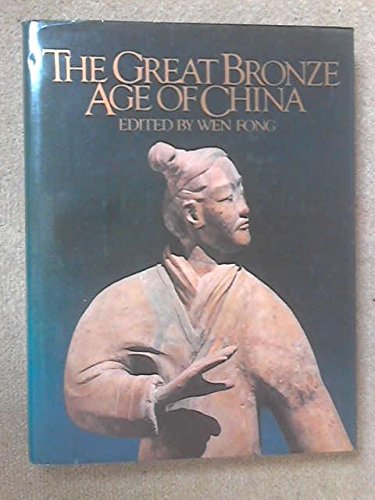
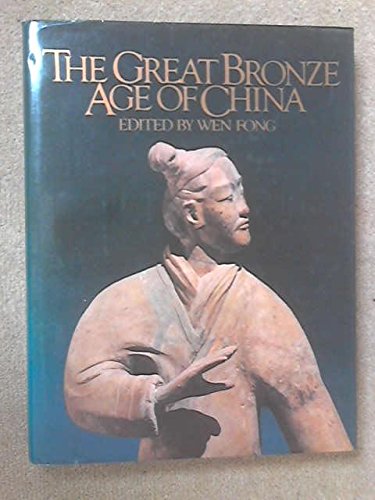
(Authors: Wen Fong Publisher: Knopf Keywords: china, bronz...)
Authors: Wen Fong Publisher: Knopf Keywords: china, bronze Published: 1983-10 Language: English Category: China, Ancient, History, ISBN-10: 0394512561 ISBN-13: 9780394512563 Binding: Hardcover (1980 Edition) List Price: Unknown
http://www.amazon.com/gp/product/0394512561/?tag=2022091-20
http://www.amazon.com/gp/product/B00MDAMGYS/?tag=2022091-20
http://www.amazon.com/gp/product/B011DC84UG/?tag=2022091-20
http://www.amazon.com/gp/product/B013J9O5PO/?tag=2022091-20
http://www.amazon.com/gp/product/B00LXGXX7C/?tag=2022091-20
educator museum curator art historian author
Fong, Wen Chih was born on December 9, 1930 in Shanghai, People's Republic of China. Son of Tse-tsing and Jen-yen (Sha) Fong. came to the United States, 1948, naturalized, 1961.
AB, Princeton University, 1951; Master of Fine Arts, Princeton University, 1954; Doctor of Philosophy, Princeton University, 1958.
Research assistant, Cleveland Museum Art, 1953;
instructor, then assistant professor, Princeton University, 1955-1960;
visiting curator Oriental art, Yale Art Gallery, 1958-1959;
member of faculty, Princeton University, since 1960;
professor art and archeology, curator Oriental art, Princeton University, since 1967;
chairman Doctor of Philosophy program Chinese and Japanese art and archeology, Princeton University, since 1964;
department chairman art and archeology, Princeton University, 1970-1973;
Sanford Edwards professor art and archeology, Princeton University, since 1971;
chairman of the executive committee Art. Museum, Princeton University, 1970-1975. Member vis committee department fine arts Harvard University, 1972-1977.
Consultant chairman Asian Art Department, Metropolitan Museum Art, since 1971. Member art committee China Institute American, since 1971, trustee, 1984. Advisory council art department Mount Holyoke College.
Gallery committee Asia Society Art Gallery, New York City.
(Authors: Wen Fong Publisher: Knopf Keywords: china, bronz...)
( Beyond Representation surveys Chinese painting and call...)
(Emperor Ch'ien-lung, who ruled China from 1736 to 1795, a...)
(The story of Chinese art from its foundations in the Bron...)
(This book presents a survey of Chinese painting from the ...)
( Landscape has been the dominant subject in Chinese pai...)
( The acquisition by the Metropolitan Museum of Art of t...)
(Excellent condition, spine is tight but with some marks o...)
(. dw, lge fmt, 1980)
Member American College Art Association (board directors 1971-1976), Chinese Art Society of America. Member Chinese painting delegation to People's Republic of China, 1977 (Communications Scholarly Communications with Provider Reimbursement Consultants), American Philosophical Society, Academia Sinica.
Married Constance Chih-ming Tang, August 29, 1953. Children: Laurence T., Peter C., Serena M.
