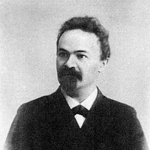
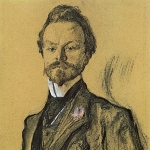
Lyudmila Vilkina was a Russian literary critic, publicist, translator, writer, poet. She was a prominent figure in the Saint Petersburg bohemian society of the second half of the 1900s - early 1910s. Together with her husband, the symbolist poet Nikolai Maksimovich Minsky (Vilenkin), she had a rather popular literary salon. She translated into Russian a significant number of works of famous European writers and playwrights.
Background
Lyudmila Vilkina was born on January 17, 1873 in St. Petersburg in a wealthy Jewish family. Father, Nikolai Lvovich Vilkin, was the publisher, co-owner of the "Printing House of Vilkin and Ettinger." Mother, Elizaveta Afanasyevna Vilkina, was the daughter of a banker and public figure.
Education
In 1884, Isabella entered the prestigious Saint Petersburg girls' gymnasium of Princess A. A. Obolenskaya. After graduating from high school in 1889, she moved to relatives in Moscow, where she lived for more than two years. She studied in various stage art studios, intending to begin a serious artistic career. As a result, she did not become a professional actress, however, in Moscow and subsequently in St. Petersburg she often played in amateur plays.
Career
In 1891, while living in Moscow, she switched from Judaism to Orthodoxy, changing the name Isabella to the name Lyudmila.
Having returned to Saint Petersburg at the end of 1892, Vilkina began to be involved in literary and artistic circles.In a short time, she became a prominent figure in the capital's bohemian society, constantly visiting numerous salons and circles. June 8, 1905 she married the poet Nikolai Maksimovich Minsky. In their apartment in Saint Petersburg, the couple opened a literary salon, which gained some popularity in symbolist circles.
Vilkina began to publish her work in the second half of the 1890s. Vilkina’s creativity was limited mainly by the framework of decadent themes and style techniques. Translations became an important part of her creative work. works of a number of leading European writers and playwrights of that period, for example, O. Mirbo, G. Hauptmann, A. Savignon, R. de Gourmont.
The only collection of works by Vilkina, called "My Garden", was published at the end of 1906 by the symbolist publishing house "Scorpio". The collection included three stories and thirty sonnets. "My Garden" has been largely frowned upon by critics.
After leaving for France, Vilkina continued her creative and translation work. In the first half of the 1910s, her poems, short stories, essays and translations sent from Paris were published in the almanacs "Grif", "Strada".
In 1891, while living in Moscow, she switched from Judaism to Orthodoxy, changing the name Isabella to the name Lyudmila.
Personality
Contemporaries mentioned her temperamental character. Lyudmila led a free lifestyle: her romantic connections with many famous writers, philosophers and artists gained fame.
Physical Characteristics:
According to contemporaries, Vilkina was distinguished by her attractive, albeit somewhat sickly appearance, rather poor health (many sources mention tuberculosis) and a very temperamental character.
Connections
Lyudmila Vilkina was born in a wealthy Jewish family. Father, Nikolai Lvovich Vilkin, was the publisher, co-owner of the "Printing House of Vilkin and Ettinger." Mother, Elizaveta Afanasyevna Vilkina, was the daughter of a banker and public figure. June 8, 1905 she married the poet Nikolai Maksimovich Minsky.