

Background
Marie Howe was born in 1950 in Rochester, New York, United States. Howe is the eldest girl in the family and has eight siblings. She notes that the camaraderie between the siblings was tremendous.

Marie Howe

401 Sunset Ave, Windsor, ON N9B 3P4, Canada
The University of Windsor where Marie Howe receives her Bachelor of Arts degree.

116th St & Broadway, New York, NY 10027, United States
Columbia University where Marie Howe received her Master of Fine Arts degree.

2009
Marie Howe at Invocation of the Muse - Poets and Musicians Toast Poets House on September 26, 2009, at 10 River Terrace and Nelson A. Rockefeller Park in Battery Park City.

2012
Marie Howe at the Buddhist Contemplative Care Symposium in November 2012.

2017
1 University Park Dr, Nashville, TN 37204, United States
Marie Howe at Christian Scholars' Conference 2017 Plenary in Lipscomb University.

Marie Howe

Marie Howe at Key West Literary Seminar.

Marie Howe
2009
Marie Howe at Invocation of the Muse - Poets and Musicians Toast Poets House on September 26, 2009, at 10 River Terrace and Nelson A. Rockefeller Park in Battery Park City.
2012
Marie Howe at the Buddhist Contemplative Care Symposium in November 2012.
2017
1 University Park Dr, Nashville, TN 37204, United States
Marie Howe at Christian Scholars' Conference 2017 Plenary in Lipscomb University.
401 Sunset Ave, Windsor, ON N9B 3P4, Canada
The University of Windsor where Marie Howe receives her Bachelor of Arts degree.
116th St & Broadway, New York, NY 10027, United States
Columbia University where Marie Howe received her Master of Fine Arts degree.
Marie Howe
Marie Howe at Key West Literary Seminar.
Marie Howe
Marie Howe
Marie Howe
Marie Howe
Marie Howe
Marie Howe with Henri Cole.
Marie Howe with writer Patricia Hampl and poet Jane Hirshfield.
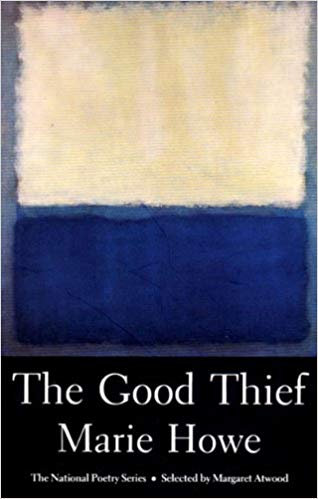
(Poems in the book The Good Thief concern relationship, at...)
Poems in the book The Good Thief concern relationship, attachment, and loss, in a highly original search for personal transcendence.
https://www.amazon.com/Good-Thief-Poems-National-Poetry/dp/0892551275/?tag=2022091-20
1988
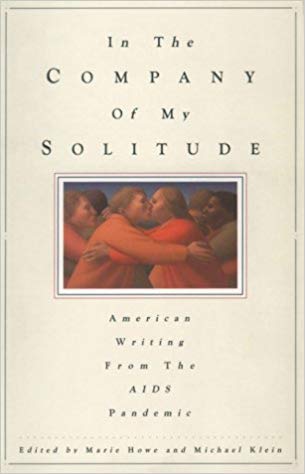
(The editors of In the Company of My Solitude: American Wr...)
The editors of In the Company of My Solitude: American Writing from the AIDS Pandemic have successfully pulled together many voices and viewpoints into a balanced and accomplished collection that includes unknown and often unidentified writers along with Mark Doty, Paul Monette, and Harold Brodkey.
https://www.amazon.com/Company-My-Solitude-American-Pandemic/dp/0892552085/?tag=2022091-20
1994
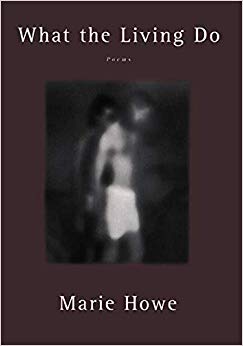
(Informed by the death of a beloved brother, here are the ...)
Informed by the death of a beloved brother, here are the stories of childhood, its thicket of sex and sorrow and joy, boys and girls growing into men and women, stories of a brother who in his dying could teach how to be most alive. What the Living Do reflects a new form of confessional poetry, one shared to some degree by other women poets.
https://www.amazon.com/What-Living-Do-Marie-Howe/dp/0393318869/?tag=2022091-20
1997

(Elizabeth Berg Hurrying through errands, attending a dyin...)
Elizabeth Berg Hurrying through errands, attending a dying mother, helping her own child down the playground slide, the speaker in these poems wonders: what is the difference between the self and the soul? The secular and the sacred? Where is the kingdom of heaven? And how does one live in Ordinary Time, during those apparently unmiraculous periods of everyday trouble and joy?
https://www.amazon.com/Kingdom-Ordinary-Time-Poems/dp/0393337340/?tag=2022091-20
2008
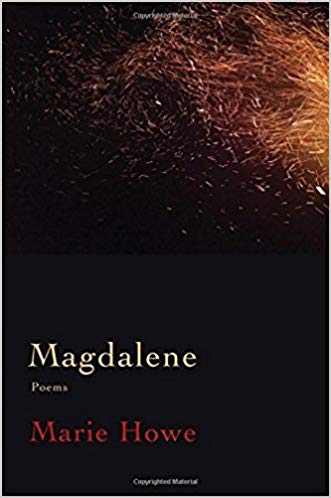
(Magdalene imagines the biblical figure of Mary Magdalene ...)
Magdalene imagines the biblical figure of Mary Magdalene as a woman who embodies the spiritual and sensual, alive in a contemporary landscape hailing a cab, raising a child, listening to the news on the radio. Between facing the traumas of her past and navigating daily life, the narrator of Magdalene yearns for the guidance of her spiritual teacher, a Christ figure, whose death she continues to grieve. Erotic, spirited, and searching for meaning, she is a woman striving to be the subject of her own life, fully human and alive to the sacred in the mortal world.
https://www.amazon.com/gp/product/B0716NPDJK/?tag=2022091-20
2017
Marie Howe was born in 1950 in Rochester, New York, United States. Howe is the eldest girl in the family and has eight siblings. She notes that the camaraderie between the siblings was tremendous.
Marie Howe attended Sacred Heart Convent School and the University of Windsor where she received a Bachelor of Arts degree. She earned a Master of Fine Arts degree in 1983 from Columbia University, where she studied with Stanley Kunitz, whom she refers to as her true teacher.
Before earning a degree from Columbia University, Marie Howe worked briefly as a newspaper reporter in Rochester and as a high school English teacher in Massachusetts.
Howe did not devote serious attention to writing poetry until she turned 30. Marie Howe’s first poetry collection called The Good Thief was written in 1988. Library Journal reviewer Rochelle Ratner stated that the book’s poems display “fashionable surrealism,” but that the emotional issues hinted it would have made them stronger.
In 1989, Howe’s brother John died of an AIDS-related illness. What the Living Do (1997), an elegy to John, was praised by Publishers Weekly as one of the five best poetry collections of the year. Stripping her poems of metaphor, Howe composed the collection as a transparent, accessible documentary of loss. She also co-edited with Michael Klein the essay anthology In the Company of My Solitude: American Writing from the AIDS Pandemic. Contributors include well-known writers, medical professionals, and volunteers, as well as students, prostitutes, and drug users.
In The Kingdom of Ordinary Time (2008), Howe distanced herself from the personal narrative and returned to, as she describes, her obsession with the metaphysical, the spiritual dimensions of life as they present themselves in this world. One more book of poetry, Magdalene, was published in 2017.
Marie Howe also taught writing at Tufts University and Warren Wilson College. Nowadays she works on the writing faculties at Columbia University, Sarah Lawrence College, and New York University.
Marie Howe's poetry collection The Good Thief was chosen for the National Poetry series by Margaret Atwood in 1989. Marie is a recipient of fellowships from various organizations, including the Massachusetts Artist Foundation, Fine Arts Work Center, John Simon Guggenheim Memorial Foundation, Radcliffe College’s Bunting Institute, and the National Endowment for the Arts. She was the Poet Laureate of New York State from 2012 to 2014.
(Elizabeth Berg Hurrying through errands, attending a dyin...)
2008(The editors of In the Company of My Solitude: American Wr...)
1994(Informed by the death of a beloved brother, here are the ...)
1997(Magdalene imagines the biblical figure of Mary Magdalene ...)
2017(Poems in the book The Good Thief concern relationship, at...)
1988
Quotations:
"Every poem holds the unspeakable inside it. The unsayable... The thing that you can't really say because it's too complicated. It's too complex for us. Every poem has that silence deep in the center of it."
"This might be the most difficult task for us in postmodern life: not to look away from what is actually happening. To put down the iPod and the e-mail and the phone. To look long enough so that we can look through it - like a window."
"John’s living and dying changed my aesthetic entirely."
"Poetry is telling something to someone."
"Sometimes I open a book that’s so beautiful I have to shut it because it hurts me. I can’t stand it. It’s like, Oh no! Oh no! Oh no! This is going to drive me into my own heart. A day or two days later I’m saying, All right, and I just surrender to it: Do it to me. Go ahead. I want it. I don’t want it. I want it. I don’t want it."
"One day it happens: what you have feared all your life,
the unendurably specific, the exact thing. No matter what you say or do."
"Poetry holds the knowledge that we are alive and that we know we're going to die."
"Memory is a poet, not a historian."
"When we think we have something to say we are usually wrong. We are fooling ourselves. Trip into discovery. Don't write what you know, discover something new."
Quotes from others about the person
"Marie Howe's poetry is luminous, intense, and eloquent, rooted in the abundant inner life. Her long, deep-breathing lines address the mysteries of flesh and spirit, in terms accessible only to a woman who is very much of our time and yet still in touch with the sacred." - Stanley Kunitz


